

Chinese authorities clamp down on spreading negative news about the real estate market online.
- Last update: 3 days ago
- 2 min read
- 29 Views
- BUSINESS
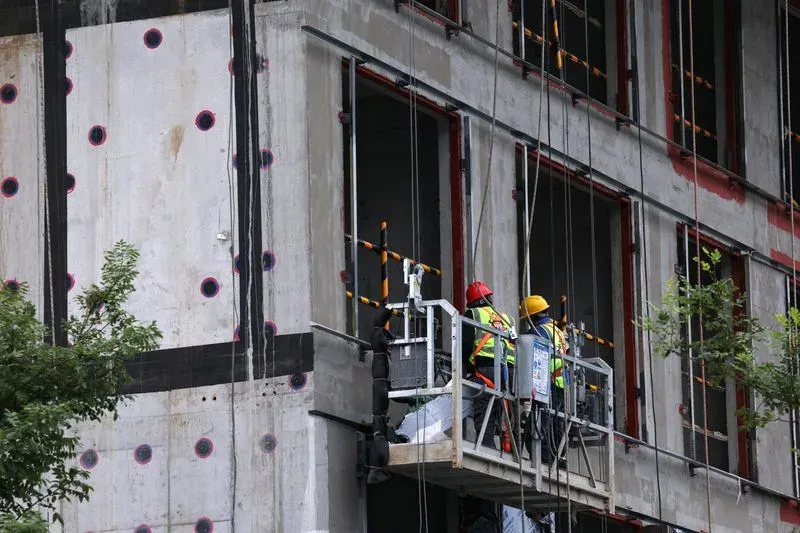
BEIJING, Dec 3 (Reuters) - The Shanghai office of China's cyberspace authority announced on Tuesday that it had taken down thousands of online posts that allegedly spread "negative rumors about the real estate sector and misinterpreted housing policies," amid an ongoing slump in the property market.
Since November 14, more than 40,000 posts on social media platforms such as RedNote, similar to Instagram, and video-sharing site Bilibili have been removed. This effort was conducted by the Shanghai branch of the Cyberspace Administration of China (CAC), in coordination with the city's housing bureau and internet police.
The property market has been struggling since 2021, with numerous developers unable to repay debts or finish presold housing projects, causing a drop in consumer confidence and household spending. Chinese authorities have faced challenges in reviving this weakened sector.
The crackdown in Shanghai also resulted in sanctions against over 70,000 real estate accounts and 1,200 livestream channels, according to a statement posted on the official WeChat account of the Shanghai CAC on Tuesday.
Under President Xi Jinping, political dissent has been nearly eliminated within the heavily monitored "Great Firewall" of China. Recently, online censorship has increasingly targeted critiques of the Chinese economy and the slower growth experienced since the COVID-19 pandemic.
The current measures underscore the governments concern that public panic or dissatisfaction about the property market could escalate into wider criticism of state policies. During a recent Politburo study session, Xi emphasized the need for authorities to "take decisive action" against online networks promoting profit-driven misconduct, while also advocating for the use of artificial intelligence to strengthen oversight of cyberspace.
The Shanghai CAC further noted that some accounts were penalized for sharing AI-generated images of properties as if they were real.
(Reporting by Eduardo Baptista; Editing by Peter Graff)
Author: Sophia Brooks
Share

How the trucking industry in America turned into a nightmare
1 minutes ago 4 min read BUSINESS

EU launches antitrust investigation into Meta's WhatsApp AI capabilities
17 minutes ago 2 min read BUSINESS

Judge mandates annual rebidding for default search deals with Google in significant antitrust ruling
18 minutes ago 2 min read BUSINESS

Article: Will Smith & Jada Pinkett Smith Upset About $3M Lawsuit
29 minutes ago 2 min read BUSINESS

Formosa and Rxilient ink deal for licensing APP13007
30 minutes ago 2 min read BUSINESS

Truth commission calls on Finland to address Sami injustices
34 minutes ago 2 min read BUSINESS

Alyssa Farah Griffin's Health Issues Cause Absence from 'The View'
35 minutes ago 2 min read BUSINESS
Plans underway to create new 20mph zones for safer streets
43 minutes ago 2 min read BUSINESS

Shakespeare trust introduces 'adopt a beam' program
45 minutes ago 2 min read BUSINESS

Greek Parliament approves purchase of 36 PULS launchers from Elbit Systems for $758 million
47 minutes ago 2 min read BUSINESS