

Fact Checking in Skopje: Revisiting the Kumanovo Connection from Macedonia
- Last update: 5 hours ago
- 3 min read
- 368 Views
- BUSINESS
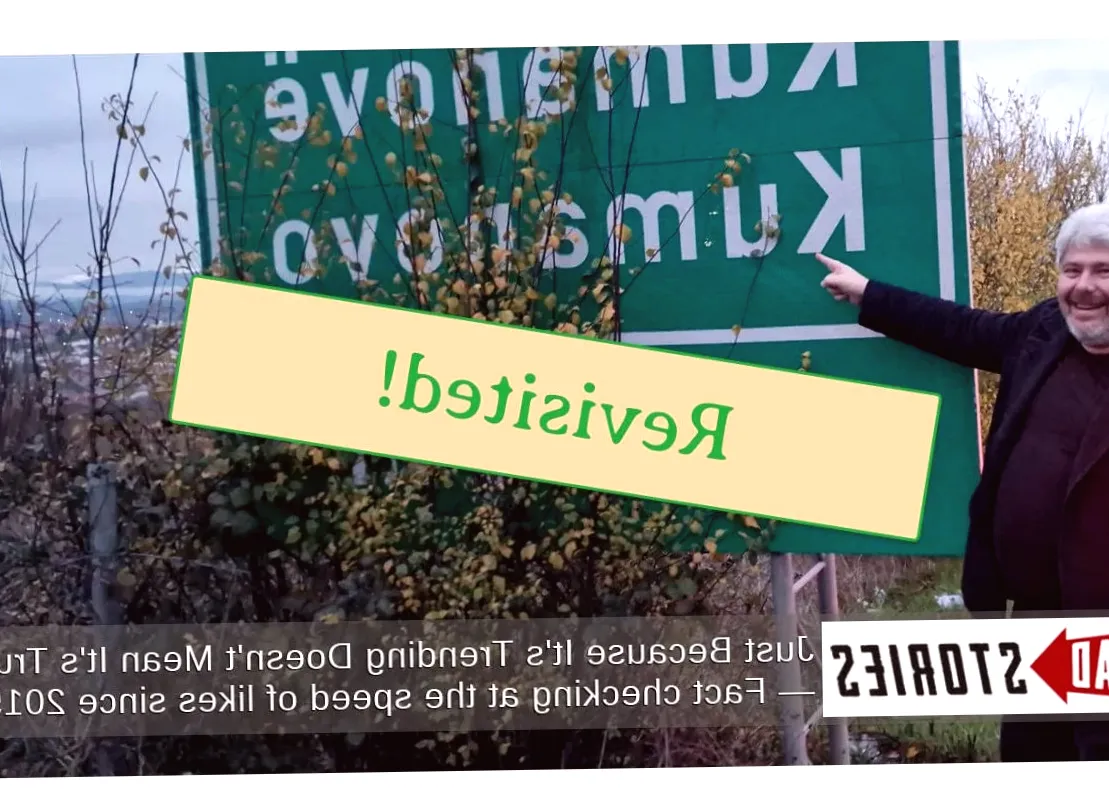
Last month, I accepted an invitation to Macedonia to meet with journalists and fact checkers at the Metamorphosis Foundation. The discussion focused on Lead Stories' experience producing automated short-form fact-checking videos. Having written in 2019 about a network of fake news websites originating from Kumanovo, I had long wanted to visit the area, and this trip provided the perfect opportunity. I also visited Veles, another Macedonian town known for its fake news activity.
The Kumanovo Network and Veles Teens
In 2019, Lead Stories, together with Peter Burger from the Dutch fact-checking site Nieuwscheckers.nl, published a series of reports exposing a Macedonian fake news network. One article, titled "The Kumanovo Connection: Macedonian Spam Clans Still Profit From Fake News About Muslims and Migrants," described how individuals in Kumanovo operated dozens of websites spreading inflammatory or false stories to earn advertising revenue. Operators included people with ordinary professions such as truckers, police officers, and even military personnel.
Following the exposure, the network largely disbanded, illustrating how public accountability can disrupt misinformation campaigns. This network was part of a broader Macedonian trend where many people ran fake news websites as a side business. Veles gained international attention in 2016 when teenagers in the town controlled over 100 websites spreading politically charged misinformation in favor of a U.S. presidential candidate, mainly to generate ad revenue.
Evolution of Misinformation
Since that time, terminology has shifted from "fake news" to "misinformation" and "disinformation," now encompassing foreign influence, scams, AI-generated content, conspiracy theories, and false rumors. Macedonian fact-checkers continue to monitor sites like meta.mk, vistinomer.mk, and portalb.mk.
Observations from Skopje
During my visit to Skopje, I explored the revitalized downtown, noted for its bright buildings, expansive squares, and numerous statues. Locals mentioned that IT-skilled Macedonians are often approached to participate in questionable online projects. While traditional ad-filled websites promoted via social media have declined, new forms of digital manipulation have emerged, including online scams, cryptocurrency schemes, dropshipping, and AI-generated content.
Current Landscape of Online Deception
Recent platform updates, such as location features on X, revealed that accounts appearing American were often operated from Macedonia, Vietnam, Bangladesh, India, the Philippines, or Nigeria. This reflects the intensifying global competition in the spread of online misinformation. Historical patterns from Ghana and the Philippines demonstrate that fake news networks are a worldwide phenomenon.
The Continuing Need for Fact Checking
These developments emphasize the ongoing importance of fact checking. Despite technological changes and evolving tactics, reliable verification remains essential to ensure that misleading or false content does not go unchallenged online.
Author: Ava Mitchell