

A Bollywood movie transforms India's symbol of love into a representation of conflict
- HOME
- ENTERTAINMENT
- A Bollywood movie transforms India's symbol of love into a representation of conflict
- Last update: 2 hours ago
- 4 min read
- 883 Views
- ENTERTAINMENT
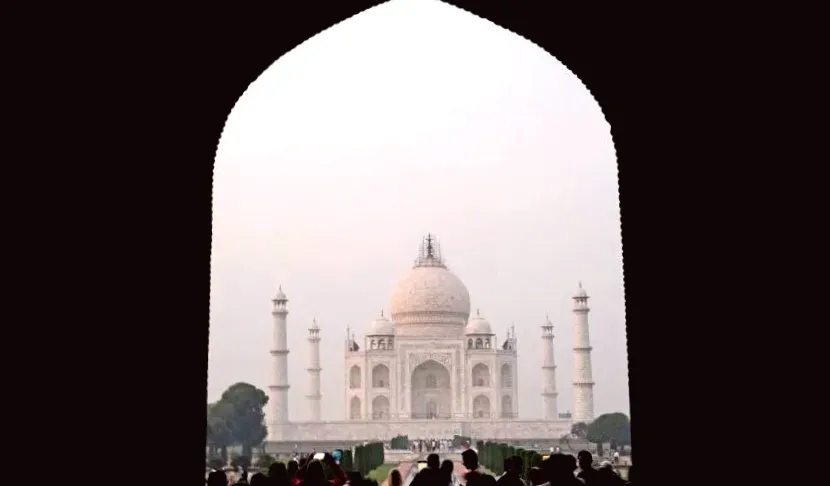
Vishu Das, a seasoned tour guide who has spent decades narrating the timeless love story of the Taj Mahal, now finds himself questioning everything. Could the story weve been telling be false? he wonders, gazing at the monument from a nearby rooftop. Overcome by doubt, he even suggests, Shouldnt we run a DNA test on the Taj Mahal? His reflections end on a somber note: We are spreading a lie.
This scene is part of The Taj Story, a controversial film directed by Tushar Goel and released in October. The movie challenges the long-accepted historical narrative of the Taj Mahal. In it, Das promotes a widely discredited theory suggesting that the 17th-century monument is not a Muslim mausoleum but originally a Hindu palace appropriated by Islamic rulers.
The film joins a growing number of Indian movies that critics argue aim to marginalize the countrys roughly 200 million Muslims and highlight a Hindu-centric version of history. Observers note that this aligns with the ideology of the ruling Hindu-nationalist Bharatiya Janata Party (BJP), which has faced accusations of promoting Islamophobia and deepening religious divides in India.
Paresh Rawal, who portrays Das, is a former BJP lawmaker. Director Goel emphasized that the film received no political backing. Nevertheless, the storyline contradicts the findings of the governments archaeological department and has drawn skepticism from much of Indias academic and media circles. The Indian Express described it as a collage of conspiracy theories blending fact and fiction, while The Week critiqued it for failing as both entertainment and propaganda.
The movie begins with a disclaimer stating it is fictional and not historically accurate. At the box office, it has performed modestly, earning about $2 million from a $1.3 million budget. Yet for some, the films revisionist narrative resonates. BJP lawmaker Ashwini Upadhyay told local media, The truth cannot be kept hidden any longer. A viewer in Mumbai said, We have been misled all this time. We never knew our own history.
The Taj Mahal: From Symbol of Love to Battleground of History
Perched along the Yamuna River, the Taj Mahal was built in the 17th century by Emperor Shah Jahan in memory of his wife Mumtaz Mahal. The white marble mausoleum, a UNESCO World Heritage Site, attracts millions annually and is celebrated as a universal emblem of love and artistic achievement.
The Taj Story seeks to challenge this cherished narrative. The 165-minute courtroom drama follows Das as he publicly questions the monuments origins, filing a lawsuit to dispute the official history. The film juxtaposes his fervent speeches against historians evidence, framing the debate as one between alleged leftist agendas and a desire to reveal hidden truths.
Goel insists the movie is focused on historical inquiry rather than religion, though Muslim characters are depicted as antagonists. Rawal supports this view, stating the film addresses facts rather than faith, based on consultations with credible historians.
Rewriting Indias Past
Critics see the film as part of a broader effort to reshape Indias historical narrative. Since the BJP assumed power in 2014, textbooks and official records have been altered to downplay Indias Islamic history, including Mughal-era rulers and cultural sites. Legal and political campaigns have also sought to reinterpret historic monuments, such as the Babri Masjid in Ayodhya, echoing longstanding debates about religious heritage and national identity.
Earlier controversies include the Taj Mahals omission from a state tourism booklet in 2017 and court petitions demanding access to its sealed rooms based on fringe claims of a Hindu origin. While The Taj Story does not explicitly endorse these theories, promotional material featuring Hindu deities in the tomb sparked public debate.
Historian Swapna Liddle emphasized the well-documented nature of the Mughal period, noting that extensive records exist to verify the Taj Mahals origins. Nevertheless, Bollywood continues to reflect and shape societal attitudes. Films like The Kashmir Files (2022) and The Kerala Story (2023) have been criticized for portraying Muslims negatively, while movies like Padmaavat (2018) faced backlash for alleged historical distortions.
Such films, historians argue, influence public perception of history far beyond the classroom, reinforcing narratives aligned with current political agendas. Despite the controversies, the Taj Mahal itself remains unchanged, its marble facade glimmering across the Yamuna River, a silent testament to symmetry and devotion. Yet the story India tells about it is increasingly contested.
We are seeing movies that deliberately portray historical Muslim figures as villains, Liddle noted. This aligns with a political agenda and represents a dangerous form of mischief.
Author: Lucas Grant