

Exploring the Major Changes in 'The Long Walk' from the Stephen King Novel
- HOME
- ENTERTAINMENT
- Exploring the Major Changes in 'The Long Walk' from the Stephen King Novel
- Last update: 1 hours ago
- 4 min read
- 934 Views
- ENTERTAINMENT
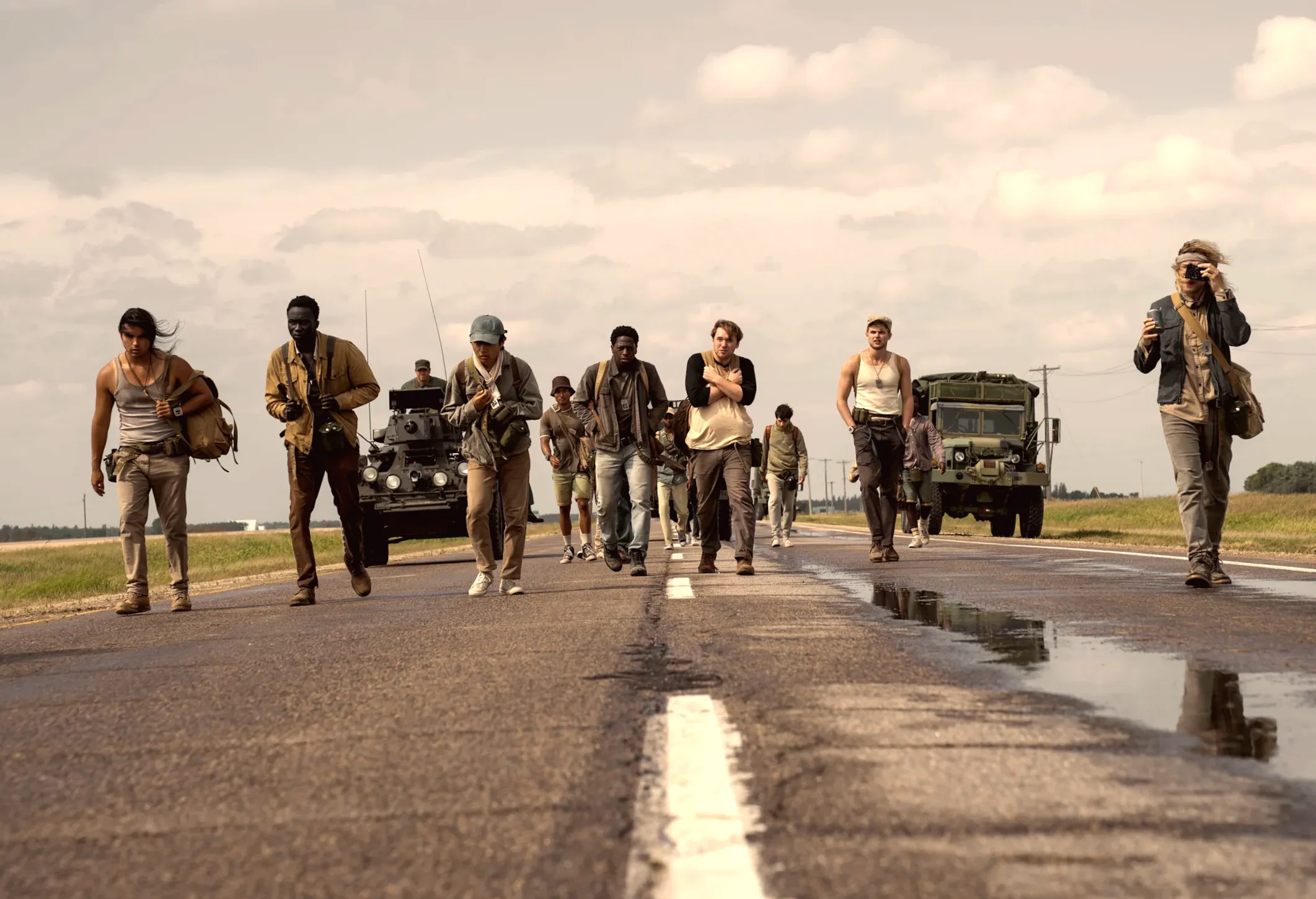
For years, "The Long Walk" was considered the Stephen King novel most in need of a film adaptation, yet it had never been made. The novel, originally published under King's pseudonym Richard Bachman, was ahead of its time, foreshadowing the surge of young adult dystopian stories in the 2010s. Its compact narrative made it a prime candidate for a short, intense 120-minute film. Writer-director JT Mollner, coming off the success of his indie film "Strange Darling," was searching for a project that would remain grounded in the script, leaving the complexities of filmmaking to others. Producer Roy Lee brought Mollner on board for "The Long Walk" and paired him with Francis Lawrence, the director behind many of the popular young adult dystopian films of the 2010s.
At this year's Film Independent Spirit Awards, "The Long Walk" was awarded the prestigious Robert Altman Award for Best Ensemble, acknowledging the outstanding collective performance in the film.
In an interview with Gold Derby, Mollner revealed insights into his creative journey with Lawrence and the delicate process of adapting one of Stephen King's most cherished works.
Beginning the Adaptation Process with Francis Lawrence
Gold Derby: How did your discussions with Francis Lawrence about adapting the King novel begin?
Mollner: From the outset, I was committed to staying true to the book's core elements. I really connected with Francis because he shared my desire to be as faithful as possible to the source material. He emphasized that the film would be rated R, with no restrictions on the story. After that meeting, I was confident that the movie Francis envisioned was exactly the one I wanted to write.
Adapting the Story for Film: The Challenges
Gold Derby: What were the key changes you needed to make to adapt the novel into a film?
Mollner: One of the main issues was the books lengthit was too long for a typical movie. Additionally, the book features too many characters to include everything. We realized that watching these kids struggle over several episodes would be too much for a movie format, which is why a limited series would have been a better fit, but that wasnt the direction we wanted to take. So, the challenge was to maintain the essence of the story while making it suitable for a movie under two hours.
We started by halving the number of walkers, which allowed us to trim down the main group of characters. I was careful not to eliminate any characters completely. If we had to cut someone, I merged aspects of their character with others, so in a way, several characters were composites of two or more people.
Focusing on Central Relationships
Gold Derby: What was the central narrative focus for the film?
Mollner: Once we had streamlined the characters, the focus became clear: Ray and McVries, their relationship, and how that would drive the story. It was crucial to hone in on that core dynamic to make the film emotionally engaging.
The Evolution of Ray's Wish
Gold Derby: How did the idea for Rays wish come about?
Mollner: Initially, we pitched to Lionsgate that we would stay as true as possible to the book, including keeping the same ending. But as I started working on the script, I realized that some narrative elements that worked in the book wouldn't translate well to a movie of this length. We had to figure out how to raise the stakes and make the film emotionally resonant for the audience.
Thats when the idea for the ending evolved. While it differs from the book, it still keeps the core emotional and thematic resonance of the original story. We wanted to ensure that the ending would leave the audience with a feeling similar to the books conclusionperhaps even amplifying the sorrow and inner conflict that the novel evokes.
Reworking the Ending
Gold Derby: The ending of the film is notably different from the novel. How was this change developed?
Mollner: We didnt want to over-explain the ending, as the key to its ambiguity is leaving things open to interpretation. Francis and I both loved the books original ending, but we also felt that a narrative change was necessary to provide a fresh twist. We agreed that, even though we were altering the plot, the central theme of the book would remain intact in spirit. Ultimately, we wanted the audience to leave the theater with the same emotional impact, but perhaps with a heightened sense of sorrow and ambiguity.
Author: Jackson Miller
Share

'Golden Globe Nominations Expected to Be Dominated by "One Battle After Another" and "Adolescence": Predictions for Film, TV, and Podcasts'
22 minutes ago 3 min read ENTERTAINMENT

Joel Edgerton Criticizes James Cameron for Arguing Over Films Eligible for Oscars
1 days ago 3 min read ENTERTAINMENT