

Extremophile ‘Fire Amoeba’ Expands the Limits of Complex Life
- HOME
- ENTERTAINMENT
- Extremophile ‘Fire Amoeba’ Expands the Limits of Complex Life
- Last update: 1 days ago
- 2 min read
- 273 Views
- ENTERTAINMENT
A newly identified amoeba species has set a remarkable record in the natural world. This microscopic organism is capable of reproducing at 63 degrees Celsius (145 degrees Fahrenheit), surpassing the previously known thermal tolerance of any complex life form.
The research, shared in a preprint on bioRxiv and not yet peer-reviewed, suggests that lifes resilience may extend further than previously believed. Microbial ecologist and astrobiologist Luke McKay notes that these findings challenge our understanding of life's boundaries on Earth and hint at possibilities for life in extreme environments beyond our planet.
Previous studies of extremophilesorganisms thriving in extreme heat, acidity, or other harsh conditionshave primarily focused on simpler life forms such as bacteria and archaea, which lack a nucleus or membrane-bound organelles. Among these, the archaean Methanopyrus kandleri holds the record for high-temperature survival at 122 degrees Celsius (252 degrees Fahrenheit), while the thermophilic bacterium Geothermobacterium ferrireducens can endure up to 100 degrees Celsius (212 degrees Fahrenheit).
Historically, it was believed that eukaryotesorganisms with nuclei, including amoebas and animalscould not withstand such high temperatures due to the fragility of their proteins. The assumed upper limit for eukaryotes was 62 degrees Celsius, with prior observations only confirming survival up to 60 degrees Celsius.
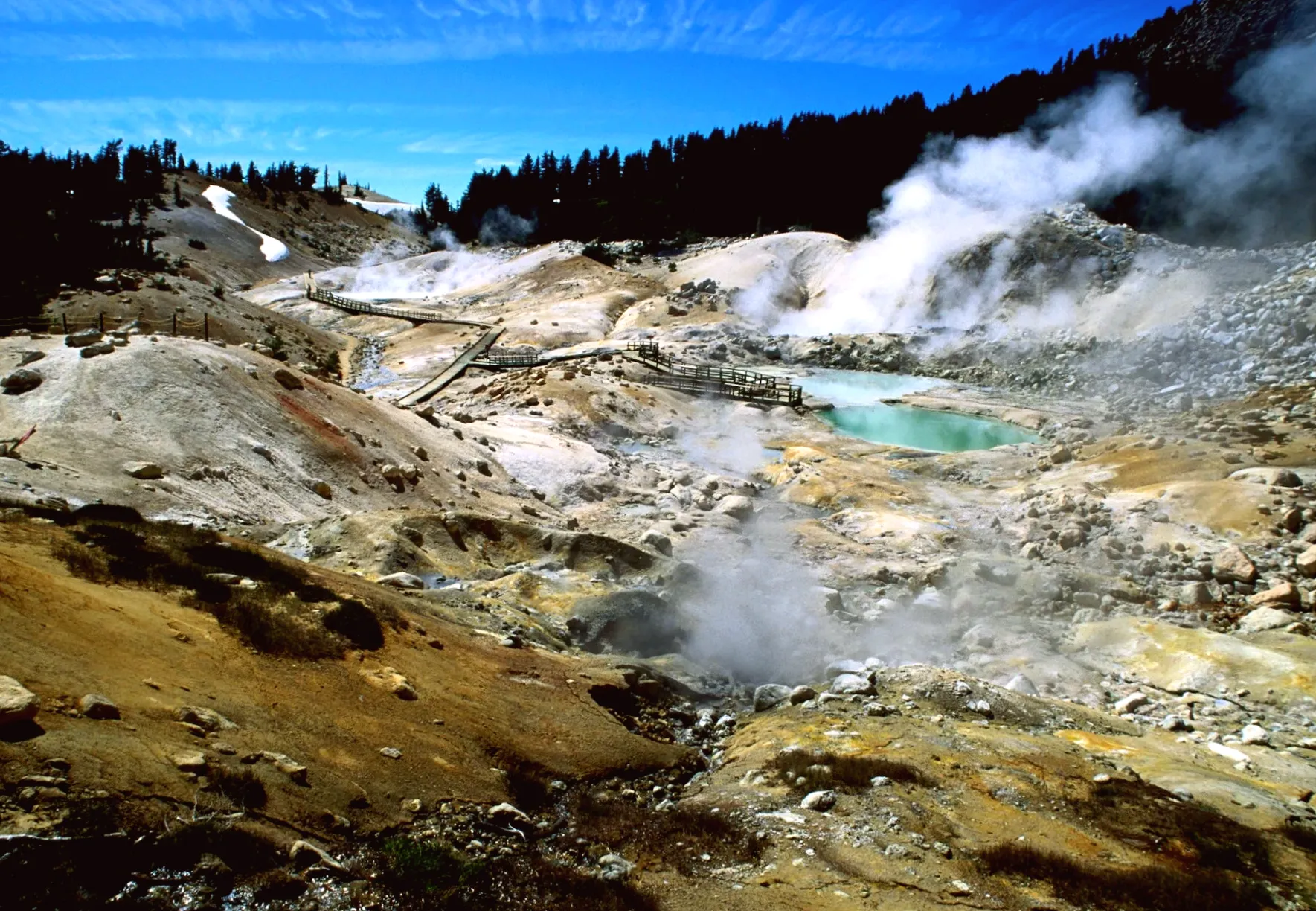
To investigate heat-tolerant eukaryotes, microbiologist Angela Oliverio and graduate student Beryl Rappaport of Syracuse University collected samples from geothermal streams in Lassen Volcanic National Park, northern California. Culturing these samples in the lab, they discovered an entirely new amoeba species in flasks maintained at high temperatures.
This species, named Incendiamoeba cascadensis (fire amoeba from the Cascades), demonstrated extraordinary resilience: it could reproduce at 63 degrees Celsius, remain active at 64 degrees, and survive within a protective coating up to 70 degrees Celsius, resuming activity once cooled.
Genomic and proteomic analysis revealed that its proteins have higher melting points compared with its closest amoeba relatives. According to McKay, even a small increase from 60 to 63 degrees Celsius represents a significant shift in our understanding of eukaryotic survival limits.
Beyond biology, this discovery may have practical applications, such as developing heat-resistant proteins and enzymes for industry, including everyday products like laundry detergent. Oliverio emphasizes the broader significance: It raises fundamental questions about the constraints on life, and there could be even more extreme organisms yet to be discovered.
Author: Aiden Foster
Share
Extremophile ‘Fire Amoeba’ Expands the Limits of Complex Life
1 days ago 2 min read ENTERTAINMENT

Complex Life Could Be One Billion Years Older Than Previously Believed
1 days ago 3 min read BUSINESS
Recently Found 'Heat-Resistant Amoeba' Can Thrive in Extreme Heat
3 days ago 2 min read ENTERTAINMENT

Small Creature Living in Volcano Sets New Heat Record
4 days ago 2 min read SCIENCE
Record-breaking Heat-resistant 'Fire Amoeba'
5 days ago 2 min read SCIENCE