

Top 10: The Top Vertical Take-off Military Aircraft
- HOME
- ENTERTAINMENT
- Top 10: The Top Vertical Take-off Military Aircraft
- Last update: 49 minutes ago
- 4 min read
- 179 Views
- ENTERTAINMENT
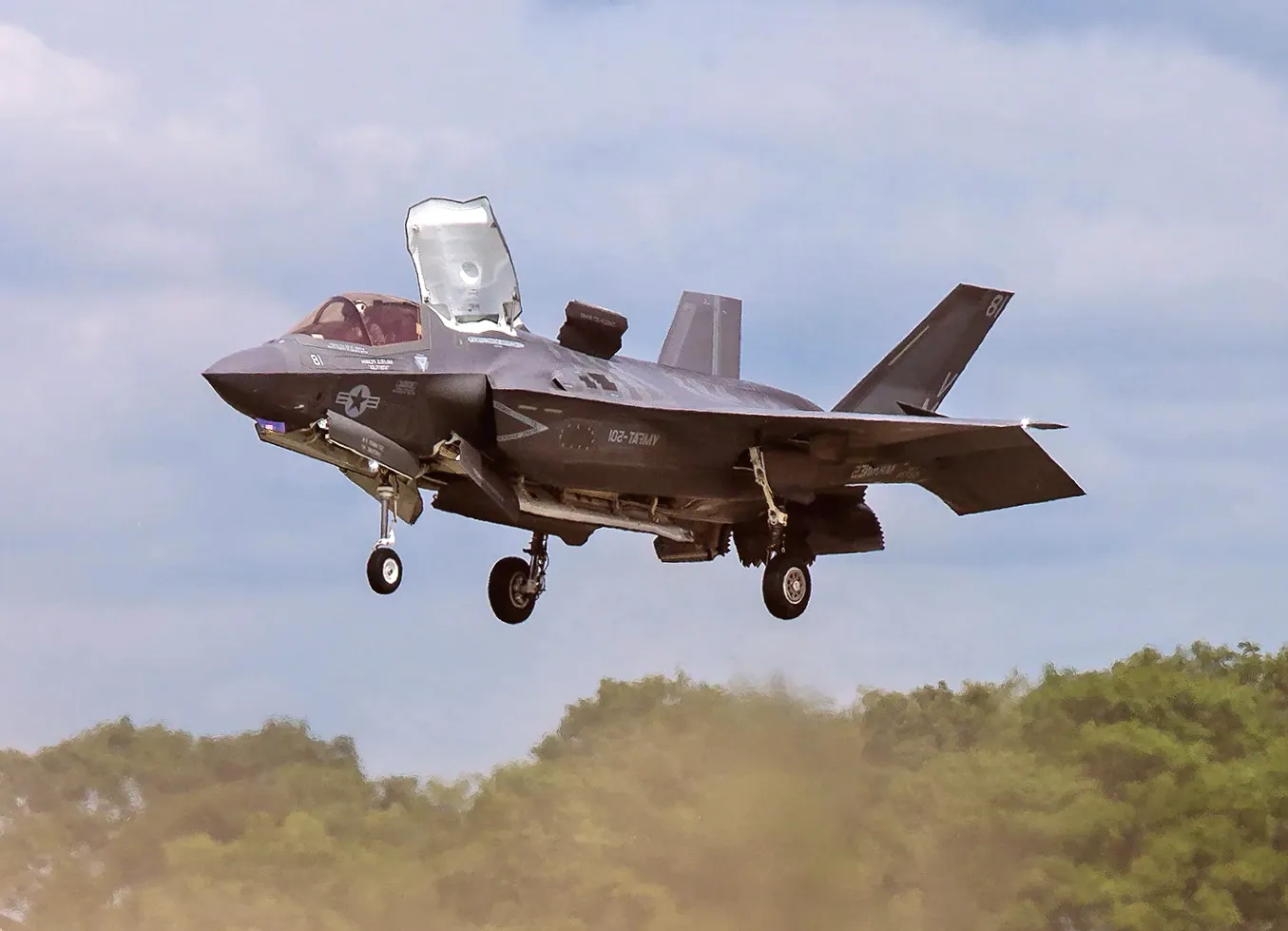
Airstrips often limit the strategic potential of military jets, making them vulnerable and restricting operational flexibility. At sea, aircraft carriers pose extreme challenges due to their narrow decks and constant motion. This has driven engineers to create vertical take-off and landing (VTOL) aircraft that operate similarly to helicopters. However, designing such machines is extraordinarily difficult, which explains why only a few of these ambitious projects reached active service.
10: VFW VAK 191B
The VFW VAK 191B was Germanys entry into NATOs competition for a supersonic VTOL strike aircraft. Powered by a Rolls-Royce/MAN Turbo RB.193 engine with two lift jets, it featured an internal weapons bay. After NATO cancelled the requirement, the VAK-191 continued in experimental programs but was eventually scrapped in 1972.
The VAK-191B stood out for its straightforward propulsion setup, combining thrust-vectoring and fixed lift engines. While its slender design offered aerodynamic efficiency, its low thrust-to-weight ratio and small wings made maneuvering and conventional landings problematic. It flew successfully but needed significant development to become combat-ready.
9: Ryan X-13 Vertijet
Known as the Pentagon Easychair, the X-13 was a tail-sitter VTOL aircraft powered by a Rolls-Royce Avon turbojet. Despite a successful demonstration crossing the Potomac River to land at the Pentagon, the military found the capability unnecessary, and the project was not pursued further.
8: Lockheed XV-4 Hummingbird
Designed for target spotting by the US Army, the XV-4 Hummingbird struggled with low thrust from its vectored engines. It was the first practical use of an ejector-augmentor system to increase lift, but performance remained insufficient. Subsequent versions added lift jets, yet the propulsion system consumed too much internal space, limiting operational payload. Both prototypes ultimately crashed, including one fatality.
7: Yakovlev Yak-38 Forger
The Soviet Yak-38, comparable to the British Sea Harrier, was an interim VTOL fighter that served from 1976 to 1991, including in the SovietAfghan War. It featured two lift engines and a vectored-thrust main engine, with an automatic ejection seat for emergencies. Despite limited range and payload, it was one of only three VTOL jets to enter service, laying groundwork for the more advanced Yak-41.
6: Ryan XV-5A Vertifan
The Ryan XV-5A used innovative lift fans embedded in the wings, demonstrating advantages of moving large volumes of air at slower speeds. However, complex fan doors and nose fans made control difficult, especially during transition. Poor low-speed handling and multiple fatal crashes highlighted the designs operational challenges.
5: EWR VJ 101
Developed by Heinkel, Messerschmitt, and Blkow, the VJ 101 was a six-engine VTOL aircraft with advanced throttle-integrated controls and differential thrust for maneuvering. It reached Mach 1.14, but afterburners caused ground erosion and engine intake problems. Despite technical achievements, the design was ultimately superseded by more conventional aircraft like the F-4 and Typhoon.
4: Dornier Do 31
The Do 31 was Germanys ambitious VTOL transport designed to supply forward-deployed jets. Although technically successful, its complexity and cost made short take-off cargo planes, like the Fiat G.222 (later C-27 Spartan), a more practical solution. The Do 31 exemplified innovation outpacing operational necessity.
3: Yakovlev Yak-141 Series
The Yak-141 featured a swiveling rear thrust-vector nozzle and achieved Mach 1.4. While impressive, the use of afterburners for vertical flight caused extreme noise, ground erosion, and intake hazards. Development ended in 1991 due to economic issues, but the aircraft showcased advanced VTOL capabilities and was a precursor to the unbuilt Yak-43 and the conceptual stealth Yak-201.
2: Lockheed Martin F-35B Lightning II
The F-35B is a supersonic STOVL fighter using the Rolls-Royce Integrated Lift Fan Propulsion System, combining a lift fan, a swiveling jet nozzle, and roll posts. In service with the US Marine Corps, UK, Italy, Japan, Singapore, and South Korea, it offers advanced sensors, pilot interface, and stealth. Its STOVL system reduces internal fuel capacity, limiting range compared to conventional F-35 variants.
1: Hawker Harrier
The Harrier, the first operational jump jet, owes its success to a simple thrust-vectoring engine design without additional lift engines or specialized landing pads. Introduced in 1969, it served with the RAF and Indian Navy and was later succeeded by the Harrier II in the 1980s, which continues to operate in the UK, Italy, and Spain. Its pioneering design remains the benchmark for VTOL strike aircraft.
Author: Sophia Brooks
Share
The Most Frightening Military Vehicles Ever Constructed
1 days ago 4 min read WORLD
Top 10: Most significant airplanes during the Vietnam War
3 days ago 4 min read TRAVEL
Top 10: Key aircraft during the Vietnam War
3 days ago 5 min read TRAVEL
Top 10: The Vietnam War's Most Significant Aircraft
3 days ago 4 min read TRAVEL
Top 10: The most significant planes during the Vietnam War
3 days ago 5 min read TRAVEL
Top 10: Key aircraft during the Vietnam War
3 days ago 4 min read TRAVEL
Top 10: Key airplanes during the Vietnam War
3 days ago 4 min read TRAVEL
Top 10: Key aircraft during the Vietnam War
4 days ago 4 min read TRAVEL
Top 10: Insane World War 2 Altered Warplanes
6 days ago 4 min read WORLD
5 Fighter Jet Engines That Are Among the Most Powerful Ever Created
6 days ago 3 min read SCIENCE