

Cell and gene therapy in respiratory diseases: current landscape and future prospects
- Last update: 6 days ago
- 3 min read
- 13 Views
- HEALTH
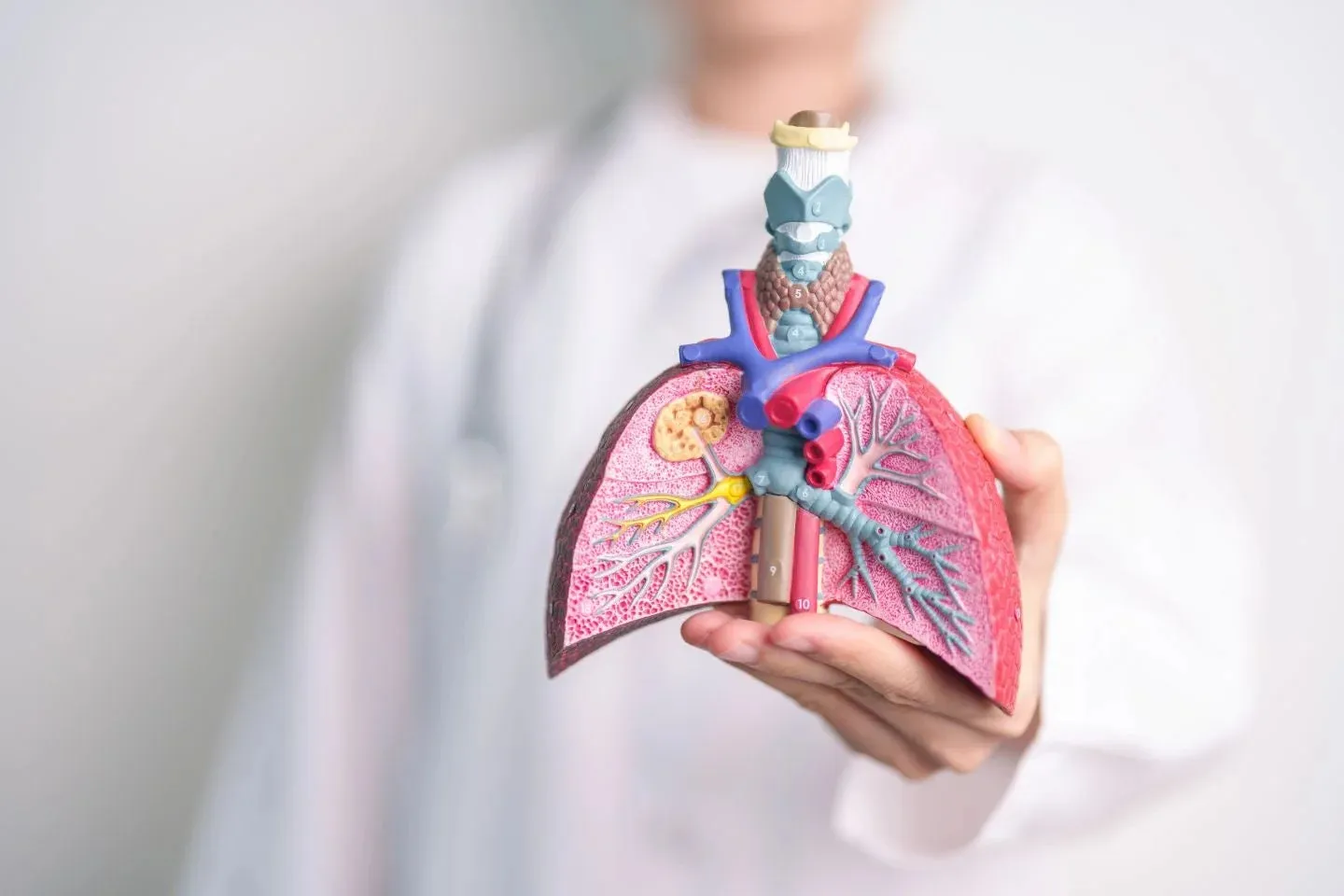
The cell and gene therapy (CGT) sector has faced a notable decline in venture capital investment over the past few years, dropping from $35.9 billion in 2021 to $23.3 billion in 2024 (GlobalData Webinar - Cell & Gene Therapies: Current & Future Landscape, 2025). This downturn is largely due to two key issues: the low success rates in clinical trials and the production challenges that arise once therapies gain approval. As a result, CGTs remain extremely costly on the market, ranging from $462,000 for the single-dose CAR-T therapy Tecartus to $4.25 million for Lenmeldy, a one-time treatment for metachromatic leukodystrophy, according to GlobalDatas Drug Pricing (POLI) database.
The shift in CGT development is moving away from the US and EU toward the Asia-Pacific region, where the number of clinical trials (982) surpassed North America (904) in 2025 (GenScript Biotech Forum, 2025). In the respiratory therapy domain, progress has been minimal, with no approved CGTs currently and only one therapy in Phase III trials. TasDes-02 from Taskin Bioregeneration Co is the sole asset under investigation for acute respiratory distress syndrome.
Slow advancement in respiratory CGTs can be attributed to multiple factors, such as limited understanding of disease mechanisms like idiopathic pulmonary fibrosis and the variability among patients, which complicates the creation of broadly effective therapies for conditions like chronic obstructive pulmonary disease (COPD). Among emerging candidates, 4D-710 from 4D Molecular Therapeutics Inc (4DMT) shows promise for cystic fibrosis (CF). This aerosol gene therapy employs a tailored adeno-associated virus (AAV) vector to deliver a functional copy of the CFTR gene to lung cells, restoring proper CFTR protein production and improving mucus clearance. The vector is engineered to penetrate thick lung mucus, delivering an artificial gene variant called CFTRR. In October 2025, 4DMT secured up to $11 million from the Cystic Fibrosis Foundation to support Phase II progress and prepare for Phase III, scheduled for H1 2026 (4DMT, 2025).
Despite recent challenges, optimism remains for CGTs, driven by advances in automation and artificial intelligence. Companies like Made Scientific and Streamline Bio announced a collaboration in October 2025 to accelerate AI-enabled robotic manufacturing, with technology adaptable to different equipment and methods (Made Scientific, 2025). These innovations aim to streamline production, maintain product quality, and reduce therapy costs.
Government support also plays a role. The US administration has emphasized that CGTs align with the Make America Healthy Again initiative, focusing on addressing disease causes. Consequently, the FDA has introduced the plausible mechanism pathway (PMP), inspired by the CRISPR-based treatment of baby KJ with CPS1 deficiency, offering a potential new regulatory route for CGTs, though specifics are still pending.
China has implemented policies to promote CGT research, including investigator-initiated trials, enabling rapid acquisition of safety and efficacy data to evaluate candidate therapies (Gao et al., 2025). Coupled with a high patient population and extensive clinical resources, this approach positions China as a central hub for CGT development.
Author: Sophia Brooks
Share

Researchers Discover That This Basic Diet Improves Digestion and Enhances Gut Health
1 hours ago 3 min read HEALTH

Concerns arise over US childhood vaccine schedule following hepatitis B guideline revision
1 hours ago 3 min read HEALTH

The benefits of smelling your own farts according to science
1 hours ago 2 min read HEALTH

FDA approves Francis Medical's water vapor ablation treatment for prostate cancer
2 hours ago 2 min read HEALTH

Study finds bird flu gene enhances its ability to survive human fever defences
4 hours ago 4 min read HEALTH

Many lifters are making painful mistakes with the seemingly simple front rack position
4 hours ago 2 min read HEALTH

Singing along improves lung health and supports a charitable cause
7 hours ago 2 min read HEALTH

CDC Changes Hepatitis B Vaccine Recommendation for Children Despite Opposition from Academy of Pediatrics
7 hours ago 2 min read HEALTH

CDC Panel Votes Against Recommending Hepatitis B Vaccine for Newborns, Experts Warn of Impact on Children’s Health
12 hours ago 4 min read HEALTH

Experiencing stress in life is not a disease - GPs discuss mental health over-diagnosis
13 hours ago 4 min read HEALTH