

Bonuses fail to address Hawaiʻi's Special Education Teacher Shortage
- Last update: 3 hours ago
- 2 min read
- 975 Views
- POLITICS
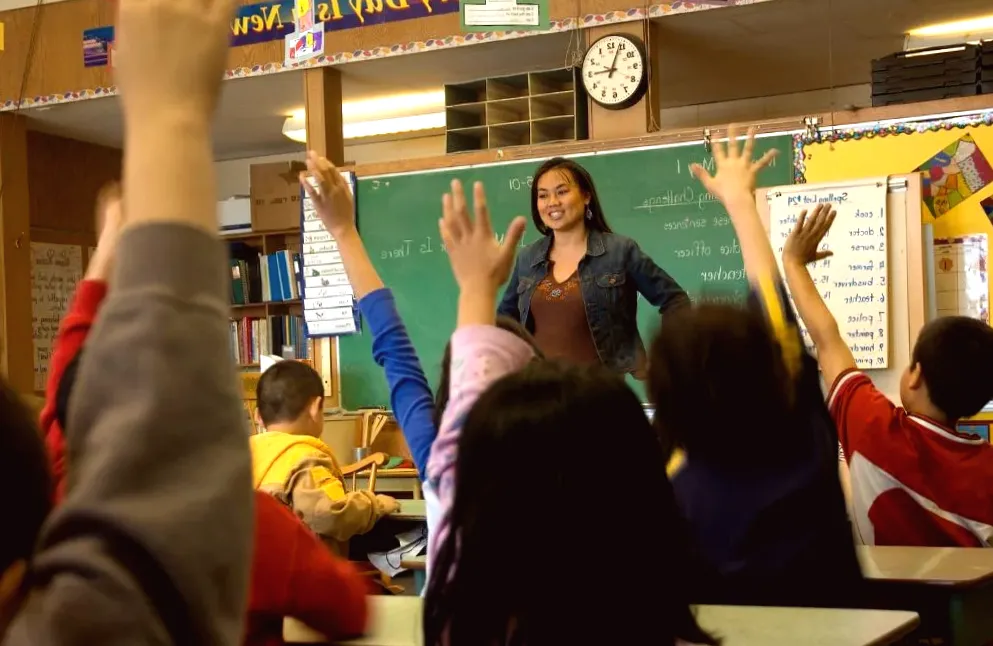
Since 2020, Hawaii has provided the nations largest bonuses to special education teachers in an effort to tackle staffing shortages. Despite this, recent data from the Hawaii Department of Education and the National Council on Teacher Quality indicate that the strategy has achieved limited success in filling these positions.
The Hawaii Department of Education introduced pay differentials in 2020 for teachers in special education and other difficult-to-staff roles, a tactic increasingly adopted nationwide. By 2025, 85 school districts were offering financial incentives for special education teachers, an increase from 63 districts in 2022, according to the NCTQ.
Hawaiis special education teachers receive $10,000 annual salary increases, the highest in the country. For comparison, Atlanta Public Schools in Georgia provides $3,000, while Jackson Public Schools in Mississippi offers $5,000 over three years.
In some regions of Hawaii, special education teachers also receive additional hard-to-staff bonuses, further boosting their earnings. Educators in geographically isolated schools or those facing chronic staffing shortages can receive $3,000 to $8,000 extra, meaning top bonuses can reach $13,000 to $18,000 annually.
However, a recent DOE-commissioned study shows that these bonuses have not resolved the teacher shortage. While the overall number of licensed special education teachers has risen since the introduction of bonuses, many positions remain unfilled.
Vacancy rates initially dropped in 2020, the first year of the bonuses, but increased during the pandemic and have since only partially recovered, remaining near or above pre-pandemic levels for most schools. The only notable progress occurred in the Nnkuli-Waianae and Hna-Lnai-Molokai complexes, where special education teachers received the full $18,000 bonus. In these schools, vacancies decreased from 14% to 5% over seven years, and the share of unlicensed special education teachers fell from 14% to 6% since 2019.
Statewide, while special education vacancies now represent a smaller portion of total teacher shortages, they still account for 20% of all unfilled positions in 2024, down from 30% before the pandemic.
Author: Chloe Ramirez
Share
Democrat Mandela Barnes announces campaign for Wisconsin governor
1 minutes ago 3 min read POLITICS
Hegseth suggests significant increase in defense spending, unveils new information on Trump's efforts against narco-terrorism.
17 minutes ago 3 min read POLITICS

5 possible candidates to replace OC Collin Klein at Texas A&M
18 minutes ago 2 min read POLITICS
Live updates: Trump convenes Cabinet meeting in response to criticism regarding boat collisions
19 minutes ago 2 min read POLITICS
Hegseth stands by decision in second Sept. 2 boat strike
30 minutes ago 3 min read POLITICS
ICE Agents Use Pepper Spray on Newly Sworn-In Congresswoman
32 minutes ago 3 min read POLITICS
Bongino Admits to Shocking Conspiracies
37 minutes ago 2 min read POLITICS
Judge temporarily halts Justice Department from using evidence in dismissed Comey case
38 minutes ago 3 min read POLITICS
Pentagon Pete's Allegation: Drug Boat Destined for U.S. Explodes
38 minutes ago 2 min read POLITICS
EXCLUSIVE: Coast Guard helicopter sniper disables drug vessel in interdiction operation - Watch now
57 minutes ago 1 min read POLITICS