

Judge questions justification for Trump's authority over California's national guard
- Last update: 57 minutes ago
- 3 min read
- 706 Views
- POLITICS
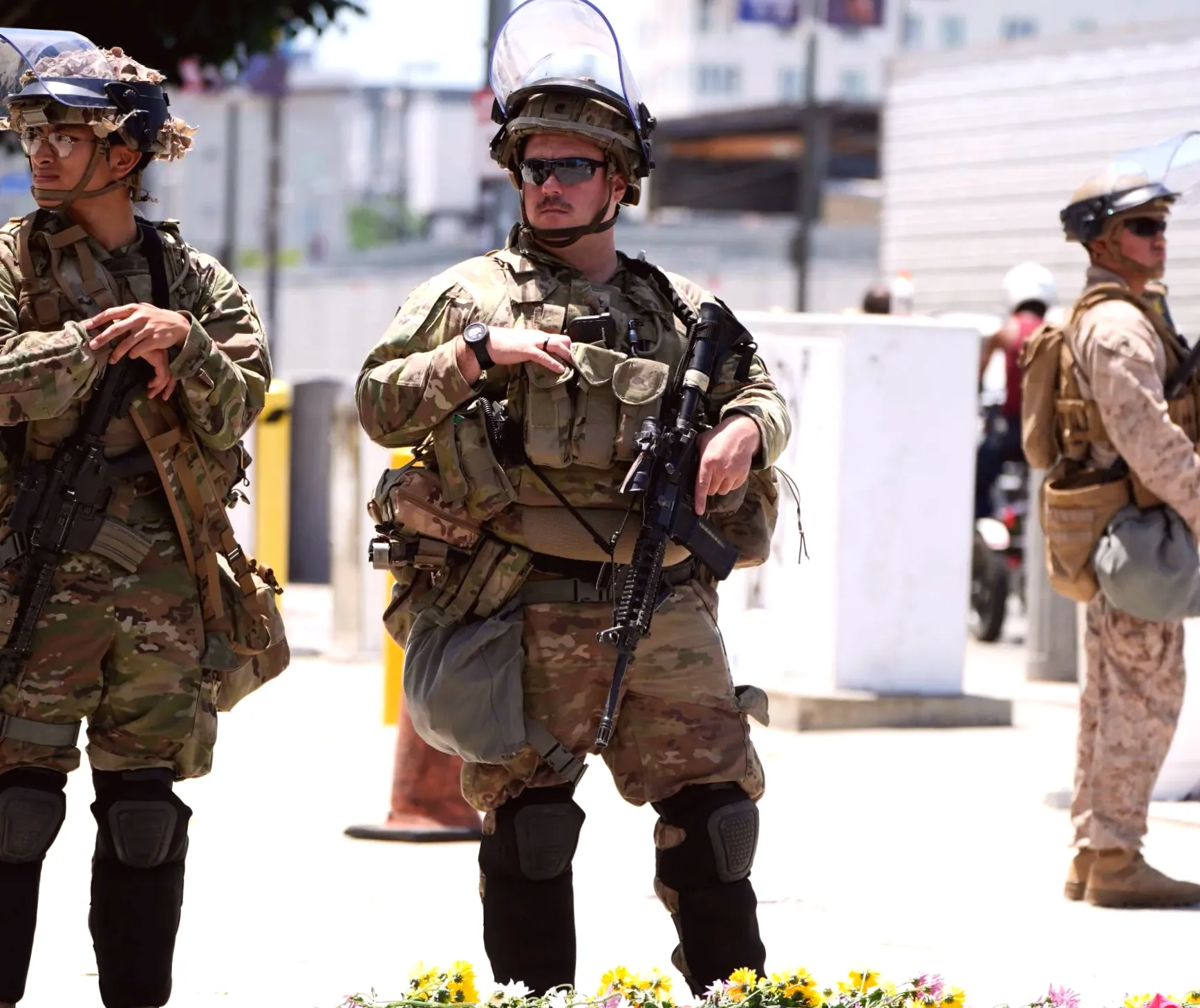
The judge overseeing Californias lawsuit against the Trump administration challenged the federal governments justification for keeping authority over the National Guard forces deployed to Los Angeles earlier this year.
In June, the administration placed roughly 4,000 California National Guard members under federal command in response to protests against immigration raids, despite opposition from Governor Gavin Newsom. California swiftly filed suit, calling the action unlawful, and the case has been moving through the courts ever since.
During a hearing in San Francisco, Judge Charles Breyer expressed doubts about the federal governments position. He noted that conditions in Los Angeles had shifted significantly since the initial deployment and questioned whether Washington could continue directing the states guard without limit.
No crisis lasts forever, Breyer said, adding that emergencies naturally rise and fade. He pressed government attorneys to provide evidence showing that state officials were either unable or unwilling to safeguard federal personnel and property. He also pointed out that the administration already had access to large numbers of active-duty troops stationed in California.
California asked the court to issue a preliminary injunction that would restore state control over the remaining guard forces in Los Angeles. Although Breyer previously determined the deployment was illegal and ordered authority returned to the state, an appeals court halted that ruling, and he did not make an immediate decision on the new request.
Justice Department attorney Eric Hamilton argued that federal law grants the president broad authority to retain control of state guard troops for as long as he finds necessary. He said the remaining guard members were helping immigration agents carry out their work and were protecting federal facilities, citing an incident in which incendiary devices were thrown into a federal building.
Hamilton contended that the court lacked the power to intervene in how the president manages an ongoing guard mission, and even if it could, it must consider the violence that occurred in Los Angeles earlier in the year.
The federal activation of Californias guard the first in decades without a governors request represented a major escalation in the administrations immigration enforcement efforts. Troops were posted near a federal detention center where demonstrations were taking place and later deployed to assist immigration officers during arrests.
California maintained that the president was effectively using guard members as his own domestic police force, violating limits on military involvement in civilian affairs. The administration countered that the unrest hindered the presidents ability to enforce federal law through ordinary means and posed the threat of rebellion.
In a ruling earlier this year, Breyer concluded that the deployment breached federal law. Similar judicial decisions have blocked the administration from sending guard troops to other cities, including Portland and Chicago.
Author: Logan Reeves
Share

Federal Judge Confirms DHS Violating Its Own Rules in D.C. Immigration Arrests
8 hours ago 3 min read US
Federal judge questions Trump's control over California National Guard troops
8 hours ago 3 min read POLITICS
Justice Department urges Supreme Court to prevent immigration judges from filing free speech lawsuit
11 hours ago 3 min read POLITICS
Appeals court grants permission for National Guard to remain in D.C. temporarily
18 hours ago 2 min read POLITICS
Appeals court approves ongoing deployment of Trump National Guard in DC
19 hours ago 3 min read POLITICS
Appeals court allows Trump to maintain National Guard troops in DC for the time being
21 hours ago 2 min read POLITICS
Court permits ongoing deployment of National Guard in US capital
21 hours ago 2 min read POLITICS
Court decision allows National Guard to stay in Washington D.C. temporarily
21 hours ago 2 min read POLITICS
Court allows DC National Guard deployment to continue temporarily
22 hours ago 3 min read POLITICS
Appeals court pauses decision to end National Guard deployment in DC
22 hours ago 2 min read POLITICS