

Review of 'Spartacus: House of Ashur' | A Dark, Political and Addictive New Chapter
- Last update: 3 hours ago
- 3 min read
- 999 Views
- POLITICS
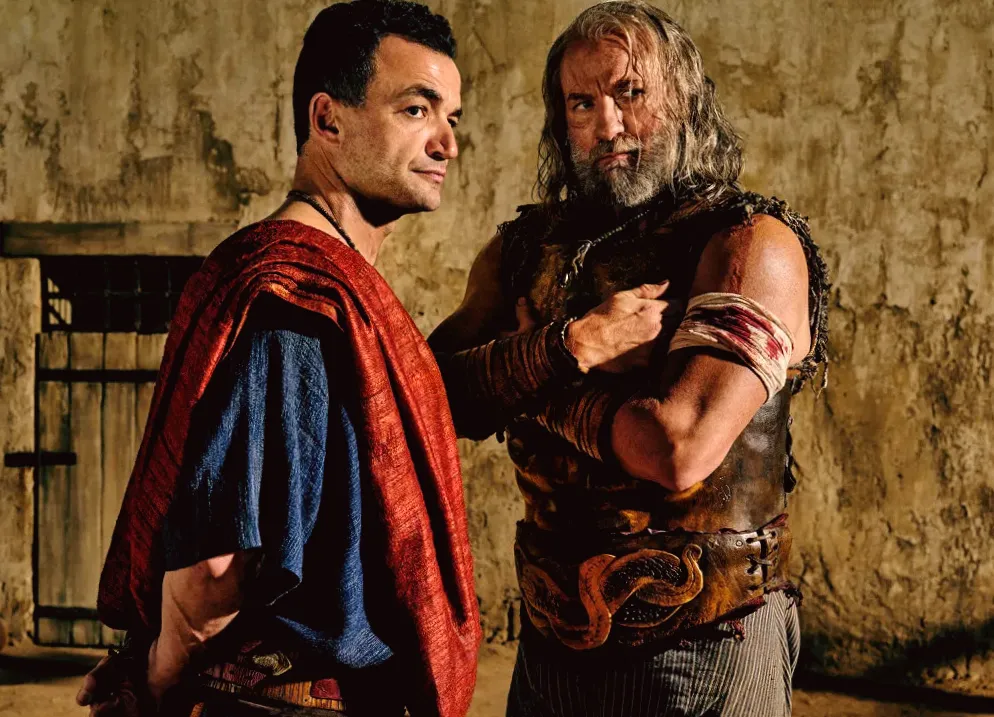
Before Game of Thrones became a global phenomenon, another series had already captured the imagination of audiences. Equally intense, violent, and thrilling, Spartacus offered a brutal glimpse into the world of the historical rebel who challenged the Roman Republic. Running from 2010 to 2013, the series became a cultural touchstone and continues to be referenced in pop culture discussions today.
Fans have long hoped for a return to this universe, and now, 12 years later, Spartacus: House of Ashur delivers, offering a fresh angle on one of the franchise's most notorious figures. What if Ashur had not betrayed his comrades and assassinated Spartacus? The answer explored in this new series suggests the Romans would have rewarded his treachery. House of Ashur reimagines the story, presenting Ashur as a celebrated figure who now runs a gladiator schoolironically, the very place where he once suffered. This narrative twist adds depth and sets the stage for a complex, riveting character journey.
A Cunning Anti-Hero at the Center
Unlike the original, which focused on gladiatorial combat, House of Ashur shifts toward the treacherous world of Roman politics. Ashur is no longer just a Syrian opportunist; he navigates the corridors of power alongside senators, wealthy elites, and rival schemers, where betrayal is routine. This expansion of the series universe allows for richer storytelling, with stakes that are high from the very start, as alliances and treacheries carry immediate consequences.
Showrunner Steven S. DeKnight returns, ensuring that the series retains the signature tone and style of the original: gritty visuals, dramatic lighting, stylized slow-motion action, and emotionally charged storytelling. DeKnights understanding of the original series heartrebellion, ambition, and survivalpermeates every frame of this new installment, elevating it beyond a simple continuation.
Standout Performances and Fresh Faces
Performances anchor the series, with Nick Tarabay excelling as Ashur. He transforms a previously villainous character into a fully realized anti-hero, embodying charm, cunning, and ambition. Tenika Davis shines as Achillia, a formidable gladiatrix asserting herself in a male-dominated world, bringing both intensity and contemporary resonance. Claudia Black, India Shaw-Smith, and Graham McTavish also deliver memorable performances, each adding depth and complexity to the evolving story.
Unflinching Style and Graphic Grit
House of Ashur retains the original series signature audacity. Violence is graphic, nudity frequent, and intimate scenes intense, fully embracing the extreme and stylized tone that fans expect. While its explicit content may not be for everyone, it remains faithful to what made Spartacus iconic, offering nothing watered down.
Ultimately, Spartacus: House of Ashur proves to be a worthy continuation. It respects its roots while exploring bold new directions, led by a morally ambiguous yet captivating anti-hero. With compelling new characters, intricate political intrigue, and a visually striking style, the franchise demonstrates it still has powerful stories to tell. A bloody, bold, and addictive series that earns a rating of 8/10.
Author: Logan Reeves
Share

Democrat Mandela Barnes announces campaign for Wisconsin governor
1 minutes ago 3 min read POLITICS

Hegseth suggests significant increase in defense spending, unveils new information on Trump's efforts against narco-terrorism.
17 minutes ago 3 min read POLITICS

5 possible candidates to replace OC Collin Klein at Texas A&M
18 minutes ago 2 min read POLITICS

Live updates: Trump convenes Cabinet meeting in response to criticism regarding boat collisions
19 minutes ago 2 min read POLITICS

Hegseth stands by decision in second Sept. 2 boat strike
30 minutes ago 3 min read POLITICS

ICE Agents Use Pepper Spray on Newly Sworn-In Congresswoman
33 minutes ago 3 min read POLITICS

Bongino Admits to Shocking Conspiracies
37 minutes ago 2 min read POLITICS

Judge temporarily halts Justice Department from using evidence in dismissed Comey case
38 minutes ago 3 min read POLITICS

Pentagon Pete's Allegation: Drug Boat Destined for U.S. Explodes
38 minutes ago 2 min read POLITICS

EXCLUSIVE: Coast Guard helicopter sniper disables drug vessel in interdiction operation - Watch now
57 minutes ago 1 min read POLITICS