

The 'war on drugs' seemed to be over, but Donald Trump reignited it.
- Last update: 52 minutes ago
- 6 min read
- 276 Views
- POLITICS
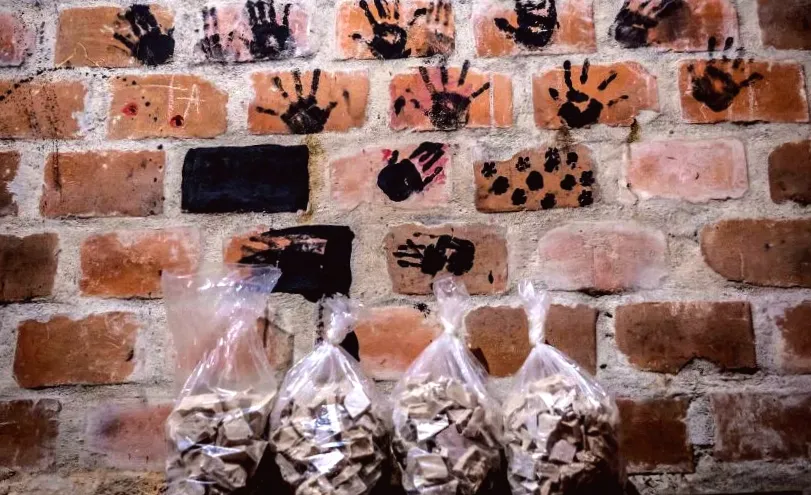
The Trump administration has reignited the so-called war on drugs, targeting what it calls narco-terrorists in Latin America. This marks a new chapter in the decades-long U.S. effort to curb drug trafficking and punish those involved. Initially launched by President Richard Nixon in the 1970s, the war on drugs has been a staple of American policy, aiming to stop the flow of illegal substances into the U.S. and severely penalize traffickers, dealers, and users. However, in recent years, the approach has been largely considered a failure by many academics, activists, and policymakers. Despite this, the issue remains unresolved, with the drug trade continuing unabated.
Under the Trump administration, the rhetoric of the war on drugs has intensified. The president's team now labels drug cartels as narco-terrorists, using this as justification to target governments like Venezuelas, which is viewed as left-wing. Additionally, the U.S. military has been authorized to destroy drug-laden boats on the high seas. This marks a shift toward more aggressive and militarized strategies, going beyond the traditional focus on punishment and interdiction.
A New Chapter in the War on Drugs
David Farber, a history professor and editor of "The War on Drugs: a History," explains the significance of the current developments. Farber argues that while the war on drugs initially served as more of a metaphor, it has since escalated into real military actions under Trump. This new chapter is marked by a sharp increase in lethal operations targeting alleged drug traffickers, something that is unprecedented in scale and severity.
From Nixons Offensive to Trumps Military Actions
Richard Nixons declaration of an "all-out offensive" in 1971 set the tone for Americas drug policies, focusing on halting the importation of illicit substances like cocaine, opioids, and cannabis. However, Nixons approach was complicated by the high demand for drugs within the U.S., which has remained a persistent challenge. Over time, U.S. drug enforcement efforts expanded to target not only international distributors but also drug users and small-time dealers, often resulting in mass incarcerations, particularly among Black and Brown communities.
In the 1980s and 1990s, the focus shifted further to harsh incarceration measures. While rehabilitation and public health initiatives lagged, the war on drugs largely centered on criminalization, punishing drug users and small-time dealers more than addressing the root causes of addiction.
Trumps Aggressive Tactics
The Trump administration has taken the war on drugs in a more militarized direction, especially with its emphasis on international interdiction. Farber points out that this aggressive stance is a new development. In the 1980s, President George H.W. Bush explored similar tactics but never implemented them without the cooperation of other countries. Trump, however, has pursued these operations without such alliances, signaling a shift toward unilateral action.
Trumps military actions against drug traffickers are being carried out with lethal force, including the destruction of drug boats in international waters. This represents a significant departure from previous administrations, which focused primarily on law enforcement rather than military interventions.
The Long History of U.S. Anti-Drug Operations
Efforts to curtail the flow of drugs into the U.S. date back to the early 20th century, but it was after World War II that these efforts became more formalized. The U.S. has long utilized its military, intelligence agencies, and other government bodies in drug interdiction efforts. The use of force, however, has escalated in recent years, with Trumps administration willing to employ lethal methods against suspected drug traffickers in a way that has never been seen before.
Farber notes that while U.S. policy has at times involved compromising with drug lords or turning a blind eye to certain operations, such as during the Cold War with the Nicaraguan Contras or Panamas Manuel Noriega, the current approach is characterized by direct military engagement and a complete disregard for international norms.
Using Drugs as a Political Tool
Throughout history, U.S. drug policies have been intertwined with political objectives. In the 1980s, the U.S. supported the Nicaraguan Contras, despite their involvement in drug trafficking, and later invaded Panama in 1989 to depose Noriega and curb drug operations. Farber argues that this strategy continues today, particularly in the Trump administrations stance on Venezuela, where drug-related concerns are being used as a justification for regime change.
The Decline of the War on DrugsUntil Now
Until recently, it appeared that the war on drugs had been winding down. Under the Obama administration, the focus shifted toward rehabilitation, public health measures, and the decriminalization of substances like cannabis. State-level legalization efforts reflected this shift, signaling a move away from punitive measures. However, as Farber explains, the war on drugs has reemerged with renewed vigor under Trump, focusing once again on supply-side interdiction and military action.
Sentencing Reform and Trumps Approach
Despite his harsh stance on drug trafficking, Trump did sign the First Step Act in 2018, a piece of sentencing reform legislation that aimed to address some of the inequities in the justice system. This bipartisan achievement was a recognition that the previous approach to drug enforcementespecially mass incarcerationwas flawed. However, Farber notes that while Trump supported sentencing reform, his administrations foreign policy, particularly regarding Venezuela, aligns more with older, imperialist tactics of gunboat diplomacy.
The Politics of the War on Drugs
Drug issues have long been used as political leverage, with leaders like Nixon using them to garner support among voters concerned about rising drug use. Farber points out that while Nixon's initial concerns were rooted in public health, the political potential of anti-drug policies soon became apparent, and the war on drugs became a powerful tool for future politicians. Today, Trump continues to use the rhetoric of the war on drugs to appeal to his political base, framing it as an issue of national security and moral righteousness.
The war on drugs may have been deemed a failure by many, but its political utility remains as potent as ever. As long as drug trafficking and addiction continue to be central concerns for American society, the war on drugs, in some form or another, is unlikely to disappear anytime soon.
Author: Connor Blake
Share
Are Americans in favor of Trump's boat strikes? It's complex.
21 hours ago 3 min read POLITICS
Unleashing ‘Pandora’s box’: The consequences of a US attack on Venezuela
23 hours ago 3 min read WORLD
Trump is attempting to legitimize corruption through misuse of his pardon authority
1 days ago 3 min read POLITICS

Rand Paul warns of Trump's boat attacks as a prelude to a potential invasion of Venezuela
1 days ago 1 min read POLITICS
Meeting the US's Allies in Drug Trafficking: A Timeline of Involvement with Narcotics
1 days ago 4 min read POLITICS

Outrage sparked by killing of survivors amidst shaky legality of entire US 'drug boat' war
1 days ago 3 min read POLITICS
What has the US accomplished in 50 years of the 'war on drugs' amidst Trump's threats?
2 days ago 4 min read WORLD
Trump intensifies confrontation with Venezuela
3 days ago 1 min read POLITICS
Trump warns of potential military action against any country producing drugs for US.
3 days ago 2 min read WORLD
Trump plans imminent land strikes on alleged drug traffickers
3 days ago 3 min read POLITICS