

5 Fighter Jet Engines That Are Among the Most Powerful Ever Created
- Last update: 6 days ago
- 3 min read
- 11 Views
- SCIENCE
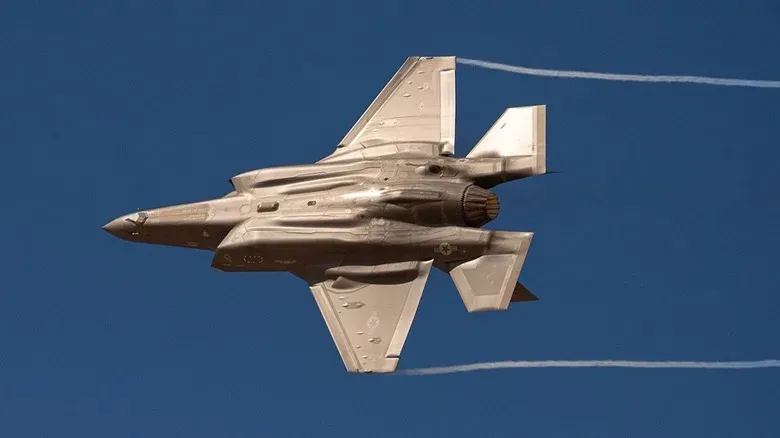
The evolution of fighter jets has progressed at an extraordinary pace. Germany's Messerschmitt Me 262 became the world's first operational jet fighter, taking to the skies during the closing stages of World War II. Shortly after, the F-100 Super Sabre emerged as the first supersonic jet-powered aircraft, with its prototype flying in May 1953. These milestones were achieved thanks to the dedication of pioneering engineers, pilots, and innovators across the aviation industry.
The development of jet engines represented one of the greatest technological challenges. The Me 262 relied on two Junkers Jumo 004 engines, capable of propelling it to speeds of 540 mph. Each Jumo 004 produced 1,980 pounds of thrustremarkable for its time, yet far surpassed by modern fighter engines. Today's jet engines demonstrate astonishing power, with militaries worldwide vying for the title of the most capable aircraft.
F135 Engine: Heart of the F-35 Lightning II
Pratt & Whitney's F135 engine powers the F-35A Lightning II and is described as the most powerful and reliable fighter engine ever built. It generates over 40,000 pounds of thrust, more than 20 times that of the Me 262s engine. The F-35 achieves speeds around 1,200 mph (Mach 1.6), operates at altitudes above 50,000 feet, and has a range exceeding 1,350 miles with full internal fuel. The engine also reduces thermal signature and monitors its own performance, enhancing both survivability and efficiency.
The F-35, introduced in the 2001 Joint Strike Fighter program, serves as a fifth-generation replacement for older models like the F-16 Fighting Falcon. Its advanced features include the Electro-Optical Targeting System and a customizable weapons suite, with the F135 engine as a core element of its versatility and effectiveness.
F119 Engine: Powering the F-22 Raptor
The F-22 Raptor relies on Pratt & Whitney's F119-PW-100 engines, which produce 35,000 pounds of thrust each, totaling 70,000 pounds. These engines allow supercruise capabilities and include thrust vectoring, enabling pilots to redirect thrust up to 20 degrees for exceptional maneuverability. This combination of power and control gives the Raptor remarkable agility during takeoff, landing, and combat maneuvers.
AL-41F1S Engine: Driving the Su-35
Russia's Su-35 uses the AL-41F1S engine, capable of 32,000 pounds of thrust with afterburner. Classified as a Generation 4++ fighter, the Su-35 can supercruise above Mach 2 and includes thrust-vectoring technology for enhanced control. The engines power allows it to carry heavy armaments, such as the Gryazev-Shipunov GSh-301 cannon and R-37M missiles, while maintaining superior flight performance. Its capabilities make the Su-35 a formidable modern fighter.
EJ200 Engine: Eurofighter Typhoon
The EJ200, developed by the EUROJET consortium, powers the Eurofighter Typhoon. It produces 13,500 pounds of thrust without afterburner and 20,000 pounds with it. Lightweight and low-maintenance, it supports up to 1,200 flight hours between major services. With two engines, the Typhoon achieves impressive performance, carries advanced weapons like Brimstone 2 and Meteor missiles, and utilizes sophisticated radar systems such as the Captor ECR 90. Rolls-Royce plans continued deliveries to European air forces, ensuring the EJ200 remains a critical component of modern air combat.
XF9-1 Engine: Japans Next-Generation Powerplant
Japan's IHI XF9-1 engine is a cutting-edge low-bypass afterburning turbofan designed for potential integration into Indias Advanced Medium Combat Aircraft program. It currently achieves 33,000 pounds of thrust with afterburner and is expected to reach over 44,000 pounds in future iterations. Though not yet operational, the XF9-1 represents a significant advancement for next-generation fighter development worldwide.
From the pioneering Me 262 to the F-35, F-22, Su-35, Eurofighter Typhoon, and Japans XF9-1, fighter jet engines continue to evolve rapidly. Each innovation pushes the limits of speed, power, and maneuverability, shaping the future of aerial combat.
Author: Sophia Brooks
Share

Elon Musk predicts AI will render most skills irrelevant, but assures his children can still pursue higher education if they choose to
4 days ago 2 min read SCIENCE

What is the current status of SOCOM's AI targeting tests?
4 days ago 3 min read SCIENCE
Scientists uncover unsettling findings about wildfire smoke: 'Unnoticed chemical reactions'
4 days ago 2 min read SCIENCE
Tesla observers verify sightings of long-awaited new model on streets: 'It's an attractive car'
4 days ago 2 min read SCIENCE

Report suggests that the ship fire was probably caused by a battery
4 days ago 2 min read SCIENCE
Researchers discover remarkable effects of structures constructed by wild animals: 'Balancing costs and advantages'
4 days ago 3 min read SCIENCE

Curiosity Uncovered a Big Surprise Inside a Rock on Mars
4 days ago 3 min read SCIENCE

NASA Makes Significant Progress Towards Artemis II's Moon Mission
4 days ago 2 min read SCIENCE
NASA warns scientists about rapid acceleration of ocean changes: 'Speeding up'
4 days ago 2 min read SCIENCE
Surprising find in wetlands a decade after reintroducing extinct beavers: 'Has the potential to change local ecosystems'
4 days ago 2 min read SCIENCE