

Researchers make a surprising find in hot waters of a national park
- Last update: 5 hours ago
- 2 min read
- 96 Views
- TRAVEL
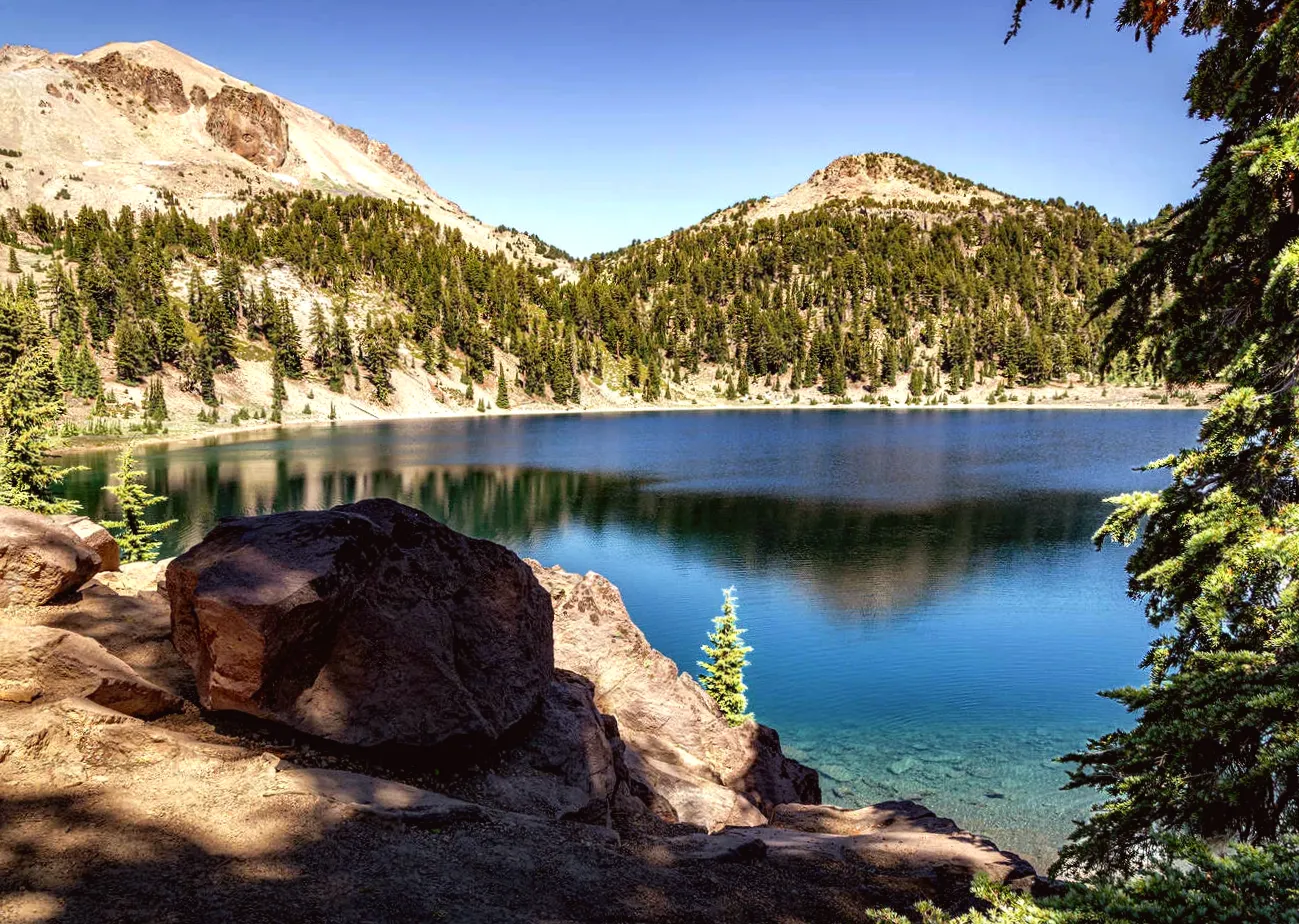
Lassen Volcanic National Park is known for its steamy hydrothermal zones, including bubbling pools, mud pots, and gas vents. Recent research has revealed that a microscopic organism is thriving in water temperatures previously believed to be uninhabitable for its kind.
Beryl Rappaport, a microbiologist completing her Ph.D. at Syracuse University, and her team identified a new eukaryotic amoeba capable of surviving extreme heat. Unlike bacteria, eukaryotes have a membrane-bound nucleus, making this discovery particularly remarkable.
Rappaport named the organism Incendiamoeba cascadensis, or fire amoeba of the Cascade Range, highlighting both its heat tolerance and the mountain region where it was found. She noted that Lassen, often overshadowed by Yellowstone, contains North Americas largest geothermal lake.
The discovery was documented in a preprint publication, raising new questions about the limits of life. "Its fascinating to see how resilient life can be," Rappaport explained. Identifying organisms that survive extreme conditions may also guide the search for extraterrestrial life, as these findings suggest what forms life might take elsewhere.
The fire amoeba reproduces at approximately 145F, surpassing the previous known limit of 140F for eukaryotes, a group that includes certain algae and fungi. While some microbes and invertebrates can endure even hotter temperatures, this finding expands our understanding of eukaryotic capabilities.
Rappaport discovered the amoeba in a small tributary of Hot Springs Creek, a location that emits visible steam. Samples were cultured in the lab, and temperatures were gradually increased beyond previous records, allowing the amoeba to continue thriving.
Future research will explore why this organism survives such heat, including genomic sequencing to uncover potential adaptations that protect its proteins from heat stress. Understanding these mechanisms could illuminate how life endures extreme environments.
Similar heat-loving microbes have been found in hot springs worldwide. Rappaport aims to expand her research globally, searching for even more resilient microscopic organisms. "Theres no reason we couldnt find something thriving at even higher temperatures elsewhere," she said.
Author: Lucas Grant
Share

Researchers amazed by the "Fire Amoeba" withstanding extreme temperatures
5 hours ago 3 min read WORLD
Extremophile ‘Fire Amoeba’ Expands the Limits of Complex Life
1 days ago 2 min read ENTERTAINMENT
Recently Found 'Heat-Resistant Amoeba' Can Thrive in Extreme Heat
3 days ago 2 min read ENTERTAINMENT

Small Creature Living in Volcano Sets New Heat Record
4 days ago 2 min read SCIENCE

Record-breaking Heat-resistant 'Fire Amoeba'
5 days ago 2 min read SCIENCE