
Top 10: Key airplanes during the Vietnam War
- Last update: 3 days ago
- 4 min read
- 15 Views
- TRAVEL
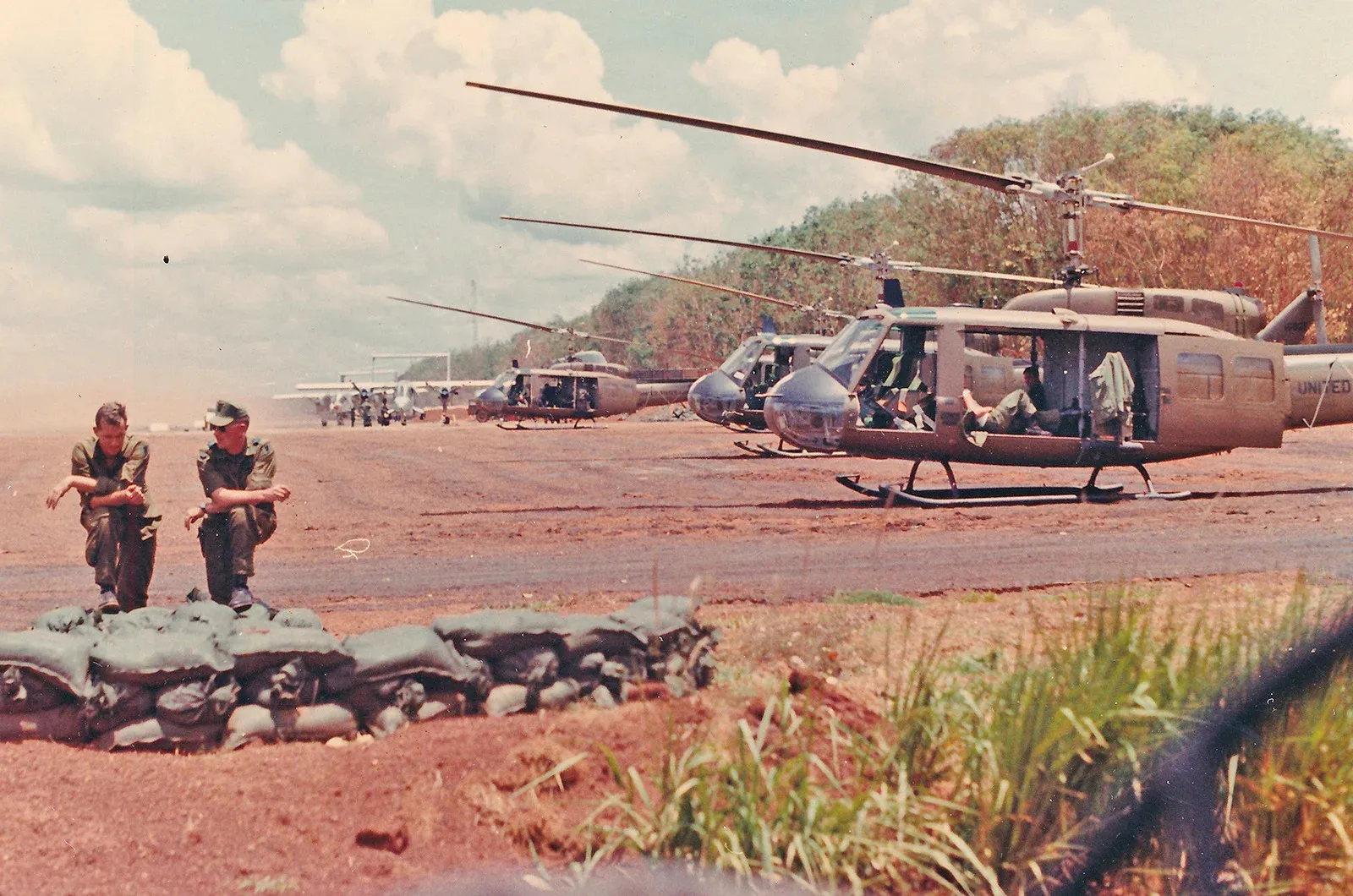
The Vietnam War was a monumental conflict that claimed millions of lives. In the skies, MiGs clashed with Phantom jets, while B-52 bombers and other aircraft unleashed destruction on vast regions, surpassing even the total bomb tonnage of World War II. The dense jungles and mountainous terrain made helicopters indispensable, with the UH-1 Huey emerging as a symbol of air mobility. Amid the roar of jet engines and the threat of napalm, a new era of aerial combat was born.
A-4 Skyhawk
Designed by Ed Heinemann at Douglas Aircraft Company, the A-4 Skyhawk was a compact, carrier-capable attack aircraft that played a pivotal role in US Navy and Marine Corps operations. Despite its small size, it could carry a substantial payload of bombs, rockets, and guided missiles. The Skyhawk excelled in close air support, interdiction, and strike missions, as well as the dangerous task of suppressing enemy air defenses. Pilots praised its agility and resilience, making it a highly versatile and reliable aircraft in Vietnam.
A-6 Intruder
The A-6 Intruder was another carrier-based attack plane that contributed significantly to US air operations, especially in precision strike missions.
B-52 Stratofortress
The B-52 Stratofortress, an eight-engine heavy bomber, carried out extensive carpet-bombing campaigns targeting North Vietnamese bases and supply lines. Its immense bombload and long-range capabilities made it central to campaigns like Operation Rolling Thunder. Though heavily armored and flying at high altitudes, 31 B-52s were lost to missiles, enemy fighters, and accidents. The bombings caused immense devastation, with widespread destruction of villages and forests, leaving lasting scars on Vietnam. The B-52s design heritage, rooted in Boeings experience with the B-17 and B-29, has kept it operational even today, with plans for service into the 2050s.
MiG-17
The MiG-17, a Soviet jet fighter, improved on the MiG-15 with an afterburner and enhanced aerodynamics. While slower than US jets like the F-4, its agility and heavy armament made it deadly in dogfights. North Vietnamese pilots used it to ambush American aircraft, achieving approximately 87 confirmed kills. The MiG-17 demonstrated that maneuverability could challenge more technologically advanced jets.
MiG-21
The MiG-21, a supersonic jet fighter introduced in the late 1950s, could reach speeds of Mach 2. Its small size and agility made it ideal for hit-and-run tactics against US aircraft. Widely exported and used extensively by the North Vietnamese Air Force, it achieved around 103 aerial kills, relying on surprise attacks, ground control, and terrain knowledge. Aces such as Nguyn Vn Cc added to its legendary status.
RA-5C Vigilante
The North American A-5 Vigilante, originally a supersonic nuclear bomber, was adapted into the RA-5C reconnaissance aircraft. It gathered vital intelligence deep within enemy territory, performing high-speed, high-altitude missions to support strike planning and evaluation. Its speed and advanced sensors made it a critical tool for mission success, despite high risk and loss rates.
AC-130 Spectre and Transport Aircraft
The AC-130 gunship revolutionized night combat with heavy side-firing guns, advanced targeting systems, and long loiter times over enemy positions. It was instrumental in protecting outposts, interdicting supply routes, and supporting ground troops. Transport aircraft like the C-130 Hercules, C-141 Starlifter, and C-123 Provider were essential for logistics and troop movements, ensuring operational flexibility across Vietnam.
A-1 Skyraider, O-1 Bird Dog, and O-2 Skymaster
The A-1 Skyraider excelled in close air support and combat search and rescue, often shielding helicopters during rescue missions. Its durability and firepower made it indispensable. The O-1 Bird Dog and O-2 Skymaster, though small and slow, served as forward air control aircraft, directing strikes, marking targets, and saving countless lives by providing accurate battlefield intelligence.
F-105 Thunderchief
The F-105 Thud was a high-speed fighter-bomber central to early strike missions over North Vietnam. It conducted suppression of enemy defenses and heavy bombing runs, achieving 27.5 aerial victories while enduring significant losses from anti-aircraft fire and missiles. Its speed, firepower, and resilience made it a critical asset for the US Air Force.
F-4 Phantom
The F-4 Phantom served multiple roles, including air superiority, ground attack, reconnaissance, and suppression of enemy air defenses. Twin-engine and capable of Mach 2 speeds, it carried diverse weaponry and flew thousands of sorties, supporting troops and gathering intelligence. Its versatility and performance cemented its reputation as a Cold War icon.
UH-1 Iroquois Huey
The UH-1 Huey transformed helicopter warfare. Used for troop transport, medevac, supply delivery, and close air support, its adaptability and reliability saved countless lives. Over 7,000 were deployed, with around 3,000 lost in combat or accidents. The Huey also laid the groundwork for modern attack helicopters like the AH-1 Cobra. Other notable helicopters included the CH-47, CH-34, CH-53, OH-6 Cayuse, CH-54, SH-3, HH-3E, and the North Vietnamese Mi-4. The Hiller OH-23 Raven also played a key humanitarian role.
Author: Sophia Brooks
Share

TSA Introduces $45 Fee for Travelers Without REAL ID Beginning February 2026
50 minutes ago 3 min read TRAVEL

Air Canada Passenger Alleges She Received 6-Month-Old Beef, But Critics Argue She Misinterpreted Date Format
1 hours ago 2 min read TRAVEL
TSA Introduces Higher $45 Fee for Travelers Without REAL ID
1 hours ago 2 min read TRAVEL

Thanksgiving Return Travel Disrupted by Winter Storm Causing 2,500+ Flight Cancellations
2 hours ago 2 min read TRAVEL

Coventry Airport set to shut down in 2026
3 hours ago 1 min read TRAVEL

Free event offering advice on healthier living
3 hours ago 2 min read TRAVEL

Swan halts Japanese high-speed train
5 hours ago 1 min read TRAVEL

The Five Men Who Surveyed Mount Everest
6 hours ago 4 min read TRAVEL

Wolves at Yellowstone National Park Enjoy a Cozy Nap in the Snow
6 hours ago 2 min read TRAVEL
Specialist hired to safeguard famous US tourist spot: 'He clearly had a plan'
6 hours ago 2 min read TRAVEL