

Famous architect Frank Gehry passes away: Explore his most iconic structures
- Last update: 1 hours ago
- 3 min read
- 431 Views
- US
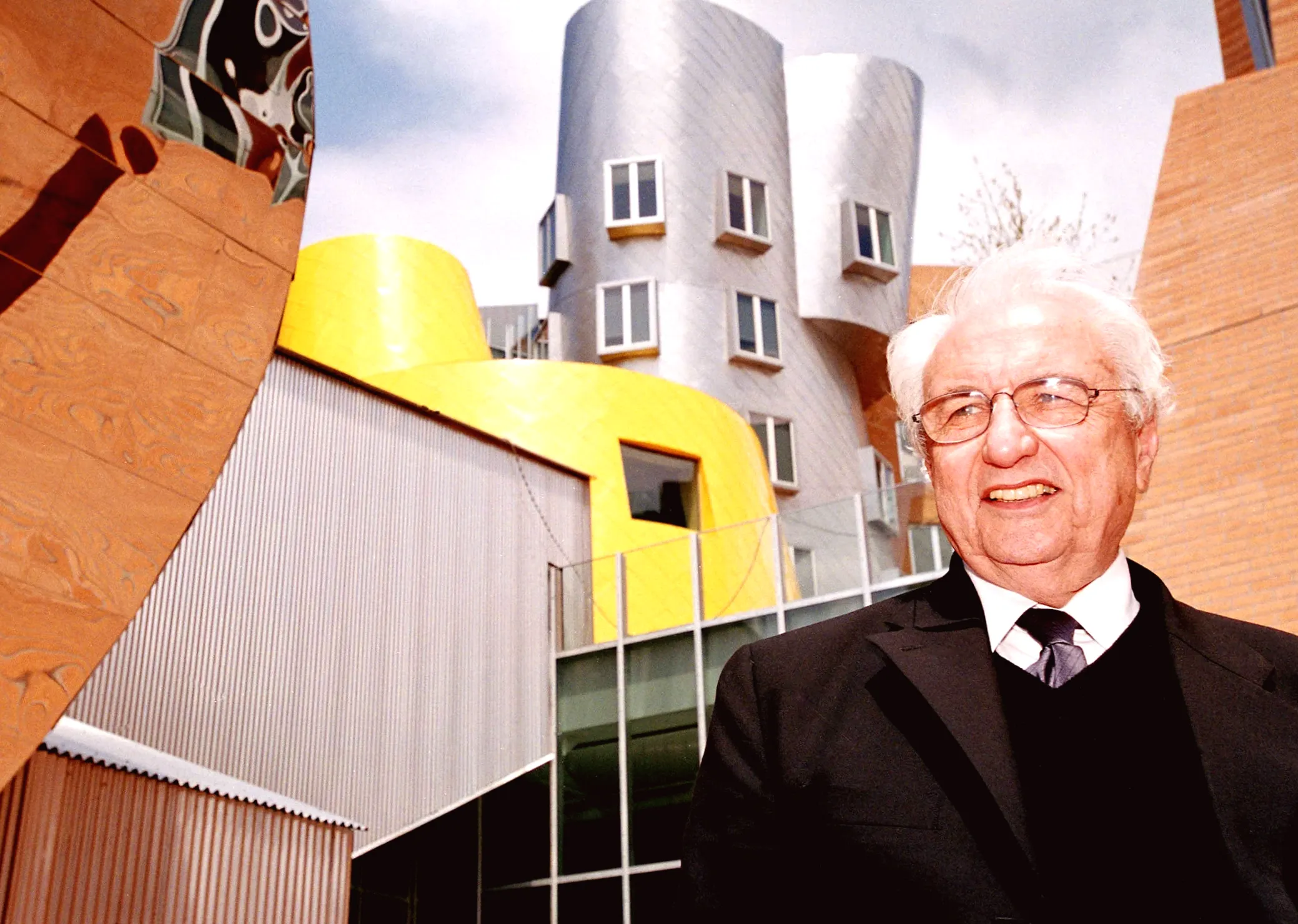
Renowned architect Frank Gehry passed away on Friday at the age of 96 in his Santa Monica, California home after a brief battle with a respiratory illness, as reported by the New York Times. Born in Canada, Gehry was widely regarded as one of the most influential architects of the modern era, with Vanity Fair naming him the "most important architect of our age" in 2010.
Gehry's designs were known for their unconventional approach, utilizing unexpected materials and challenging traditional architectural concepts, often creating buildings that appeared to defy gravity. He gained global recognition in 1978 when he redesigned his Santa Monica residence, incorporating industrial elements such as chain-link fences. From that point, his unique style became a hallmark of his work, with various iconic structures around the world that have become landmarks and tourist destinations.
Notable Works by Frank Gehry
Gehry House (1978)
The Gehry House, located in Santa Monica, California, was originally a 1920s Dutch Colonial-style home. Gehry transformed the structure by adding materials like corrugated metal, glass, and chain-link fencing. Despite some local criticism for the bold design, the house became a popular attraction and was Gehry's residence for nearly forty years.
Vitra Design Museum (1989)
Located in Weil am Rhein, Germany, the Vitra Design Museum was Gehry's first European project. Designed using white plaster and a titanium-zinc alloy, the building is a striking example of postmodern deconstructivist architecture.
Dancing House (1996)
The Dancing House, located in Prague, Czech Republic, was a collaboration between Gehry and architect Vlado Miluni. This playful structure, which houses a restaurant and a gallery, was designed to evoke the image of dancing figures, inspired by famous actors Fred Astaire and Ginger Rogers.
Guggenheim Bilbao (1997)
The Guggenheim Museum in Bilbao, Spain, is one of Gehry's most celebrated works. Created using advanced computer software to manage its complex geometries, the museums exterior is clad in thin, textured titanium sheets, complemented by limestone and glass, creating a fluid, sculptural form that has become a symbol of modern architecture.
Peter B. Lewis Building (2002)
Located at Case Western Reserve University in Cleveland, Ohio, the Peter B. Lewis Building serves as the home for the Weatherhead School of Management. Its reflective stainless steel exterior is a signature of Gehry's innovative design, making it a standout piece of modern architecture in the city.
Walt Disney Concert Hall (2003)
In downtown Los Angeles, the Walt Disney Concert Hall was funded by Lillian Disney as a tribute to her late husband, Walt Disney. Gehrys design features sweeping curves made of stainless steel, evoking the image of silver sails. The building has become an iconic cultural landmark in the city.
IAC Building (2007)
Located in New York Citys Chelsea neighborhood, the IAC Building is Gehry's first office structure in the city. Made of glass, the building stands 10 stories tall and serves as the headquarters for IAC (formerly InteractiveCorp), with its curving facade making it one of the city's most distinctive buildings.
Lou Ruvo Center for Brain Health (2010)
The Lou Ruvo Center in Las Vegas was designed as a research facility for neurological diseases. Although Gehry had initially declined projects in Las Vegas, he agreed to design the center after being persuaded by entrepreneur Larry Ruvo, who was a long-time supporter of Huntingtons disease research. The building's dynamic steel exterior is constantly changing as it reflects light throughout the day.
Fondation Louis Vuitton (2014)
In Paris, the Fondation Louis Vuitton is a stunning art museum that appears to resemble an iceberg. Gehry used special software to design the buildings unique shape, reflecting his continued innovation in architectural techniques.
Author: Lucas Grant
Share

Frank Gehry inspired interest in architecture, regardless of opinions on his buildings.
25 minutes ago 6 min read ENTERTAINMENT

Renowned Architect Frank Gehry Passes Away at the Age of 96
1 hours ago 4 min read ENTERTAINMENT

Photos of iconic works by architect Frank Gehry
1 hours ago 1 min read STYLE

Renowned Architect Frank Gehry Has Passed Away—Here Are His Top 10 Iconic Designs
1 hours ago 4 min read ENTERTAINMENT
Renowned architect Frank Gehry passes away at the age of 96
2 hours ago 2 min read STYLE

Renowned Architect Frank Gehry Passes Away at 96
4 hours ago 3 min read ENTERTAINMENT
Renowned architect Frank Gehry passes away at the age of 96
4 hours ago 3 min read STYLE
Renowned Architect Frank Gehry Dies at Age 96, Known for Walt Disney Concert Hall
4 hours ago 2 min read ENTERTAINMENT

Architect Frank Gehry, famous for his distinctive steel design, passes away at age 96
4 hours ago 1 min read ENTERTAINMENT
Renowned architect Frank Gehry passes away at the age of 96
5 hours ago 1 min read ENTERTAINMENT