

Interested in viewing the final supermoon of 2025? Here's what you need to know.
- Last update: 30 minutes ago
- 2 min read
- 159 Views
- US
This December, stargazers will have the chance to witness the last supermoon of 2025. On Thursday, December 4, the night sky will be dominated by a bright and noticeably larger moon, according to NASA. This month's full moon, often called the Cold Moon, is expected to appear up to 14% larger and about 30% brighter than usual.
Following the supermoon, a special celestial event will occur: a Moon-Jupiter conjunction. During this phenomenon, the two bodies will seem very close together in the sky, even though they are millions of miles apart, NASA notes.
When to Catch December's Full Moon
The full moon will reach its peak at 6:14 p.m. ET on Thursday, December 4. While in some areas this will occur before sunset, the moon will remain strikingly visible throughout the evening and into Friday, December 5. Observers can enjoy its full glow for several days after the peak.
Understanding a Supermoon
A supermoon occurs when a full or new moon coincides with the moons closest approach to Earth in its orbit, a point called "perigee." This proximity makes the moon appear larger and brighter than usual.
Upcoming Supermoons
The next supermoon is expected on January 3, 2026, with additional ones on November 24 and December 23, 2026.
Visibility Across the U.S.
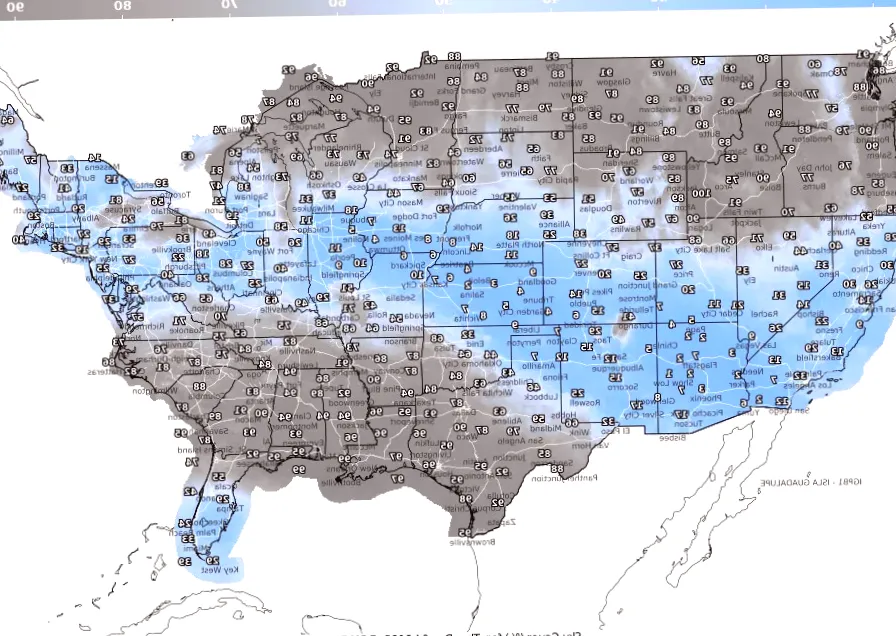
As of December 3, the National Weather Service predicts that cloud cover may obscure the view for many regions in the U.S. Maps of sky coverage indicate high clouds in several areas around 7 p.m. ET on December 4.
Moon-Jupiter Conjunction
A few days after the supermoon, on December 7, Jupiter will appear close to the moon in the eastern sky. The planet will be positioned slightly northeast of the moon around 11 p.m. ET.
Tidal Effects of the Supermoon
Supermoons can produce unusually high tides, often called king tides. These occur when the gravitational forces of the sun, moon, and Earth align, temporarily raising ocean levels. Novembers supermoon brought higher tides, and the December event will have a similar effect.
The Origin of the Cold Moon Name
The December full moon is known as the Cold Moon, a term reportedly used by the Mohawk tribe. The Mohicans referred to it as the "long night moon" due to the cold conditions typical in December. Other names listed in historical sources include Winter Maker Moon, Little Spirit Moon, Moon of the Popping Trees, and Frost Exploding Trees.
Author: Gavin Porter
Share

Leading Senate Democrat calls for $10,000 bonus for all air traffic controllers during shutdown
2 minutes ago 2 min read US

Florida Man Sentenced for Unraveling $2.5 Million Classic Car Restoration Scam
7 minutes ago 2 min read US

Decades later, DNA from paper bags leads to identification of one of Colorado’s ‘most prolific serial killers’
19 minutes ago 3 min read US

Is NASA shutting down Goddard Space Flight Center? Here's what you need to know
23 minutes ago 3 min read US

Iowa State hires Jimmy Rogers as coach following Matt Campbell's departure for Penn State
23 minutes ago 2 min read US

Ex-Pasco cop's appeal focuses on DNA discovered 30 years after Spokane murder
24 minutes ago 2 min read US

Police investigate after museum door lock is 'sabotaged'
25 minutes ago 2 min read US

Rubio says US will limit visas for Nigerians involved in violence against Christians
26 minutes ago 2 min read US

Debunked: Video Showing Retired Soldier Crying in Court Over Sleeping in a Park Charges Being Dropped is Actually AI Generated
26 minutes ago 2 min read US

New Footage Captures ICE Vehicles Surrounding Mother of Karoline Leavitt's Nephew Prior to Her Arrest
28 minutes ago 1 min read US