

Austria's Neutrality Debate Fueled by Ukraine War
- Last update: 51 minutes ago
- 3 min read
- 788 Views
- WORLD
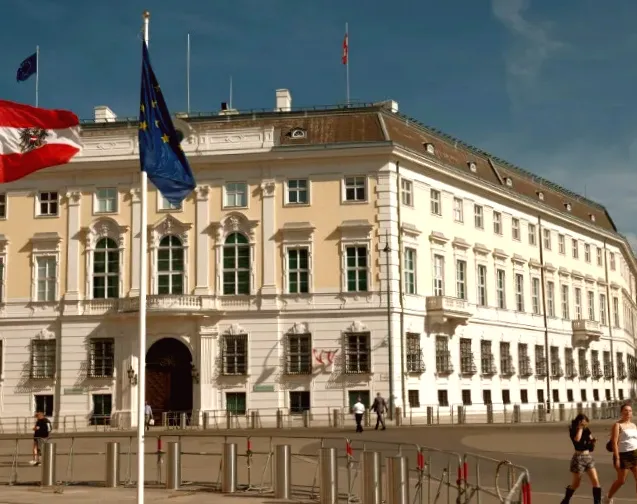
For seven decades, neutrality has been a defining pillar of Austria's foreign policy, yet the Russian invasion of Ukraine has reignited discussions about this stance. The Alpine nation has aligned with other European Union members in condemning Moscow's actions, sparking concerns that its traditional neutral position may be shifting.
"Neutrality is a core part of our national identity," said Andreas Wimmer, spokesperson for the citizen group Voices for Neutrality.
The far-right Freedom Party (FP), which secured strong election results last year but did not join the government, has strongly advocated preserving Austrias neutral status and opposes providing aid to Ukraine, labeling it a "betrayal."
Neutrality in Austria was originally imposed by the Soviet Union as a condition for ending the Allied occupation after World War II. This approach allowed Austria to recover from the war while distancing itself from Nazi complicity. The federal constitutional law enacted on October 26, 1955, enshrines Austria's permanent neutrality, prohibiting the country from joining military alliances or hosting foreign troops.
Since then, neutrality has become synonymous with freedom for many Austrians, with 80 percent considering it part of their national identity, according to a poll released in October.
Over the years, Austria has hosted one of the four United Nations headquarters, along with other international agencies such as the International Atomic Energy Agency and OPEC's Vienna offices. However, a European diplomat, speaking anonymously, noted that Austrias neutrality "is evolving, and the current government is encouraging this shift."
The diplomat highlighted that Austria has approved financial aid to Ukraine and supported sanctions against Russia, signaling that the country is "becoming less naive" in international matters.
Despite its neutrality, Austria has condemned violations of international law and explicitly criticized the invasion of Ukraine. Foreign Minister Beate Meinl-Reisinger of the liberal NEOS party stated that with Russias growing aggression, "neutrality alone no longer protects us," emphasizing the need for stronger domestic defense capabilities.
Austria's military budget, among the lowest in Europe, is projected to rise from 0.95 percent of GDP in 2024 to a target of 2 percent by 2032.
Former diplomat Franz Cede cautioned against "romanticizing" neutrality, noting it has been weakened since Austria joined the European Union in 1995. While Finland and Sweden joined NATO in response to Russia's invasion, Austria "missed the moment" to reconsider its position. Though previous neutrality debates have not altered the law, discussions about potential NATO membership could be "very fruitful," Meinl-Reisinger suggested, while acknowledging there is currently no parliamentary or public majority in favor.
The Voices for Neutrality group advocates for Austria to reclaim the active mediating role it held during the Cold War. In recent years, the country has not hosted significant high-profile international negotiations.
Author: Ethan Caldwell
Share

Britain abolishes jury trials for sentences under 3 years
23 seconds ago 2 min read WORLD

Unregistered children's care homes cost labeled a 'national scandal' by Ofsted
3 minutes ago 3 min read WORLD
SpaceX prepares for Falcon 9 rocket launch on Tuesday from Florida's Space Coast
3 minutes ago 1 min read WORLD

Audi Plunges from Apartment Car Stacker in Australia
12 minutes ago 1 min read WORLD

Hong Kong holds legislative election following tragic fire
12 minutes ago 3 min read WORLD

Tragedy strikes in Goa, India as 23 lose their lives in nightclub fire
13 minutes ago 2 min read WORLD
Ex-educator sentenced for sexual crimes against children
16 minutes ago 1 min read WORLD
Woman warns against harmful backyard habit that can harm animals: 'It's a serious problem'
16 minutes ago 2 min read WORLD
Tuesday’s Campaign Updates, 12.2.25: Residents of Tennessee participate in closely watched race
20 minutes ago 2 min read WORLD
Coast Guard seizes 10 tons of cocaine in single operation
23 minutes ago 2 min read WORLD