
Brazilian authorities investigate the situation of nearly extinct blue parrots
- Last update: 2 days ago
- 2 min read
- 658 Views
- WORLD
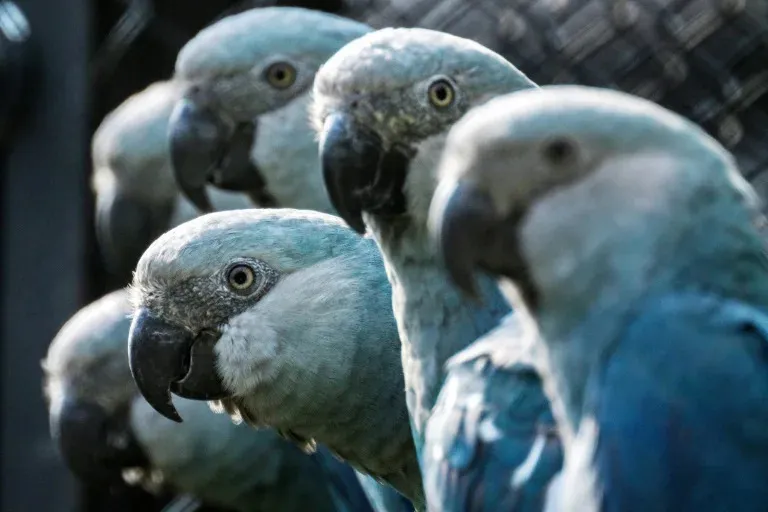
Authorities in Brazil announced on Wednesday that they are investigating a deadly viral outbreak affecting some of the last remaining Spix's macaws, one of the rarest birds on the planet, widely recognized as the blue parrot from the 2011 animated movie "Rio." Until recent conservation efforts, the species had not been observed in its natural environment for over two decades.
The conservation of Spix's macaws has been a source of friction between private breeders and government officials. In 2020, a number of these birds were relocated from Germany as part of a program aiming to reintroduce them to northeastern Brazil. Last week, the Brazilian environmental agency ICMBio confirmed that all 11 wild Spix's macaws tested positive for circovirus, a fatal virus. Another 20 birds in captivity were also found infected.
The agency has imposed a fine of 1.8 million reais ($336,000) on the breeding facility for failing to maintain proper biosafety measures to prevent virus transmission. Police stated they had confiscated computers and cellphones from the Spix's Macaw Breeding Center during "Operation Blue Hope." Authorities warned that the investigation could result in charges related to spreading a wildlife-threatening disease and obstructing environmental inspections. The center had previously resisted a court order from October requiring them to recapture the wild macaws.
The breeding facility maintains that only five out of 103 birds in its care tested positive for circovirus, which leads to beak and feather disease in parrots. The center argues that tropical species like the Spix's macaw are less vulnerable to the virus than parrots on other continents and does not consider infection an automatic death sentence. It denied allegations of poor sanitary conditions and expressed confidence regarding the ongoing police inquiry.
ICMBio clarified that it employed the most advanced testing methods but acknowledged that interpreting the results is complex. The "Rio" film depicts a Spix's macaw raised in captivity in the United States, returning to Brazil to help preserve its species. Real-world conservation has involved significant challenges, including institutional disputes, concerns about private breeders, and illegal sales.
The breeding center collaborates with the German Association for the Conservation of Threatened Parrots (ACTP), which manages 75% of the worlds registered Spix's macaws. In 2024, Brazil ended its partnership with ACTP after the organization sold 26 birds to a private zoo in India without approval. Brazil has repeatedly highlighted at CITES meetings the gaps in regulations that allow the sale of captive-bred Spix's macaws, fueling demand for this vulnerable species.
Author: Maya Henderson