

Earth Was Recently Hit by an Unexpected Solar Flare. Why Were Scientists Caught Off Guard?
- Last update: 25 minutes ago
- 2 min read
- 820 Views
- WORLD
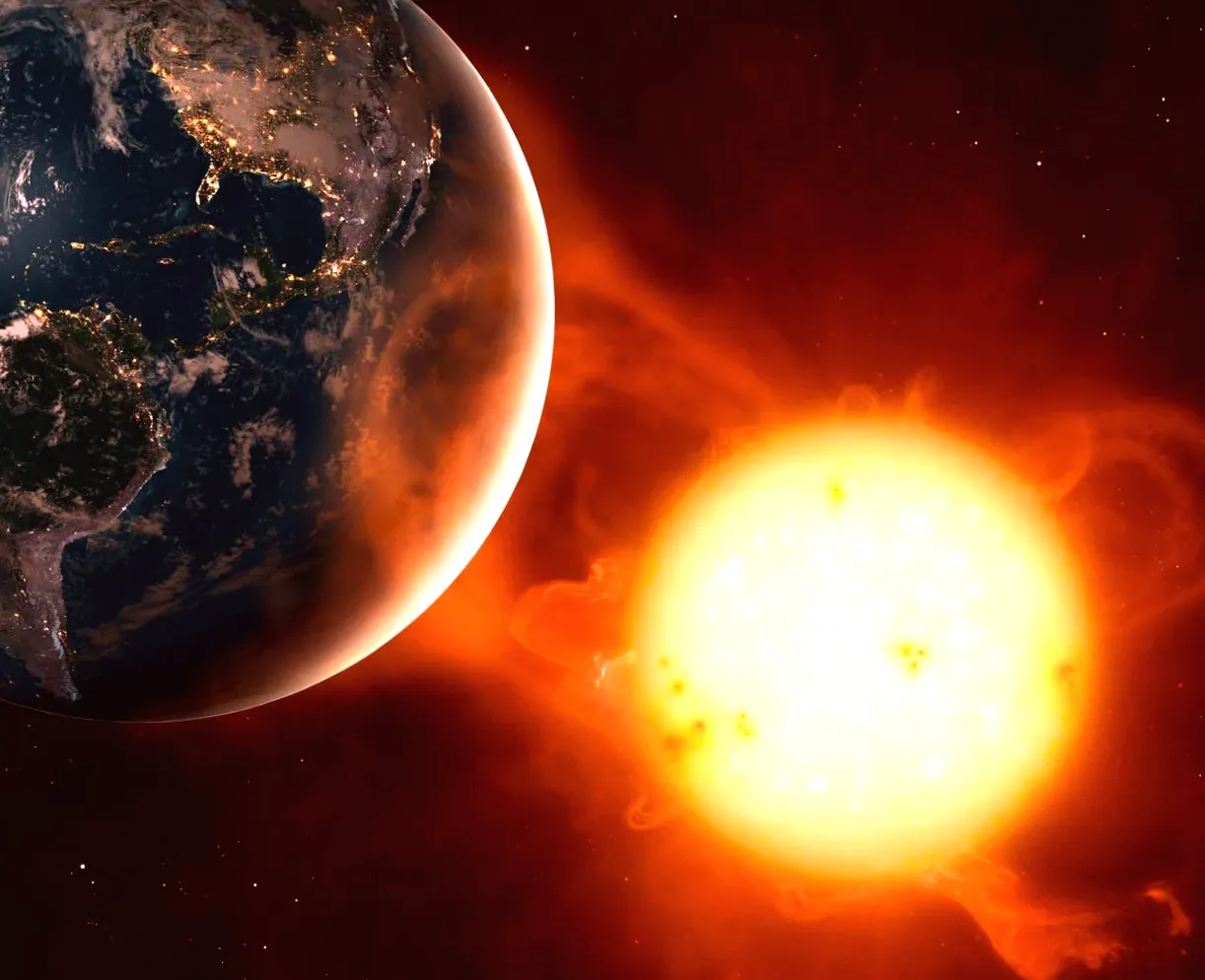
A recent solar event caught Earth off guard, as a so-called stealth coronal mass ejection (CME) struck without prior warning. These stealth CMEs are more frequent when the Sun shifts from its solar maximum toward the quieter solar minimum phase.
The arrival of this solar storm created stunning auroras visible unusually far south, including regions like Denmark and Maine, thanks to increased geomagnetic activity.
Solar eruptions release charged particles that can severely disrupt technology on Earth, affecting GPS, radio communications, power grids, and satellites. While most solar storms can be anticipated, some stealth events occur without clear early signs.
On November 20, NOAA reported solar wind emerging from a coronal holea darker, cooler area of the Suns outer atmosphere. These regions, with open magnetic field lines, allow solar plasma to escape and can influence Earth. This aligns with the Suns 11-year cycle, as coronal holes are more common during solar minimum.
The stealth CME itself was triggered by twisted magnetic fields in the Suns lower corona. When these fields realigna process known as magnetic reconnectionthey release vast amounts of energy and eject coronal material into space. As the CME reached Earth, it caused a brief spike in background solar wind.
Stealth CMEs often form at higher altitudes in the corona, where weaker magnetic fields make them hard to detect. Even when spotted, it is difficult to determine their origin on the Sun, leaving their path unpredictable. Researchers note that the stealthiness depends more on the size of the eruption than its height.
Analysis of multiple stealth CMEs revealed that structural changes in the corona often appear more clearly in images than in intensity measurements. Some storms were visible against the Suns disk, others at its glowing edge, called the limb. Future detection may improve using varied imaging angles and advanced processing techniques.
NASAs STEREO spacecraft previously helped identify the origins of stealth CMEs that went unnoticed from Earth. Scientists now recommend examining time-lapse coronal images, measuring intensity variations, and applying sophisticated image processing to detect subtle disturbances in the Suns atmosphere.
The November event not only increased geomagnetic activity temporarily but also illuminated the northern skies with vibrant purples and reds, delighting observers far beyond the usual auroral zones.
Author: Sophia Brooks
Share
CCTV footage requested following theft of £2k from elderly man
18 seconds ago 1 min read WORLD
Federal government files lawsuit against real estate developer for mishandling protected land: '3,000 artifacts lost or destroyed'
2 minutes ago 2 min read WORLD

Philippines reports China fired flares at its patrol plane in the contested South China Sea
4 minutes ago 2 min read WORLD

Experts say Florida Crunch Fitness may be the cause of a Legionnaires 'outbreak'
5 minutes ago 2 min read WORLD

Waymo autonomous taxi drives passengers into apparent police standoff
6 minutes ago 1 min read WORLD

Arizona congresswoman claims she was pepper-sprayed at ICE protest.
7 minutes ago 2 min read WORLD

Zara Aleena's relative urges for law requiring action in case of danger
9 minutes ago 3 min read WORLD

Opinions wanted on proposal to enhance air quality
9 minutes ago 1 min read WORLD

Caution about waves hitting coastal roads
12 minutes ago 1 min read WORLD

Children injured when school bus roof torn off by bridge
13 minutes ago 1 min read WORLD