

'Inviting destruction to save the colony: sick ants call for death'
- Last update: 2 hours ago
- 2 min read
- 190 Views
- WORLD
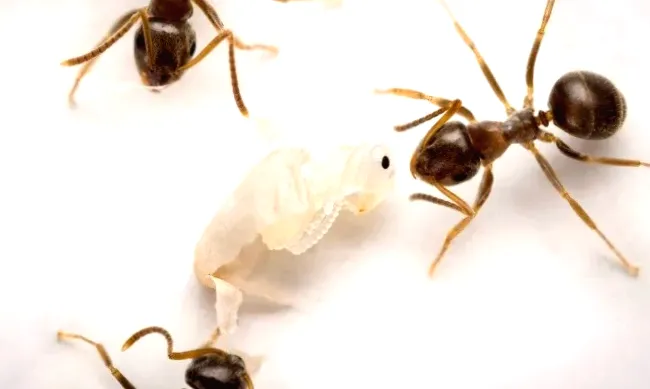
Researchers revealed on Tuesday that young ants facing illness emit a chemical signal prompting worker ants to eliminate them, thereby preventing the spread of infection within the colony. Interestingly, queen ants appear not to engage in this form of self-sacrifice.
While many species conceal sickness for social purposes humans, for instance, sometimes continue daily activities despite being contagious ant colonies function more like a single "super-organism," prioritizing collective survival. This behavior is comparable to how infected cells in the human body send out "find-me and eat-me" signals, according to a team led by Austrian scientists.
Erika Dawson, a behavioral ecologist at the Institute of Science and Technology Austria and lead author of the study, explained that ant nests are ideal environments for disease outbreaks due to the dense population of ants in constant contact.
When adult worker ants contract a contagious illness, they typically leave the nest to die alone. Young ants, called pupae, however, remain inside their cocoons, making self-isolation impossible. Previous studies indicated that terminally ill pupae undergo chemical changes that produce a distinct odor.
Worker ants respond by removing the cocoon, puncturing the pupae, and injecting a poison that acts as a disinfectant, eliminating both the pathogen and the pupae. Dawson emphasized that the team sought to determine whether the pupae were actively signaling for this intervention.
In experiments, the researchers extracted the scent from sick pupae of the small black garden ant Lasius neglectus and applied it to healthy pupae. The workers still destroyed them, confirming the odor alone was sufficient to trigger the response. Further testing showed that the scent is produced only when worker ants are nearby, proving it is an intentional signal.
"This act is altruistic, yet also benefits the pupaes genetic legacy, ensuring their genes survive in the next generation," Dawson explained.
However, queen pupae do not emit this signal when infected. The team discovered that queens possess stronger immune defenses, allowing them to combat infections without calling for destruction. Dawson noted that future research will explore whether queen pupae ever self-sacrifice if their infection proves fatal.
The study appeared in the journal Nature Communications.
Author: Noah Whitman
Share

Researchers Discover a Puzzling New Organism Resembling a Living Sun
41 seconds ago 3 min read WORLD

Hegseth justifies attacks on suspected cartel boats
9 minutes ago 2 min read WORLD

Uruguay approves deep-water oil exploration despite increasing environmental criticisms
11 minutes ago 2 min read WORLD

Hong Kong residents vote after tragic fire incident
12 minutes ago 3 min read WORLD

RadPartners chooses DataFirst for data migration services
19 minutes ago 2 min read WORLD

23 people killed in nightclub fire in Goa, India
27 minutes ago 2 min read WORLD

Thieves pilfer 20,000 rounds of German military ammunition while truck driver dozed off
30 minutes ago 2 min read WORLD

Canada looks to secure discounted access to EU weapons programme due to Britain's high pricing
31 minutes ago 2 min read WORLD

View images of people sledding, shoveling, and snow-covered landscapes throughout the US
35 minutes ago 2 min read WORLD

Israel's Prime Minister Netanyahu believes peace agreement with Syria is achievable, but insists on creating a buffer zone.
36 minutes ago 2 min read WORLD