

'The dangers of a new pipeline in British Columbia: the unknown risks'
- Last update: 3 days ago
- 3 min read
- 667 Views
- WORLD
In 2002, a major earthquake struck a remote region of Alaska, registering as the strongest ever in the state's interior. Remarkably, an oil pipeline crossing directly over the fault line remained intact. Engineers had anticipated seismic activity along the 800-mile route, which crossed the Denali fault, and constructed segments of the pipeline on rail-like supports, allowing movement without rupture.
It succeeded because engineers knew precisely where and how to build, said Edwin Nissen, a seismologist at the University of Victoria. The problem in British Columbia is that no such detailed study exists for the proposed pipeline. Theres simply so much we dont know.
Canadas Prime Minister Mark Carney recently approved a pipeline project extending from Alberta to the Pacific, sparking heated debates over its political, economic, and environmental implications. Experts caution that the multibillion-dollar initiative faces significant and poorly understood geological risks.
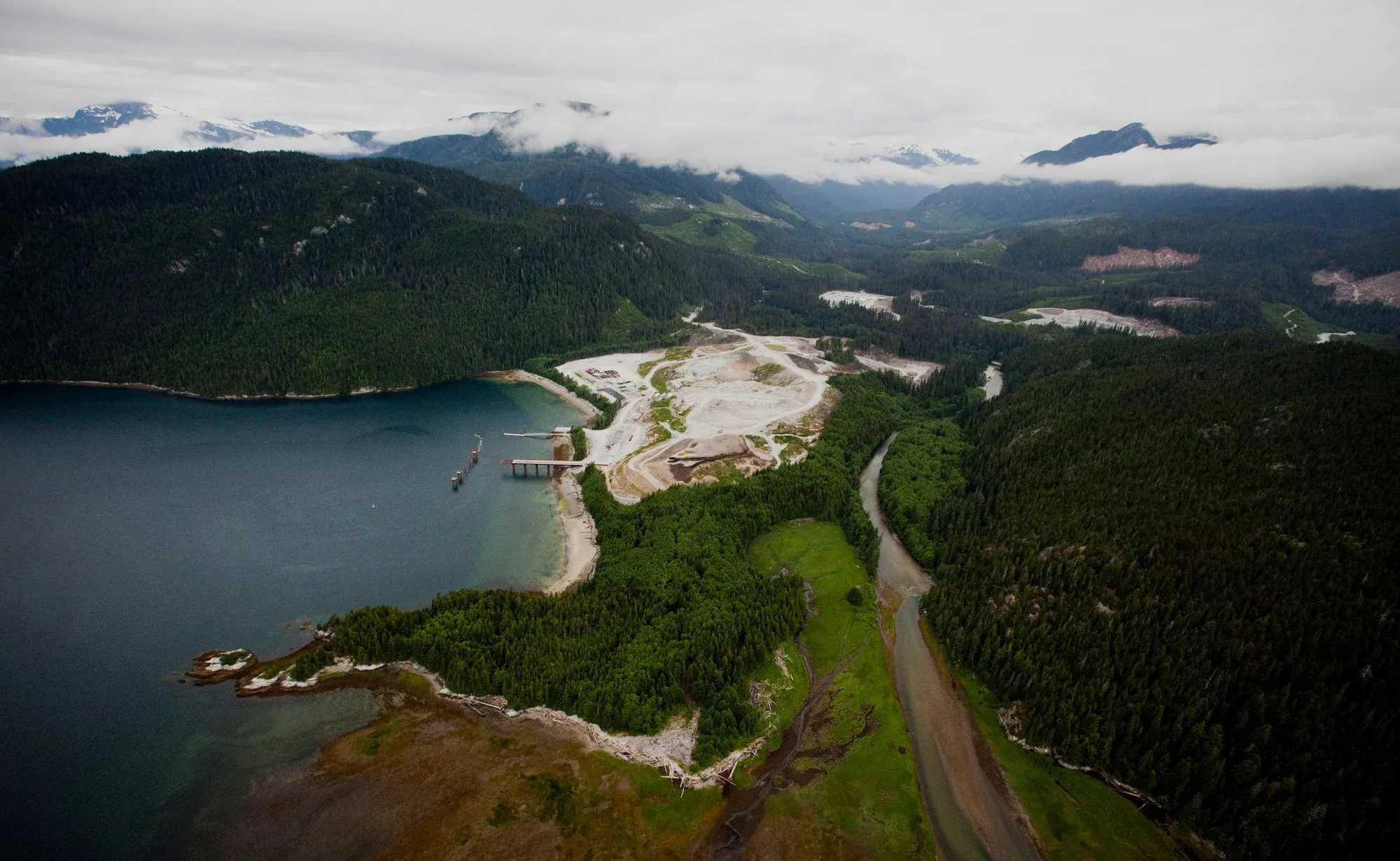
Although no official route has been proposed, the most practical path from Edmonton would likely traverse the Rocky Mountain trench and northern British Columbia before ending at the Douglas Channel, an area characterized by deep fjords and rugged terrain. First Nations communities have voiced strong opposition, fearing the lifting of a five-decade oil tanker ban in the region.
While much public discussion has focused on maritime risks, Nissen emphasizes that the land itself poses serious dangers. He and his team suggest that at least two seismic faults, including the Rocky Mountain trench, may still be active and capable of producing major surface-rupturing earthquakes. He also notes that tectonics along the Pacific coast are poorly understood. This region is sparsely instrumented, so our knowledge is limited, he said. Landslides triggered by quakes could lead to severe environmental consequences.
Seismic monitoring in Canada is largely concentrated along the southern border, leaving areas along the proposed pipeline virtually unmonitored. Theres no adequate earthquake or landslide monitoring in these zones, and deploying seismic and GPS stations is costly. Canadas science funding simply cannot cover it, Nissen explained.
British Columbia Premier David Eby has criticized the project, highlighting the exclusion of his province from Ottawa-Alberta discussions. The oil sands will reap the majority of profits, but British Columbia and coastal First Nations bear most of the risks, Nissen added. He compared the scenario to the 2008 financial crisis, where private profits contrasted with widespread public exposure to risk.
While engineering can mitigate risks in seismic zones, such measures are extremely expensive if foundational geological data are incomplete. We need to understand where faults are and their earthquake potential before even debating a pipeline, Nissen said. Unpredictable events, like massive landslides and earthquakes, can still surprise even experts.
Historical events underline these dangers. In 1958, an Alaskan earthquake triggered a landslide that created a megatsunami over 500 meters high, nearly twice the height of Londons Shard. The energy of such waves was amplified by the fjords geography, which limits natural dissipation, explained geomorphologist Daniel Shugar from the University of Calgary.
The proposed pipeline terminus in Douglas Channel shares geographical similarities with southeastern Alaska, where megatsunamis occurred. The channel has been mapped using high-resolution sonar, revealing around 100 past landslides, some of which could catastrophically impact infrastructure and tankers if repeated.
While these events are rare, sufficient data can estimate recurrence intervals, helping to assess long-term risks. Shugar stresses the need for a historical perspective in planning, noting that geological events unfold independently of political timelines. Greenland, for example, has restricted marine traffic in fjords to prevent landslide-triggered tsunamis. Nature and geology operate on timescales far beyond election cycles, he said. Past disasters show that ecosystems may take decades to recover from events that happen in minutes.
Author: Logan Reeves
Share

Indian government mandates tracking app on all mobile devices
1 minutes ago 2 min read WORLD

At least 23 people die in fire at nightclub in India's Goa
3 minutes ago 2 min read WORLD

Gen Z rappers challenge regulations of Iranian regime
4 minutes ago 3 min read WORLD

New Report by Amnesty International Reveals Torture and Overcrowding at Krome and ‘Alligator Alcatraz’
6 minutes ago 2 min read WORLD

Archaeologists Discover 100 Structures From an Ancient City While Exploring a Cloud Forest
11 minutes ago 2 min read WORLD

Putin and Witkoff initiate discussions on resolving conflict in Ukraine
16 minutes ago 1 min read WORLD

Queen wears 'happiness restored' brooch in yearly Christmas card
19 minutes ago 2 min read WORLD

Police officer 'appalled' by video showing alleged groping
20 minutes ago 2 min read WORLD

UNGA votes to prolong UNRWA's mandate for three more years
21 minutes ago 1 min read WORLD

Austria's Neutrality Debate Fueled by Ukraine War
22 minutes ago 3 min read WORLD