
The new world order has already arrived − and here's what it looks like
- Last update: 27 minutes ago
- 3 min read
- 544 Views
- WORLD
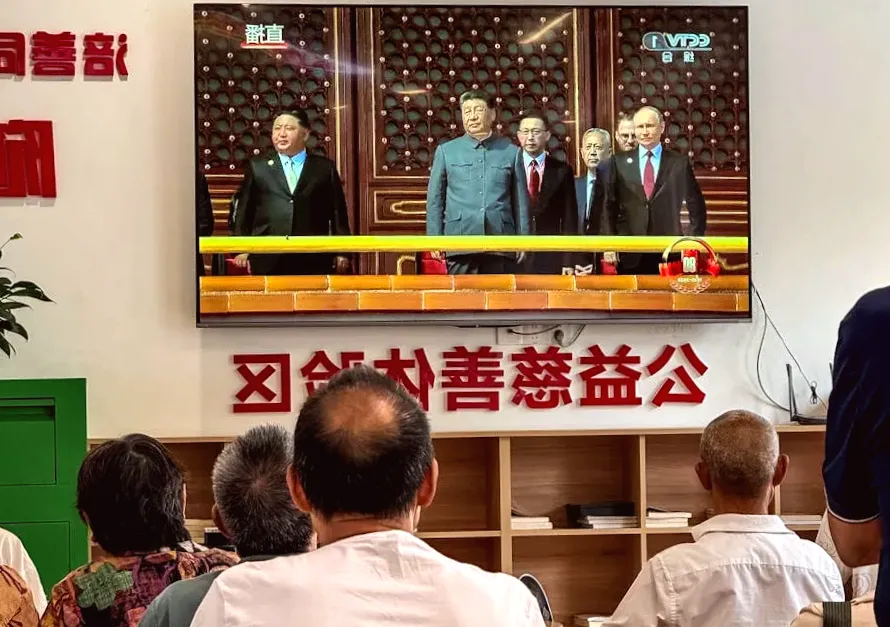
On September 3, 2025, China marked the 80th anniversary of its triumph over Japan with a meticulously orchestrated ceremony, inviting 26 international leaders to witness Beijings formidable military display. This deliberate demonstration sparked renewed debate in Western media about whether a China-centered new world order is emerging to challenge the U.S.-led international system. In reality, the transformation is already underway. While the U.S. continues to hold significant influence, the global order is evolving and will increasingly differ from the previous era.
The Evolution of Global Orders
Throughout history, world orders have shifted according to dominant powers, institutions, and norms. From 1815 to 1880, the United Kingdom held unparalleled supremacy with its expansive empire and naval dominance. Between 1880 and 1945, global rivalry intensified as other nations, including the U.S. and European powers, sought to rival Britain. This was followed by the bipolar era of 19451991, dominated by the Soviet Union and the U.S. After the Soviet collapse, a unipolar system emerged from 1991 to 2008, centered on U.S. military and economic dominance and reinforced by institutions like the World Trade Organization, World Bank, and IMF.
However, events such as the prolonged war on terrorism, the Iraq and Afghanistan conflicts, and the 2008 financial crisis weakened U.S. dominance and eroded support for its global policing role.
Transition to a Multipolar World
A multipolar world is now emerging, with at least four major sources of power. The U.S. remains central due to its vast territory, strong economy, and strategic positioning between oceans. Yet the costs of maintaining global military commitments have pushed Washington to shift burdens to allies, prompting increased defense spending in Europe and East Asia. Economically, the U.S. is moving away from promoting frictionless global trade toward protectionist policies, reversing decades of free trade advocacy and creating tension within international alliances.
China has risen as a peer competitor, seeking to establish a Sino-centric global order under Xi Jinpings leadership. Russia, though limited in influence, acts as a disruptor, while Europe faces challenges from Russian aggression and U.S. strategic pivots toward the Indo-Pacific. European nations are rearming and may emerge as an independent power center with priorities distinct from the U.S.
Shared Challenges Across Powers
All major powers face internal difficulties. The U.S. grapples with inequality and political volatility. China contends with demographic shifts, economic slowdown, and leadership transitions. Europe must manage nationalist populism alongside increasing military commitments. Meanwhile, the Global South, including countries like Brazil, India, and Indonesia, is asserting greater independence and strategically navigating between the dominant powers.
A World in Flux
The new global order is dynamic and unsettled. Major powers will continuously negotiate alliances while addressing domestic challenges. Key questions include: Which nations will form enduring partnerships? Can China manage internal pressures? Will Europe consolidate its role as an independent power? How will Russias disruptive influence evolve? And ultimately, can the major powers cooperate on global issues like climate change, pandemics, and environmental protection, or will competition escalate into conflict in contested regions such as the Arctic, cyberspace, and outer space?
All global orders eventually decline. The hope is that the current transition occurs gradually rather than through abrupt upheaval.
Author: Riley Thompson