

Top 10: Insane World War 2 Altered Warplanes
- Last update: 6 days ago
- 4 min read
- 13 Views
- WORLD
During World War II, the rapid expansion of air forces led to inventive ways to gain an edge in combat. Rather than designing entirely new planes, engineers often modified existing aircraft. Some adaptations were ingenious, some failed spectacularly, and others achieved remarkable success. Here are ten of the most extraordinary modifications, ranging from crewed missiles to flying tanks and heavily armed bombers.
10. Heavy Bomber Conversions: YB-40 and XB-41
While turning fighters into bombers was common, converting bombers into escort fighters was unusual. The USAAF experimented by modifying the B-17 Flying Fortress and B-24 Liberator into heavily armed escort aircraft. The XB-41 carried fourteen .50-caliber machine guns and over 14,000 rounds, but testing was problematic. The B-17-based YB-40 proved slightly more promising, with up to thirty defensive guns, though it was too heavy and slow to keep pace with the bombers it was meant to protect. After ten missions, the project was abandoned.
9. Seaplane Fighter Conversions: F4F Wildcat
Some land-based fighters were converted into seaplanes. The F4F Wildcat floatplane, developed in 1942, included large floats and auxiliary tail fins to maintain stability. The added weight reduced its speed to 241 mph, making it unsuitable against enemy fighters. Despite producing 100 sets of floats, only one Wildcatfish was ever built. The rapid capture of Pacific islands soon made the seaplane adaptation unnecessary.
8. Magnetic Mine Clearance: Wellington Bombers
Magnetic mines were a serious threat to shipping, prompting the British to modify Wellington bombers with a 48-foot balsa-wood ring carrying aluminum coils that emitted magnetic pulses to trigger mines. Crews flew at low altitudes of 3560 feet at 130 mph, risking destruction, but successfully cleared mines from the Thames Estuary. Germans used similar techniques with the Bv 138 and Ju 52, though their operations were disrupted by Allied fighters.
7. High-Altitude Operations: Ju 86 and Spitfire
The Ju 86 was adapted into the Ju 86P, featuring extended wings, pressurized cabins, and turbocharged diesel engines for operations at 40,000 feet. Later Ju 86R variants reached 47,000 feet. RAF Spitfires, including the Mk VI and VII, were modified to intercept these high-altitude bombers. The highest confirmed engagement was a Spitfire IX damaging a Ju 86 at 44,000 feet in 1942, prompting withdrawal of Ju 86s from British missions.
6. Crewed V-1 Missile: Fieseler Fi 103R
The Fi 103R combined a V-1 flying bomb with a cockpit for a pilot, intended to improve targeting accuracy for tactical strikes. Despite not being designed as a suicide weapon, survival chances were extremely low due to the placement of the pulsejet engine. Few pilots were trained, and the project was eventually canceled. A surviving Fi 103R is preserved at the Swiss Military Museum.
5. Ground Vehicles Turned Aircraft: Rotabuggy and Flying Tanks
The Rotabuggy, developed by Raoul Hafner, attached an unpowered rotor to a jeep to allow air towing. It successfully flew for ten minutes at 65 mph, but transport gliders soon made it redundant. The Soviets experimented with flying tanks, such as the T-60 with biplane wings and tail. It successfully flew once, but the lack of a suitable tug aircraft ended the project.
4. B-25 Gunship: Commerce Destroyer
Major Paul Pappy Gunn converted B-25 bombers into heavily armed gunships with eight forward-firing .50-caliber machine guns. Known as Commerce Destroyers, these aircraft decimated Japanese ships at the Battle of the Bismarck Sea. The field modifications inspired the factory-built B-25G and H models, featuring a 75mm cannon and additional machine guns.
3. Mistel Composite Aircraft
The Mistel combined a fighter mounted atop a Ju 88 bomber loaded with explosives. The fighter pilot could detach and escape after guiding the bomber to its target. Mistels were used in attacks on ships and bridges, but most missions caused little damage due to targeting challenges.
2. Twin Mustang: P-82
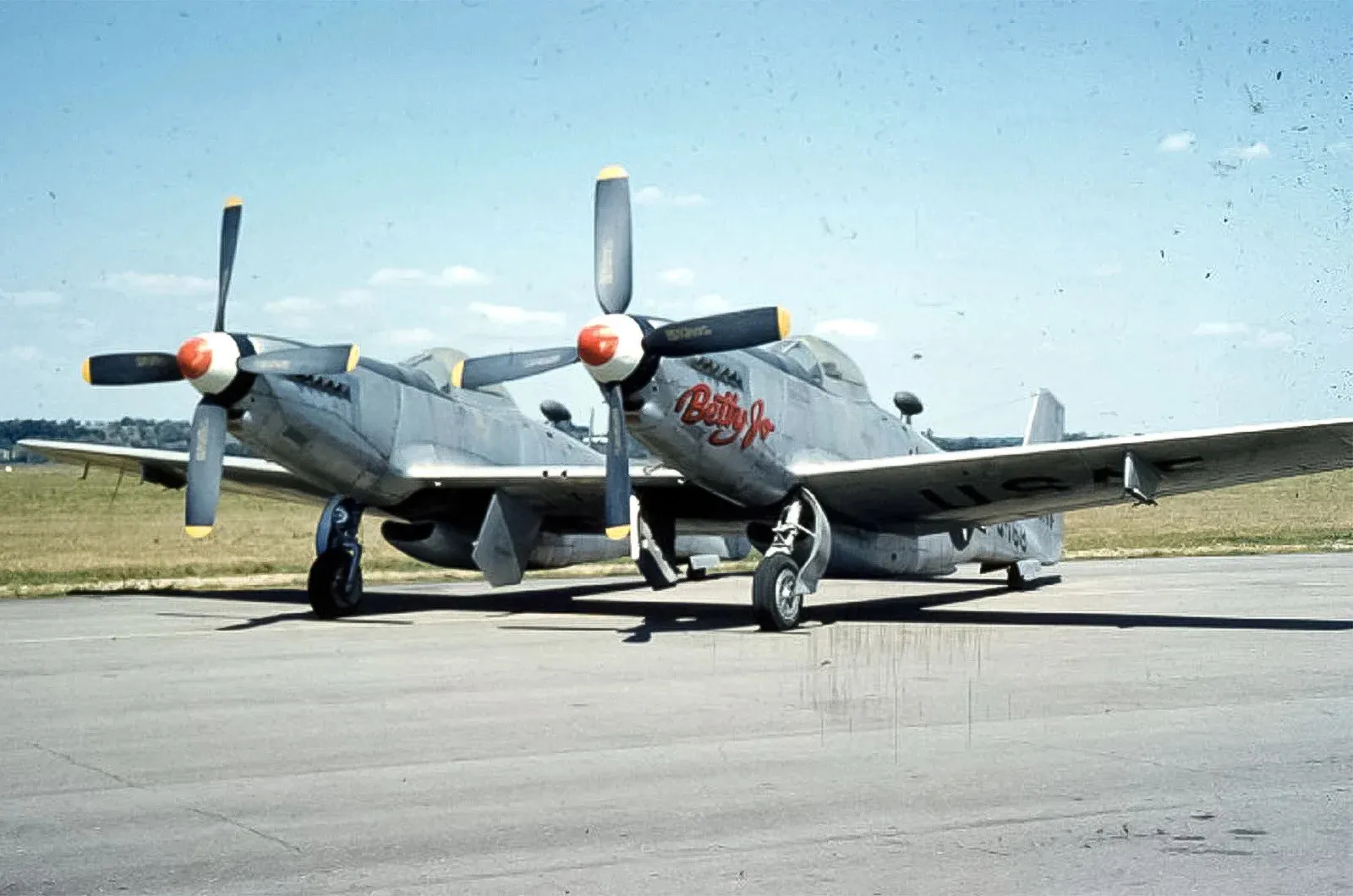
The P-82 Twin Mustang was designed for long-range escort missions. Two Mustang fuselages were joined with a new wing center and tail, allowing two pilots to share flight duties. Though it did not see combat in WWII, it set a nonstop distance record of 5,051 miles and later achieved the first US aerial victory of the Korean War. Night-fighting missions made use of its endurance.
1. Soviet Zveno Composite Bomber
The Zveno project involved a Tupolev TB-3 bomber carrying two Polikarpov I-16 fighters under its wings. This extended their range and bomb load capacity. Zvenos achieved notable success, including the destruction of the King Carol I bridge over the Danube and other strategic targets in 1941. Only six composites were built, limited by TB-3 engine shortages.
World War IIs aircraft modifications demonstrate an extraordinary blend of ingenuity, desperation, and technical daring, shaping aerial warfare in ways both brilliant and bizarre.
Author: Sophia Brooks
Share

Protesters assemble at High Court in response to council's choice to raise Palestine flag
14 seconds ago 2 min read WORLD

Quilen Blackwell, CNN's Hero of the Year, runs a nonprofit 'farm-to-vase' flower shop that empowers at-risk youth
24 seconds ago 3 min read WORLD

Restoration project for Town Hall could reach £450m
2 minutes ago 2 min read WORLD

Trump's 160 posts on Truth Social ignite debate on US president's endurance
3 minutes ago 3 min read WORLD

Japan accuses Chinese jets of using fire-control radar against Japanese aircraft
3 minutes ago 2 min read WORLD

'Inviting destruction to save the colony: sick ants call for death'
7 minutes ago 2 min read WORLD

Netanyahu advocates for a 'buffer zone' without military presence in Syria
10 minutes ago 1 min read WORLD

Technical issues cause crash of vote count site, say Honduras election officials
11 minutes ago 1 min read WORLD

Father who murdered infant daughter receives longer prison term
12 minutes ago 2 min read WORLD
Officials address imminent danger to coastal city: 'It could look darker than usual'
12 minutes ago 2 min read WORLD