

'Fostering Community Through MLK-Inspired Basketball Short Film: The Story of 'Hoops, Hopes & Dreams' Filmmakers'
- HOME
- ENTERTAINMENT
- 'Fostering Community Through MLK-Inspired Basketball Short Film: The Story of 'Hoops, Hopes & Dreams' Filmmakers'
- Last update: 3 hours ago
- 4 min read
- 838 Views
- ENTERTAINMENT
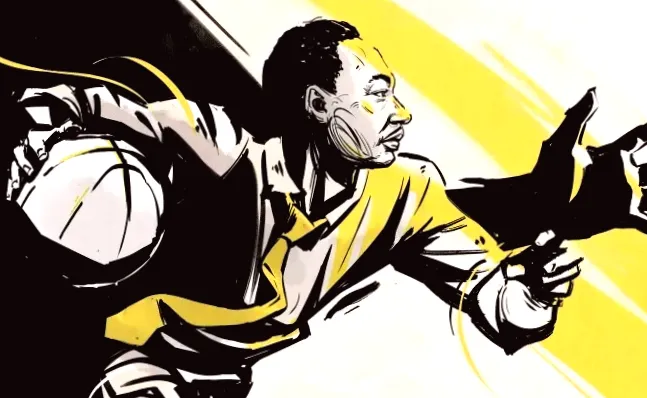
Who knew that one of the most pivotal figures in American history also had a strong backhand on the basketball court? Glenn Kainos documentary Hoops, Hopes & Dreams uncovers a lesser-known aspect of Dr. Martin Luther King Jr.'s life, revealing his involvement in basketball as a tool to unite and engage communities. The film, which premiered at the Sundance Film Festival earlier this year, went on to win the Best Documentary Short Award at the Cleveland International Film Festival and received an Honorable Mention at the Hamptons International Film Festival.
Featuring interviews with notable figures like Jemele Hill, Andrew Young, and Reggie Love, the documentary uses animation alongside interviews to explore topics such as justice, the effectiveness of President Obamas campaign, and the intersection of sports with political activism.
Creating a Unique Story
Deadline spoke with Kaino and producer Alexys Feaster about how the team combined historical research, animation, and interviews to tell a fresh story about Dr. King.
On Discovering the Story
Glenn Kaino: "I first heard about this story when Andrew Young told me about it. As a student of Dr. King, I didnt know this side of him. We assembled a team and reached out to King scholars, but even they werent familiar with the story. Thats when we realized this could be a special way to highlight community-building."
"During the making of the documentary, we found the story as we worked through the materials. We filmed interviews with Andrew Young and other important figures, and though some of the footage didnt make it into the final cut, a dozen key people shaped the films final narrative."
The Significance of Basketball
Alexys Feaster: "Like Glenn, I had never heard of this before. I reached out to my contacts at the African American History Museum, but even they had no records or footage. At first, I questioned whether it was true. But then, it made sense. Basketball is a unifying force, and Dr. King would have used it to connect with people, especially in communities where marches and protests were often ahead of him."
"It became clear that building community couldnt have been done through marches alone. When I heard Andrew Young talk about how they used basketball to gather people before protests, it was clear that it was a powerful tool for unity."
Glenn Kaino: "When Ambassador Young described the specific basketball moves Dr. King made, it added a level of detail that made the story feel real. That kind of specificity made me believe this story was genuine."
The Obama Connection
Glenn Kaino: "As we followed the thread of basketball as a cultural connector, President Obama quickly became a central figure. He was a well-known basketball player, and we felt that including his story would connect past and present leaders. His use of basketball to relate to people resonated with Dr. Kings approach."
Alexys Feaster: "I had worked on President Obamas campaign, leading efforts to engage athletes in support of his second term. When we spoke to people like Reggie Love, who played basketball with Obama, it became clear that Obama, like Dr. King, used the sport to connect with others. It was a natural addition to the story, showing how both leaders used basketball as a tool for unity and activism."
Using Animation to Tell the Story
Glenn Kaino: "One of the challenges in making the film was the lack of photographic evidence of Dr. King playing basketball. Ambassador Young mentioned he had never taken photos while playing. So, we turned to animation to fill that gap. Ive worked with animator Kirill Yeretsky before, and his passion for basketball made him the perfect fit. We wanted to make sure the animation was authentic, so the animators had to be basketball players themselves."
Message for Audiences
Glenn Kaino: "We hope the film shows that leaders and cultural heroes are not unreachable figures, but rather people whose actions can inspire us to connect and build communities. The film is about camaraderie, teamwork, and how these ideals are necessary for society today."
Alexys Feaster: "In addition to team-building, we hope the film inspires hope. When we think about figures like Dr. King and President Obama, theres an underlying message of hopefulness. The film invites viewers to reflect on what they can do to contribute to their communities. Basketball, as a part of American culture, offers a unique way to engage with others and create positive change."
Author: Ethan Caldwell