

Frank Gehry: Renowned Architect of Modest Homes and the Iconic Guggenheim Bilbao
- HOME
- ENTERTAINMENT
- Frank Gehry: Renowned Architect of Modest Homes and the Iconic Guggenheim Bilbao
- Last update: 1 hours ago
- 3 min read
- 571 Views
- ENTERTAINMENT
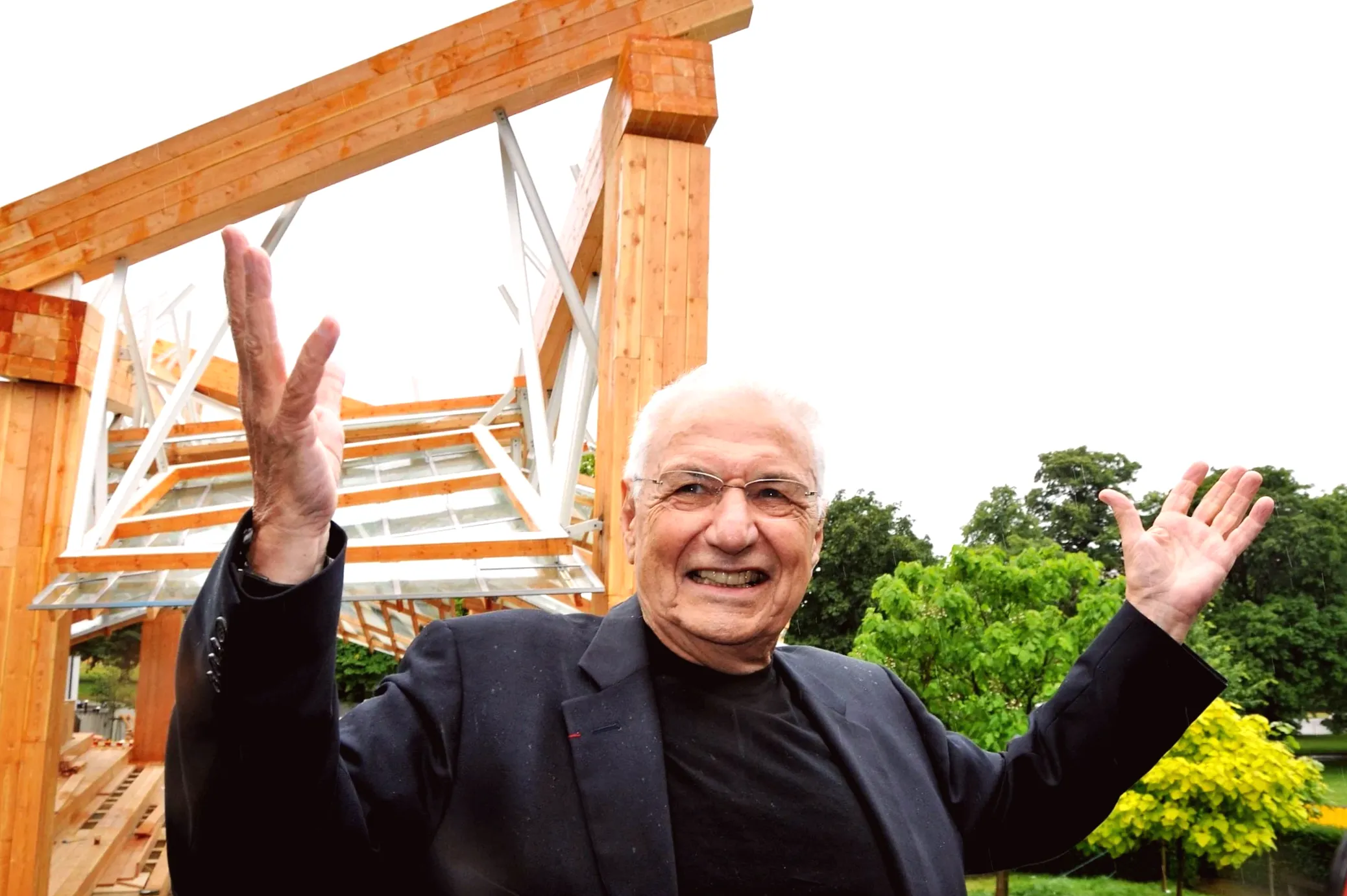
Frank Gehry, the pioneering Canadian architect renowned for his daring and imaginative designs, has died at the age of 96. Throughout his career, Gehry produced buildings that blurred the line between architecture and sculpture, drawing inspiration from artists such as Jasper Johns, Robert Rauschenberg, and Vincent van Gogh.
Gehrys creations are characterized by unexpected shapes, asymmetrical forms, and unusual materials like chain-link fencing and corrugated metal. These elements often combined to create a sense of playful chaos, earning him a reputation as a deconstructivist, though he rejected such labels. Gehry aimed to capture joy and immediacy in his work, prioritizing expressive freedom over philosophical statements.
Some of his most imaginative projects include the Chiat/Day offices in Venice Beach (1991), featuring a giant binocular-shaped building; the California Aerospace Museum (1984), with a real F-104 Starfighter integrated into the facade; the Fishdance Restaurant in Kobe, Japan (1987); and an entertainment complex at EuroDisney near Paris (1992). He also experimented with furniture and lighting designs using unconventional materials.
Gehrys own Santa Monica home (1979) exemplified his playful approach. A two-story Dutch colonial structure was transformed with layers of glass, metal, plywood, and fencing, creating reflective and acoustic effects that often surprised visitors. Sunlight formed geometric patterns, and the houses unconventional design became a celebrated example of his creative ingenuity.
Even his projects in historically sensitive areas sparked debate. The 1996 Rasin office building in Prague, nicknamed "Fred and Ginger" for its dancing forms, faced public scrutiny but ultimately received majority support. In Paris, his 1994 American Centre at Bercy demonstrated a more restrained approach, blending his signature style with local architectural traditions.
Gehrys meticulous attention to detail and innovative thinking earned him international acclaim. Born Frank Owen Goldberg on February 28, 1929, in Toronto, he changed his name in 1954. His early life included moving to Los Angeles, working in a furniture factory, and studying architecture at the University of Southern California and Harvard Graduate School of Design.
Early projects, such as the Danziger Studio (1965) and the ONeill Hay Barn (1968), displayed his interest in sculptural forms and unorthodox materials. Collaborations with artists and the use of inexpensive materials shaped his distinctive aesthetic, which continued in his furniture experiments and large-scale commercial and residential projects.
Gehrys landmark works include the Guggenheim Museum Bilbao (1997), the Walt Disney Concert Hall in Los Angeles (2003), and the Luma Foundation in Arles, France (completed 2021). His designs often responded creatively to their surroundings, producing structures that were both visually striking and contextually aware.
Other notable projects include the Maggies Centre in Dundee (2003), the Serpentine Gallery Pavilion (2008), and the ongoing Guggenheim Abu Dhabi. His office in Venice Beach reflected his experimental style, filled with models, sketches, and a casual work environment.
Throughout his career, Gehry received numerous honors, including the Pritzker Prize, the Wolf Prize, the Lillian Gish Award, the J. Paul Getty Medal, and the Presidential Medal of Freedom in 2016.
He is survived by his second wife, Berta Aguilera, their two sons, and his daughter from his first marriage. Frank Gehry passed away on December 5, 2025, leaving behind a transformative architectural legacy.
Author: Maya Henderson
Share

How Frank Gehry's Playful Nature Captivated a Generation
56 minutes ago 3 min read ENTERTAINMENT

Renowned architect and designer Frank Gehry passes away at the age of 96
1 hours ago 3 min read ENTERTAINMENT
Photos of the famous buildings designed by groundbreaking architect Frank Gehry
9 hours ago 3 min read ENTERTAINMENT

Renowned emotional architect Frank Gehry passes away at 96
13 hours ago 2 min read ENTERTAINMENT

Photos of iconic works by architect Frank Gehry
15 hours ago 1 min read STYLE

Famous architect Frank Gehry passes away: Explore his most iconic structures
15 hours ago 3 min read US

Renowned Architect Frank Gehry Has Passed Away—Here Are His Top 10 Iconic Designs
15 hours ago 4 min read ENTERTAINMENT

Renowned architect Frank Gehry passes away at the age of 96
15 hours ago 2 min read STYLE

Renowned Architect Frank Gehry Passes Away at 96
18 hours ago 3 min read ENTERTAINMENT
Renowned architect Frank Gehry passes away at the age of 96
18 hours ago 3 min read STYLE