

These Bat Companions Have Strikingly Similar Sounds
- HOME
- ENTERTAINMENT
- These Bat Companions Have Strikingly Similar Sounds
- Last update: 3 days ago
- 3 min read
- 11 Views
- ENTERTAINMENT
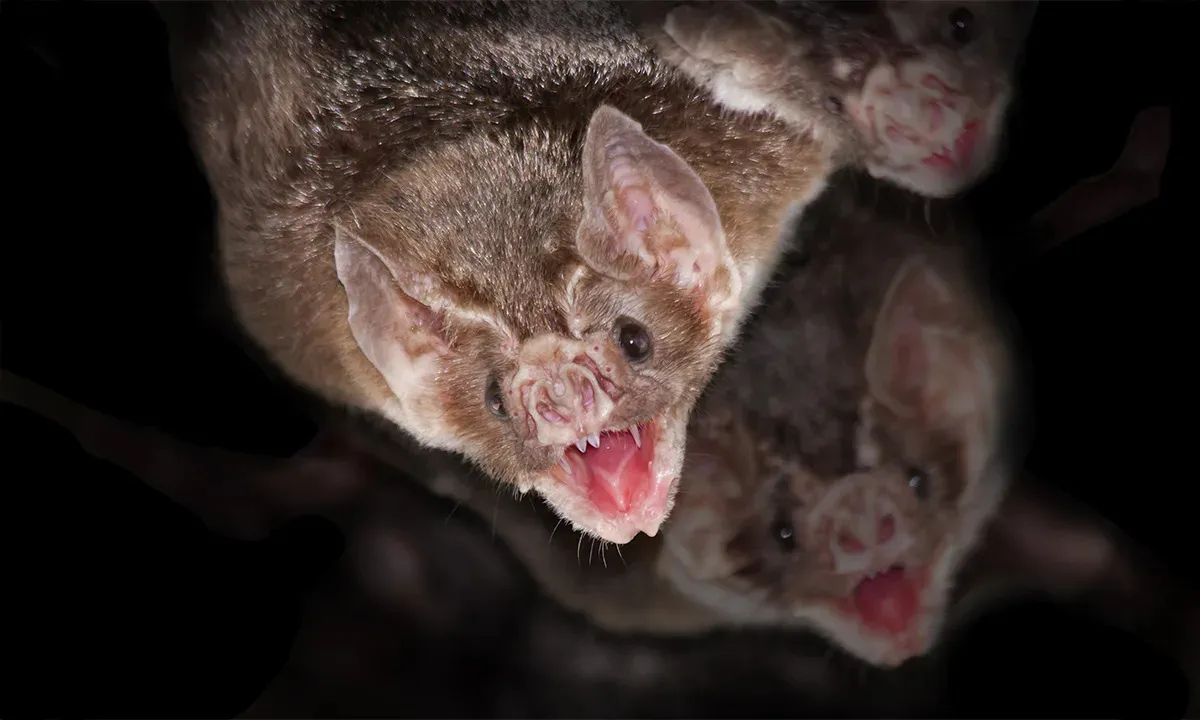
If your voice ever starts sounding a lot like a close friend, you share a trait with vampire bats. Female vampire bats have been observed copying the calls of their neighbors to form new social bonds.
Research into the vocalizations of mammals and birds reveals how sound can shape social interactions. Contact calls, which are specific sounds animals use to communicate, seem to help groups stay connected and reunite after being apart. Studies across various speciesincluding marmosets, baboons, dolphins, and batssuggest that animals often adjust their calls to resemble those of unrelated peers as friendships develop. However, proving a direct link between these vocal similarities and strengthened social ties can be challenging.
Female vampire bats are ideal for studying this phenomenon. They live in tight-knit groups and maintain reciprocal relationships beyond family ties. For instance, they share meals by regurgitating food for their friends. To examine how vocalizations influence these social circles, researchers housed female vampire bats in a lab from 2011 to 2019, observing interactions over extended periods. Some bats already knew each other, but most were strangers.
Scientists tracked social bonds by noting which bats shared food or groomed one another. Each bats contact calls were recorded in approximately seven sessions on average. Since these calls are ultrasonic, inaudible to humans, the team analyzed frequency patterns to identify similarities. In total, nearly 700,000 calls from 95 bats were studied.
Results showed that when unrelated bats formed social groups, they adapted their calls to resemble those of their new companions. The findings were published in Proceedings of the Royal Society B. This shows that females learn their calls by listening to each other during interactions rather than producing sounds solely based on genetics, explained Grace Smith-Vidaurre, a behavioral ecologist at Michigan State University. Bats that shared food were more likely to have similar calls, whereas grooming did not significantly affect vocal resemblance.
There are several explanations for this vocal mimicry. Bats may pick up on frequently heard sounds, similar to how humans adopt regional accents. This bat accent could indicate whether an individual belongs to a social group. Mimicking calls may also facilitate familiarity among bats or help them locate each other in noisy settings.
Researchers are now exploring whether female vampire bats use unique calls to address specific individuals. Gerald Carter, a behavioral ecologist at Princeton University, noted, Bats have incredible vocal flexibility, yet this aspect is still understudied beyond echolocation. This research is only the beginning.
Author: Sophia Brooks
Share

New York Times reveals tips for today's crossword puzzle #909: Hints and solutions for Saturday, Dec. 6
12 seconds ago 2 min read ENTERTAINMENT

Was it a mistake for Stokes not to declare?
1 minutes ago 2 min read ENTERTAINMENT

George Pickens demonstrates to Cowboys why Steelers were keen on trading him
3 minutes ago 2 min read ENTERTAINMENT

Tom Brady's Daughter Vivian, 13, Appears Mature in Birthday Pictures
6 minutes ago 3 min read ENTERTAINMENT

Mexican composer transforms fire and ritual into a musical journey of rebirth
7 minutes ago 3 min read ENTERTAINMENT

MAGA Pastor Reveals Details of Late-Night Call With Barron Trump
7 minutes ago 2 min read ENTERTAINMENT

"I Absolutely Despise It": People Are Exposing Overrated Things They're Sick of Hearing Are Fantastic.
7 minutes ago 4 min read ENTERTAINMENT

Former NASCAR driver Michael Annett passes away at the age of 39
8 minutes ago 2 min read ENTERTAINMENT

The Top 7 Latest Films Available on Netflix in December 2025
10 minutes ago 2 min read ENTERTAINMENT

'Fire Country' Organizes 'SEAL Team' Reunion — and Introduces New Love Triangle for Bode?
10 minutes ago 2 min read ENTERTAINMENT