

Viewpoint - The crackdown on drugs has always targeted individuals - that's why it's ineffective
- HOME
- ENTERTAINMENT
- Viewpoint - The crackdown on drugs has always targeted individuals - that's why it's ineffective
- Last update: 1 hours ago
- 4 min read
- 697 Views
- ENTERTAINMENT
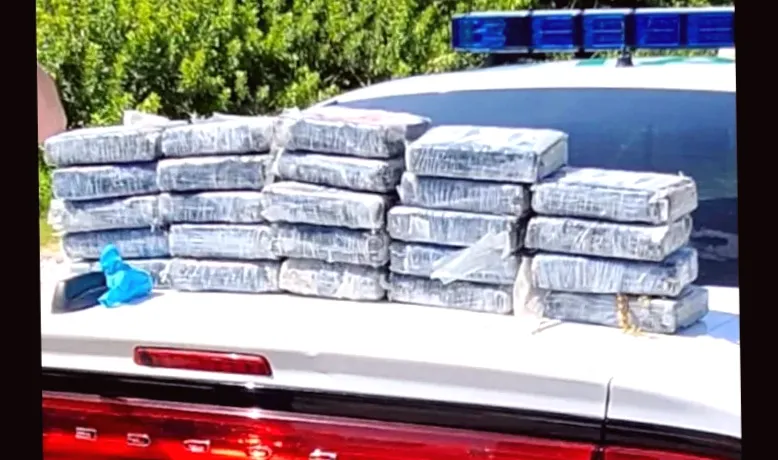
Last month, the U.S. Senate narrowly struck down a bipartisan measure that would have blocked the Trump administration from carrying out military action in Venezuela without congressional consent. The 4951 decision effectively allowed the White House to escalate force, sending more warships to Venezuelas coastline, labeling Cartel de los Soles a foreign terrorist group, and expanding operations from military sites in Puerto Rico.
Even as lawmakers debated war authority, strikes at sea had already begun. U.S. forces targeted small vessels accused of transporting narcotics toward American shores, yet no public proof has been offered that those on board threatened the United States or that drugs were even present. At least 80 people have been killed since September, many of whom may never be identified.
These actions expose a longstanding reality: more than fifty years after Nixon announced the war on drugs, the United States continues to wage war on individuals rather than substances. No arrests, trials or due process accompany these campaigns only lethal power aimed at civilian boats. Members of both parties have acknowledged that the strikes may violate international law, a scenario the Senate could have prevented had it approved the resolution.
The contradiction is stark. An administration claiming to crack down on narcotics through severe punishment of the hemispheres poorest communities now appears intent on insulating its own officials from legal consequences tied to potentially unlawful military missions.
The U.S. incarcerates more people than any other country, yet continues to rank at the top in drug consumption and overdose deaths. After a short drop in 2024, overdose fatalities are rising again. For decades, federal strategy has favored militarized control over public health responses. From Caribbean interdiction to eradication campaigns in Colombia, successive presidents have exported force under the banners of security and stability, leaving the greatest harm to poor, marginalized and non-white communities.
Across Latin America, this framework has functioned as geopolitical leverage. U.S.-funded security projects have disrupted rural economies, forced communities from their land and fueled violence. Plan Colombia, initiated in 2000 and backed by multiple administrations, cost more than $10 billion through 2018. Despite the investment, coca cultivation and cocaine production hit historic highs, with output tripling between 2013 and 2017. Aerial spraying contaminated water sources, destroyed crops and contributed to the displacement of more than seven million Colombians.
The Mrida Initiative, launched in 2007 and extending across Mexico and Central America, delivered roughly $3 billion in security aid while homicide levels in Mexico surged to an average of 95 per day in 2020. Cartels fractured into increasingly violent groups, and trafficking routes multiplied rather than disappeared. U.S.-provided training and equipment were tied to extrajudicial killings, forced disappearances and widespread human rights abuses.
Despite these outcomes, large sums continue to support militarization while doing little to reduce the drug supply or demand. The strategy relies more on political optics than on evidence. Within the U.S., drug use remains treated as criminal deviance rather than a health issue. Enforcement and interdiction consistently overshadow prevention and treatment nearly $8 billion has been requested this year for policing and interdiction, compared with $1.7 billion for treatment and only $325 million for prevention.
More than one million overdose deaths in the last decade, strained treatment systems and public disillusionment demonstrate the cost of this approach. Each new overdose or trafficking surge is framed not as a reason to rethink policy but as justification for expanding the same methods.
A different model is necessary one that recognizes drugs as a public health challenge, not a battlefield. Domestically, this means prioritizing housing, employment, health care and harm reduction over punishment. Globally, it means replacing military doctrine with cooperative strategies rooted in development, sovereignty and equitable partnership.
After fifty years of promises of victory, one fact remains unchanged: the war on drugs has always been a war on people.
Author: Zoe Harrison
Share

Meghan Markle's Engagement Ring: The Special Detail Honoring Princess Diana
29 seconds ago 3 min read ENTERTAINMENT

Power Players of Awards Season in Hollywood: Emma Stone's Hairstylist and Lily Collins' Makeup Artist
3 minutes ago 4 min read ENTERTAINMENT

George Clooney Inquires About Travis Kelce's Interest in Acting Post-Retirement
4 minutes ago 2 min read ENTERTAINMENT

Adam Sandler's Three Siblings: The Stories of Scott, Elizabeth, and Valerie (and How They Helped Shape His Acting Career!)
5 minutes ago 2 min read ENTERTAINMENT

The 10 most painful show cancellations of 2025
8 minutes ago 3 min read ENTERTAINMENT

Roger Ebert Gives Brad Pitt's Heartbreaking 2006 Drama on Prime Video a Perfect Score
9 minutes ago 3 min read ENTERTAINMENT

Is "The Abandons" Inspired by a True Mafia Story? Delving into the Real-Life Inspiration Behind the Netflix Western
10 minutes ago 3 min read ENTERTAINMENT

Saturday Viewing: Melissa McCarthy Hosts SNL, Lacey Chabert Christmas Movie And More
11 minutes ago 2 min read ENTERTAINMENT

Gwen Stefani Wows in a Sheer Ballgown Made Entirely of Tulle for Solo Event
13 minutes ago 2 min read ENTERTAINMENT

Peacock & Sky announce their first comedy co-production in development.
13 minutes ago 2 min read ENTERTAINMENT