

SCOTUS Faces Major Challenge in Determining If It Is Trump’s Court
- Last update: 49 minutes ago
- 3 min read
- 534 Views
- POLITICS
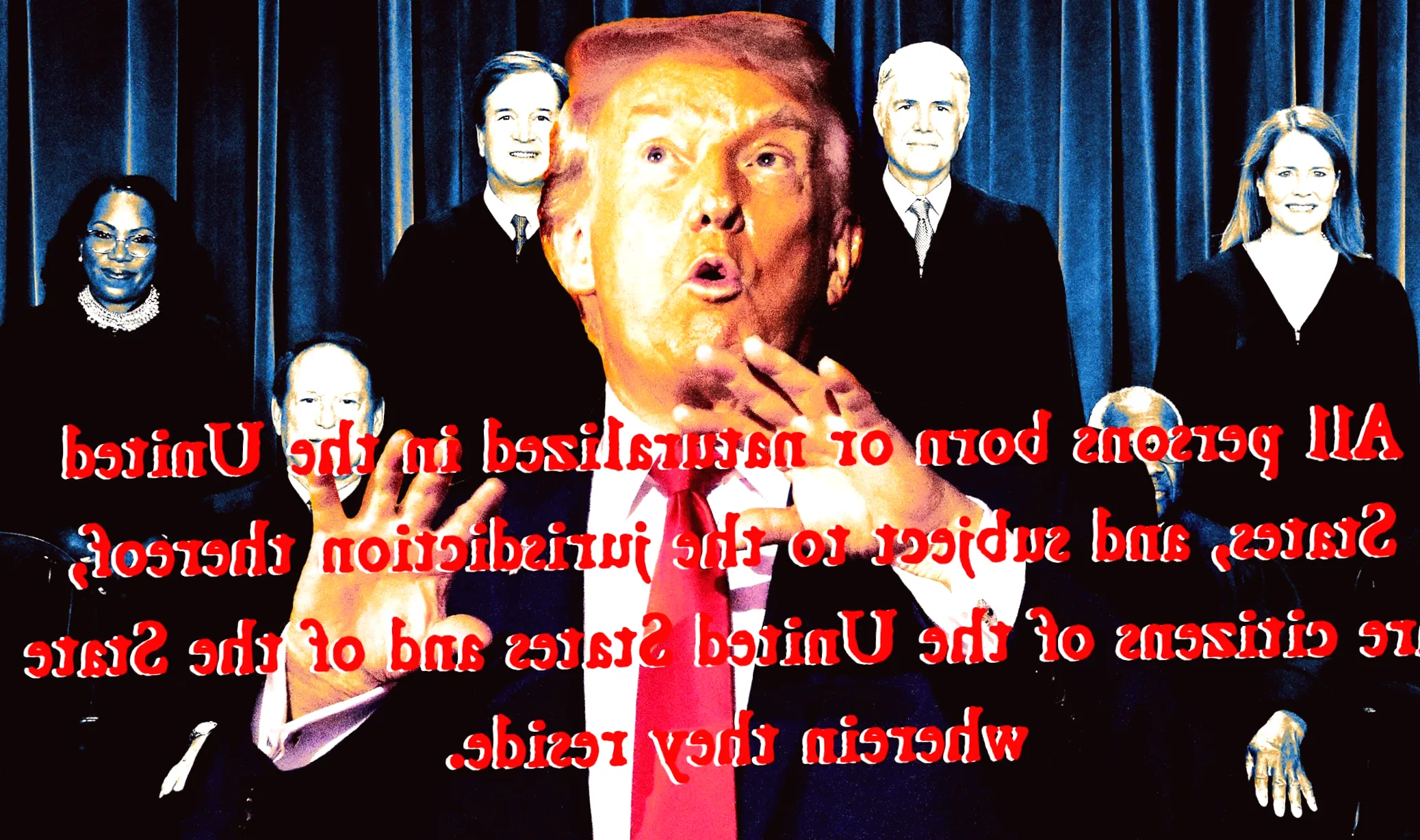
The U.S. Supreme Court has agreed to examine whether President Donald Trumps attempt to terminate birthright citizenship aligns with the Constitution. This case could result in a landmark ruling on a legal principle long considered settled in the country.
The court announced on Friday that it would hear the appeal, after previously siding with the president on procedural technicalities concerning his executive order on birthright citizenship. The new review will focus on the substantive constitutional questions at the heart of the dispute.
If the conservative-majority Supreme Court were to support Trumps proposal to limit automatic citizenship for children born in the U.S., it could have far-reaching consequences for constitutional law, immigration policy, and the formal registration of newborns.
The court, with its six-to-three conservative split, will examine Trumps executive order, which aims to restrict citizenship to children with at least one parent who is either a U.S. citizen or a permanent resident. Under this plan, babies born to parents on temporary visas, student visas, or without legal status would not automatically receive U.S. citizenship.
Oral arguments in Trump v. Barbara are expected next spring, with a decision likely by the end of the term in June or early July. The central issue concerns the longstanding interpretation of the 14th Amendment, which has guaranteed citizenship to all individuals born on U.S. soil for over 150 years.
Trump signed the executive order on January 20, the first day of his second term, as part of his broader immigration agenda. Critics argue the move contradicts both historical precedent and existing law. Cecillia Wang of the ACLU, which challenged the order in court, stated, Federal courts have consistently ruled that this executive order violates the Constitution, Supreme Court precedent from 1898, and congressional statutes. We are eager for the Supreme Court to resolve this issue definitively this term.
Legal scholars note that the arguments presented by the Trump administration in this case are viewed as extreme, even within conservative circles. Nonetheless, the Supreme Courts willingness to hear the case reflects its openness to evaluating controversial claims from the administration.
The conservative majority has previously ruled in favor of Trump in several significant cases, expanding presidential powers, limiting judicial oversight, and permitting certain immigration enforcement measures. Recently, the court allowed Texas to proceed with new congressional districts ahead of the 2026 midterms and continues to review other executive actions, including tariff policies.
Earlier this year, the Supreme Court addressed procedural issues regarding Trumps birthright citizenship order but did not resolve the constitutional questions. While the lower courts ability to block the policy was curtailed, the executive order itself remains temporarily restrained by other court interventions.
Author: Sophia Brooks
Share
Understanding birthright citizenship: Key points to know following Supreme Court decision to hear appeal
1 hours ago 2 min read POLITICS

Interpretation of one phrase will determine Supreme Court's decision on birthright citizenship
8 hours ago 3 min read BUSINESS

The Supreme Court to review the most unconstitutional action taken by Trump
8 hours ago 3 min read POLITICS

Supreme Court to consider case on birthright citizenship
8 hours ago 2 min read POLITICS
Supreme Court to rule on legality of Trump's attempt to restrict birthright citizenship
9 hours ago 3 min read POLITICS

Supreme Court to determine if Trump has the power to limit birthright citizenship
9 hours ago 3 min read POLITICS

Trump's executive order on birthright citizenship goes to the Supreme Court
9 hours ago 2 min read POLITICS

Supreme Court Allows Trump to Move Closer to Ending Birthright Citizenship
9 hours ago 2 min read POLITICS

US Supreme Court to consider Trump's attempt to eliminate birthright citizenship
10 hours ago 2 min read POLITICS

Supreme Court to review Trump's challenge to birthright citizenship
10 hours ago 3 min read POLITICS