

Chimpanzees surprise scientists with rational thinking
- Last update: 5 days ago
- 3 min read
- 11 Views
- SCIENCE
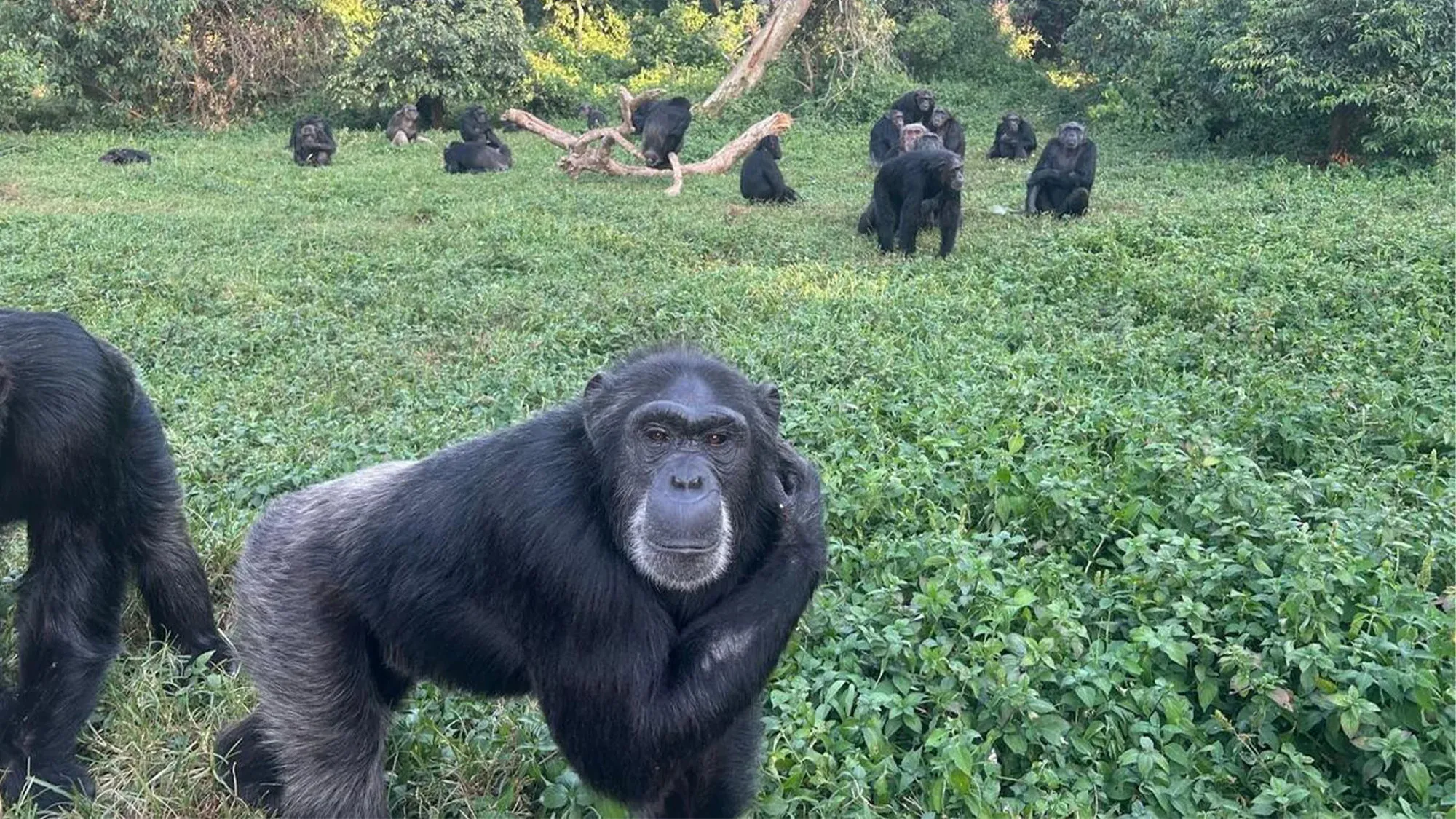
Aristotle once claimed that the ability to reason sets humans apart from all other animals. Yet, recent research indicates that this distinction may not be as exclusive as traditionally believed. A new study published in Science examined the decision-making abilities of chimpanzees at the Ngamba Island Chimpanzee Sanctuary in Uganda.
In the study, chimpanzees were presented with two boxesone containing food and the other empty. Initially, they were given a hint indicating which box held a treat. Following this, the chimps received a series of additional clues of varying clarity about the location of the food. When the first clue was strong, the chimpanzees remained with their initial choice. However, when subsequent evidence clearly outweighed the first, they changed their selection, explains Hanna Schleihauf, assistant professor of developmental psychology at Utrecht University and co-author of the research.
To ensure the primates decisions reflected true reasoning rather than simply favoring the latest hint, the team employed computer models. The results showed that the chimpanzees behavior aligned with rational strategies of belief updating. This type of reasoning is typically observed in children around four years old.
Schleihauf highlights that the chimps also demonstrated metacognitive awarenessan understanding of their own thinking. They adjusted their decisions based on the strength of the evidence, revising beliefs when prior clues were contradicted, she notes. This indicates that chimpanzees are capable of belief revision based on evidence, a key feature of rational thought long assumed to be uniquely human.
The findings suggest that cognitive differences between humans and other primates may be less stark than previously assumed, pointing instead to a gradual spectrum of rational reasoning. Beyond this insight into primate cognition, the study has broader implications. Demonstrating rational belief revision in chimpanzees offers a comparative framework for exploring the evolution of human reasoning, Schleihauf says. Researchers can use these findings to identify which elements of rationality are shared with chimpanzees, which emerge early in human children, and which depend on culture or uniquely human forms of social learning like teaching and argumentation.
Additionally, the study reinforces the importance of conservation and ethical treatment of great apes. The research supports the creation of more cognitively enriching environments in sanctuaries and zoos, emphasizing both welfare and conservation goals.
Overall, the research adds to a growing body of evidence that challenges the long-held belief in humans unique cognitive supremacy, showing that our closest primate relatives share more in common with us than previously realized.
Author: Sophia Brooks
Share

Elon Musk predicts AI will render most skills irrelevant, but assures his children can still pursue higher education if they choose to
3 days ago 2 min read SCIENCE

What is the current status of SOCOM's AI targeting tests?
3 days ago 3 min read SCIENCE
Scientists uncover unsettling findings about wildfire smoke: 'Unnoticed chemical reactions'
3 days ago 2 min read SCIENCE
Tesla observers verify sightings of long-awaited new model on streets: 'It's an attractive car'
3 days ago 2 min read SCIENCE

Report suggests that the ship fire was probably caused by a battery
3 days ago 2 min read SCIENCE
Researchers discover remarkable effects of structures constructed by wild animals: 'Balancing costs and advantages'
3 days ago 3 min read SCIENCE

Curiosity Uncovered a Big Surprise Inside a Rock on Mars
3 days ago 3 min read SCIENCE

NASA Makes Significant Progress Towards Artemis II's Moon Mission
3 days ago 2 min read SCIENCE
NASA warns scientists about rapid acceleration of ocean changes: 'Speeding up'
3 days ago 2 min read SCIENCE
Surprising find in wetlands a decade after reintroducing extinct beavers: 'Has the potential to change local ecosystems'
3 days ago 2 min read SCIENCE