

Clues from Monkeys Point to a Mysterious Evolutionary Musical Connection
- Last update: 4 days ago
- 3 min read
- 49 Views
- SCIENCE
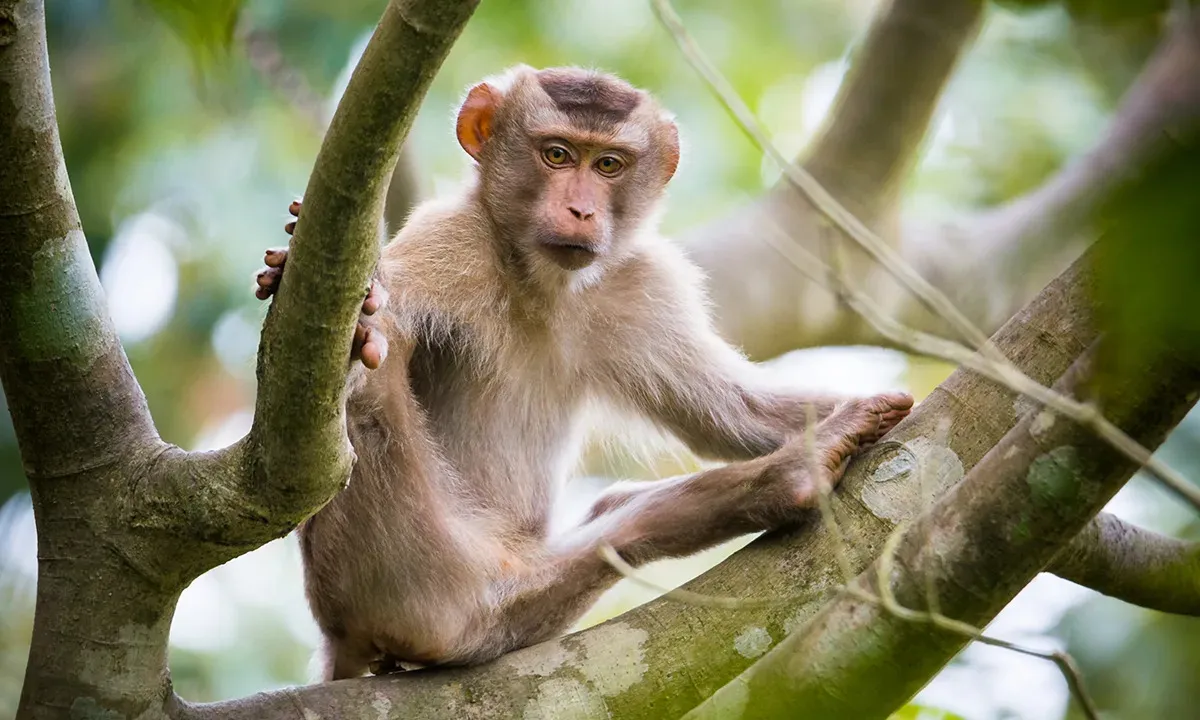
Humans may not always be the most graceful dancers, but our capacity to instinctively move to music is considered exceptional in the animal world. Synchronizing motion with a beat is relatively rare among animals, and until now, scientists believed it was mostly confined to species capable of mimicking sounds, a skill known as complex vocal learning. Most nonhuman primates, including chimpanzees, our closest living relatives, do not possess this ability.
Recent research has challenged this assumption. Macaque monkeys, who are not recognized as vocal learners, have shown the ability to tap along with songs, including hits from the Backstreet Boys. These monkeys were able to synchronize their hand movements with the rhythm of several musical tracks, offering new insights into the evolution of musicality.
Researchers have long explored how different species perceive and respond to human-created music to understand the origins of musical perception. In humans, moving spontaneously to a song involves complex cognitive skills, such as recognizing abstract patterns and preparing the body to react to the next beatcapabilities that begin emerging in infancy. Outside humans, only certain birds and sea lions had previously been observed keeping time with music. Macaques now join this select group, according to a recent study published in Science.
The study involved three experiments with two adult male macaques trained using juice rewards to tap along with multiple songs. These tracks were chosen for their clear beats, similar to metronome rhythms previously used in training. The researchers from the National Autonomous University of Mexico tested the monkeys' tapping abilities under different conditions:
- Experiment 1: Three songs were played, and the tempo was altered by half a beat. Despite the change, the macaques maintained the rhythm.
- Experiment 2: Songs were scrambled, disrupting the rhythmic structure. The monkeys synchronized only when a discernible beat was present.
- Experiment 3: The macaques were rewarded for maintaining a steady rhythm to "Everybody" by the Backstreet Boys, played at three different speeds. They consistently tapped along to the original tempo of the song.
The study notes, The observation that a trained monkey naturally gravitates toward synchronizing its taps at the true tempo of new songs suggests a potential spontaneity in perceiving musical rhythm. However, researchers clarify that these tapping behaviors are not entirely instinctive like the natural toe-tapping or swaying humans do to music. The monkeys required extensive training and still found the task challenging.
The findings suggest that the ability to move to music in various species may depend on four key skills: perceiving musical patterns, predicting the next beat, timing movements accordingly, and integrating these abilities to earn rewards. This implies that more animal species could possess some capacity for rhythm perception than previously recognized.
This study marks a significant step toward understanding the neurobiological and evolutionary origins of musical beat perception, establishing the macaque as a useful model organism, the authors concluded. Despite needing guidance, these reluctant dancers hint that the roots of rhythm may extend deeper into our evolutionary history than previously thought.
Author: Sophia Brooks
Share

Elon Musk predicts AI will render most skills irrelevant, but assures his children can still pursue higher education if they choose to
3 days ago 2 min read SCIENCE

What is the current status of SOCOM's AI targeting tests?
3 days ago 3 min read SCIENCE
Scientists uncover unsettling findings about wildfire smoke: 'Unnoticed chemical reactions'
3 days ago 2 min read SCIENCE
Tesla observers verify sightings of long-awaited new model on streets: 'It's an attractive car'
3 days ago 2 min read SCIENCE

Report suggests that the ship fire was probably caused by a battery
3 days ago 2 min read SCIENCE
Researchers discover remarkable effects of structures constructed by wild animals: 'Balancing costs and advantages'
3 days ago 3 min read SCIENCE

Curiosity Uncovered a Big Surprise Inside a Rock on Mars
3 days ago 3 min read SCIENCE

NASA Makes Significant Progress Towards Artemis II's Moon Mission
3 days ago 2 min read SCIENCE
NASA warns scientists about rapid acceleration of ocean changes: 'Speeding up'
3 days ago 2 min read SCIENCE
Surprising find in wetlands a decade after reintroducing extinct beavers: 'Has the potential to change local ecosystems'
3 days ago 2 min read SCIENCE