
Trump administration implements plan to increase water pumping in California despite state opposition
- Last update: 20 hours ago
- 4 min read
- 290 Views
- US
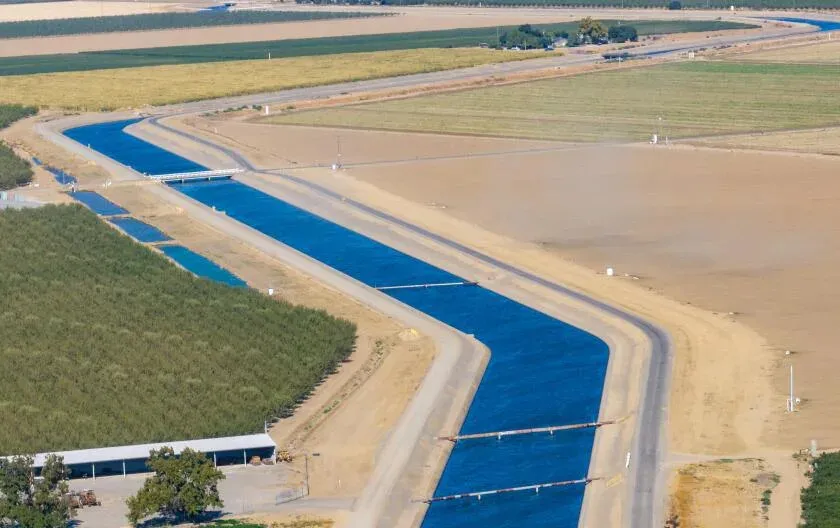
The federal government, following an order from President Trump, announced Thursday a plan to boost water deliveries to Central Valley farmlands via the Sacramento-San Joaquin River Delta. California officials have warned that this unilateral decision could harm local fish populations and reduce water availability for millions elsewhere in the state.
The U.S. Bureau of Reclamation stated that its updated operational strategy for the federally managed Central Valley Project is designed to "maximize water deliveries throughout California while ensuring protections for endangered fish species." The revised plan will supply additional water to farms and communities across the San Joaquin Valley.
A spokesperson for Governor Gavin Newsom criticized the move, saying it prioritizes political interests and large donors over the needs of Californians.
Interior Secretary Doug Burgum emphasized that the federal government is "fulfilling the promise" of Trump's earlier executive order aimed at "strengthening Californias water resilience." Some major agricultural water districts in California welcomed the change. Allison Febbo, general manager of Westlands Water District, noted that the adjustments "help growers secure water for local communities and national food supply while protecting wildlife."
Federico Barajas, executive director of the San Luis & Delta-Mendota Water Authority, estimated the plan could provide 250,000 to 400,000 additional acre-feet of water per year. For context, the city of Los Angeles uses nearly 500,000 acre-feet annually. Barajas highlighted the importance of this water as groundwater supplies become limited due to forthcoming restrictions.
Last month, three California state agencies warned that increasing water pumping could seriously impact Delta fish populations. Nevertheless, the Bureau of Reclamation stated that the new operations are "not expected to cause significant harm to the environment or species protected under the Endangered Species Act."
The Delta is a key hub in California's water system, and past water pumping has stressed the ecosystem, affecting species like Chinook salmon, steelhead trout, and Delta smelt. The state warned that more federal pumping could force cuts in water deliveries via the State Water Project, which serves Southern California.
The plan also challenges decades of collaboration between state and federal water agencies. Tara Gallegos of Governor Newsoms office said the administration's approach ignores science and undermines the protection of water for communities, agriculture, and ecosystems. Environmental and fishing groups have expressed concerns that the plan weakens protections for struggling fish species.
Karla Nemeth, director of Californias Water Resources Department, stressed the need for coordination between the State Water Project and the Central Valley Project to safeguard water supplies, wildlife, and water quality. She warned that federal changes to reservoir and canal operations could hinder the states ability to deliver water to 27 million residents and 750,000 acres of farmland, though the state will attempt to align both projects for Californias benefit.
The Bureau of Reclamation asserts that its new "Action 5" plan will allow both projects to increase water deliveries. Andrea Travnicek, Interior Department assistant secretary for water and science, described the plan as "forward-looking" and balanced for communities, agriculture, and ecosystems.
During Trumps first term, similar attempts to alter Californias water regulations were challenged in court by the state and conservation groups. Last year, the Biden administration, working with Governor Newsom, established new long-term operational rules for Californias major water delivery systems. The Bureau of Reclamation now states that Action 5 replaces that previous plan.
The State Water Resources Control Board criticized the decision, saying it undermines decades of cooperative state-federal efforts to improve watershed conditions and that the full impact is difficult to gauge. Chuck Bonham, director of California Department of Fish and Wildlife, described many federal measures as vague, unclear, and not based on the best available science. He argued that Action 5 provides less protection for species than prior proposals and threatens the livelihoods of communities reliant on healthy Chinook salmon populations.
Author: Lucas Grant
Share

Governor says National Guard member is "making gradual progress" after D.C. shooting
1 hours ago 2 min read US

The onset of December's Arctic air blast
1 hours ago 3 min read US

Investigation reveals victims of Maryland house fire were also shot
1 hours ago 4 min read US

3 officers wounded, suspect fatally shot in gunfight at Omaha gas station
1 hours ago 2 min read US

Kalen DeBoer, Alabama Receives Unfavorable Update During College Football Season
1 hours ago 2 min read US

Infant and grandfather possibly killed in Tennessee pitbull attack
2 hours ago 2 min read US

When a Lowe's store cat went missing, employees went above and beyond to locate her
2 hours ago 2 min read US

Puerto Rico Lottery results: Check out the winning numbers for Pega 2, Pega 3 on December 5, 2025
2 hours ago 2 min read US

Hozhonigo Institute Boosts $34.5M in Grants for Tribal Communities
2 hours ago 2 min read US

Drones deliver tree seeds to safeguard reservoir
2 hours ago 2 min read US