

18,000 Tracks Found in the Largest Dinosaur Tracksite in the World
- Last update: 1 hours ago
- 2 min read
- 296 Views
- WORLD
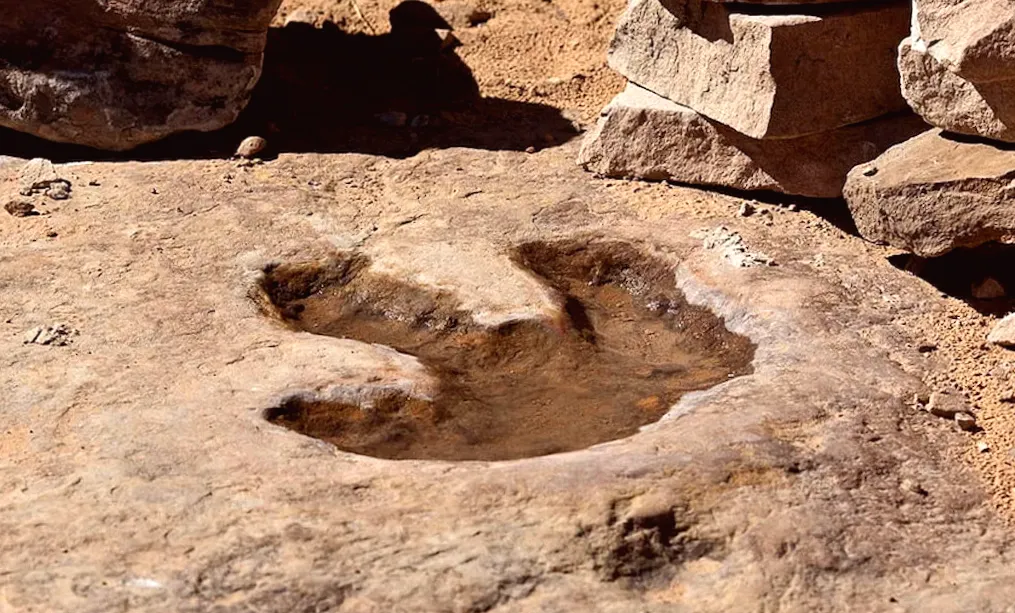
High in the Andes, within Bolivia's Torotoro National Park, a vast stretch of ancient rock has been identified as the largest dinosaur tracksite ever documented. On the eastern slopes of the mountain range, paleontologists have examined the Carreras Pampa site, uncovering nearly 18,000 individual footprints left by dinosaurs around 70 million years ago, during the final era before their extinction.
The site contains a record-breaking 16,600 three-toed prints across 1,321 trackways, alongside 289 isolated footprints. Additionally, researchers identified 1,378 swim traces in 280 distinct pathways. All tracks are attributed to theropods, the group of dinosaurs that includes carnivorous species and modern birds.
"Carreras Pampa in Torotoro National Park is a remarkable collection of dinosaur and bird tracks, swimming traces, tail marks, and invertebrate burrows," said a US-Bolivian research team led by paleontologist Ral Esperante from the Geoscience Research Institute.
The tracks formed on the shore of an ancient freshwater lake, an environment that allowed the impressions to endure. The sediment, composed mainly of oval calcium carbonate grains such as ostracod shells and ooids, combined with fine silicates, created a surface firm enough to maintain deep footprints yet soft enough to capture detailed impressions.
The site preserved more than just footprints. It also captured claw marks, tail drags, and scratches left by dinosaurs swimming. Footprint sizes range from over 30 centimeters (1 foot) to under 10 centimeters, oriented in two main directions along the lakeshore. Most prints belong to theropods with feet between 16 and 29 centimeters, corresponding to dinosaurs roughly as tall as an adult human. Researchers identified 11 distinct track types, noting even sharp turns made by running dinosaurs.
"Tail drag traces are common and well-preserved in various trackways, showing shallow, deep, and very deep impressions. These traces indicate that dinosaurs occasionally used their tails to stabilize themselves on soft ground," the team explained.
With the highest number of theropod and swim tracks recorded, along with diverse track preservation, Carreras Pampa offers rare insight into dinosaur behavior. Researchers classify it as a Lagersttte, a site of exceptional fossil concentration and preservation, highlighting its global significance.
The study detailing the discovery was published in PLOS One.
Author: Zoe Harrison
Share

Report shows that fire crews are at higher risk of cancer
1 minutes ago 2 min read WORLD

Homeless individuals who are employed utilize Nottingham winter shelter
8 minutes ago 2 min read WORLD

Woman dies in hit-and-run incident following trip to store
13 minutes ago 1 min read WORLD

German Parliament advocates for a permanent memorial honoring Polish war victims
15 minutes ago 1 min read WORLD

The Kremlin receives a gift in the form of the EU's top diplomat
25 minutes ago 3 min read WORLD

Myanmar residents cast early votes in Bangkok
27 minutes ago 2 min read WORLD
Sudanese paramilitary drone strike results in deaths of 50 people, including 33 children in Kordofan, according to doctor group
38 minutes ago 2 min read WORLD

Significant advancements in borough's revitalization efforts
42 minutes ago 2 min read WORLD

'Collective punishment': West Bank suspect's family home demolished
51 minutes ago 3 min read WORLD

Hong Kong leader emphasizes the importance of discovering the truth following fatal apartment fire, urges building reform.
53 minutes ago 2 min read WORLD