
Myanmar residents cast early votes in Bangkok
- Last update: 1 hours ago
- 2 min read
- 452 Views
- WORLD
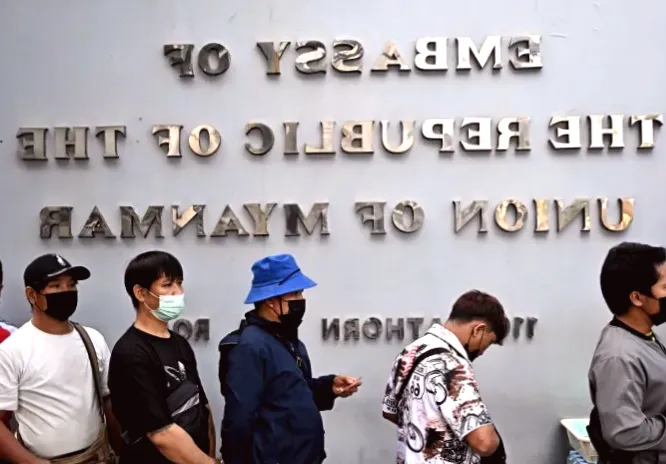
On Saturday, Myanmar citizens living abroad began casting their votes in early elections at the country's embassy in Bangkok. Only a small number of voters participated during the initial hours of polling.
Myanmar's military, which took control in a 2021 coup that triggered ongoing internal conflicts, has scheduled phased elections starting later in December, claiming they are a step toward national peace and democratic governance. However, the Union Election Commission announced the suspension of voting in nearly 1,600 village areas, significantly limiting the elections reach.
Early voting is also taking place at Myanmar embassies in locations such as Hong Kong, Singapore, and Chiang Mai. At the Bangkok embassy, journalists observed about 25 people register to vote within the first two hours, with a strong police presence ensuring order.
Voters expressed mixed sentiments. Moe Moe Lwin, 42, said she hoped the election would bring peace and unity among Myanmar citizens. First-time voter and construction worker Khun Kyaw Swe expressed hopes for improvements in education and regional development following the election.
Thailand hosts a substantial number of Myanmar nationals, with official records indicating around half a million in the capital, while international organizations estimate approximately 4.1 million Myanmar nationals reside in the country, many undocumented or having fled conflict.
Officials at the Bangkok embassy were unable to confirm how many voters had completed the registration process, which had closed on October 15.
Critics of the election, including human rights groups and opposition figures, have dismissed the vote as a controlled exercise to legitimize ongoing military rule. A Chulalongkorn University student described the election as a staged event and expressed skepticism about its fairness, citing oppression and displacement of civilians.
In its official statement, the Union Election Commission noted that voting in 1,585 village areas was canceled because conditions there were not conducive to free and fair elections. Previous announcements had indicated that elections would not take place in about one in seven national parliament constituencies. New laws passed by the military government ahead of the polls impose strict penalties for protesting or criticizing the election, including imprisonment for up to ten years.
Preparatory census data suggested that nearly 19 million of Myanmars 51 million residents were not included in voter records, further highlighting the elections limited scope.
Author: Natalie Monroe