

Archaeologists Discover Ancient Artifacts Dating Back 6,000 Years Beneath One of England's Most Revered Structures
- Last update: 1 hours ago
- 2 min read
- 174 Views
- WORLD
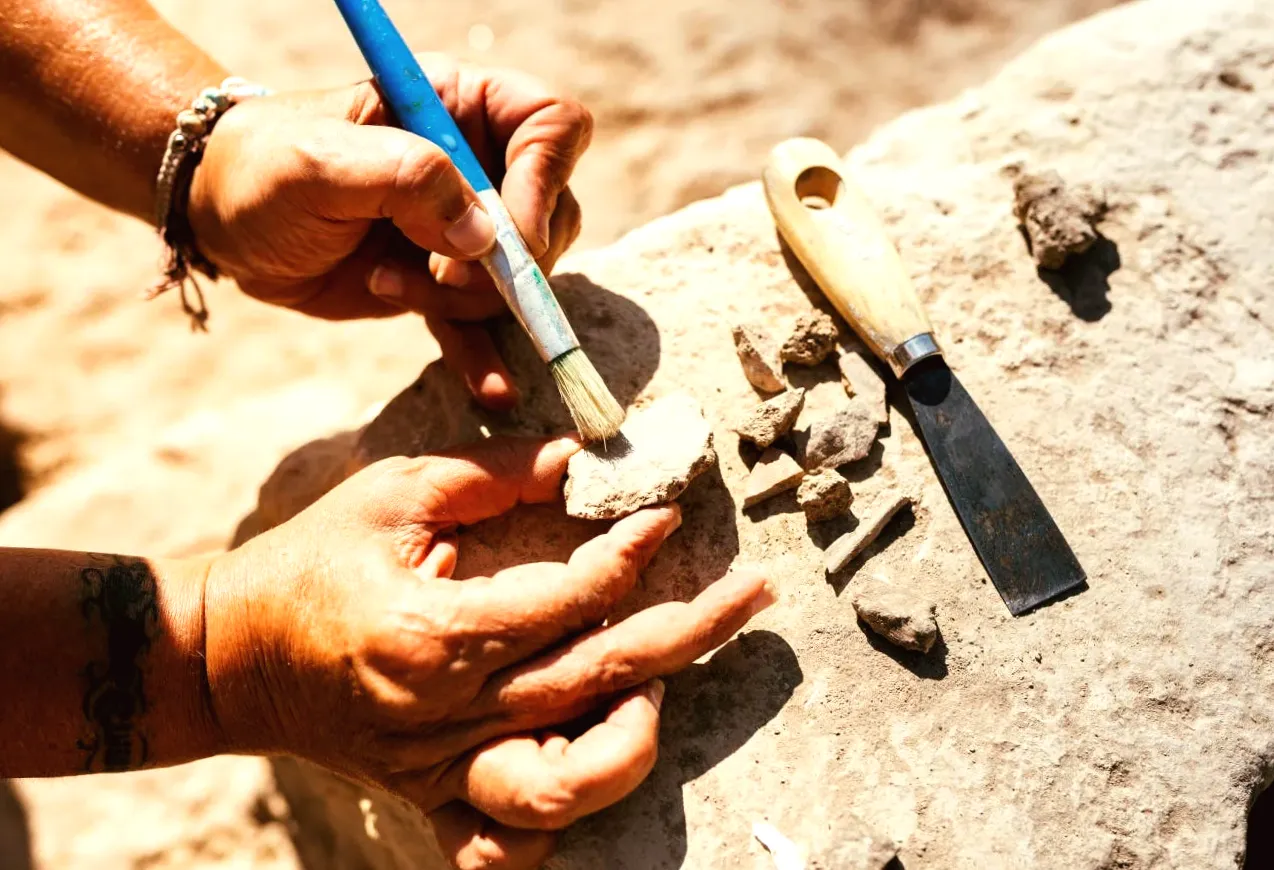
Archaeologists working at the Palace of Westminster in London have discovered artifacts dating back 6,000 years, shedding light on the areas long and varied history. Among the finds are stone tools from approximately 4300 B.C.E., suggesting that the site once supported a community of hunters and fishers.
As part of a three-year archaeological program led by the Houses of Parliament Restoration and Renewal Delivery Authority, researchers conducted 14 trial pits and 10 geoarchaeological boreholes across the estate, including areas with historical industrial activity. The most significant finds include over 60 flint flakes, some carefully shaped, possibly from the late Mesolithic era.
The investigation also revealed artifacts spanning several centuries, such as a medieval leather boot, shoe soles, and straps about 800 years old; fragments of decorated clay tobacco pipes used by stonemasons after the 1834 fire; a Roman altar fragment over 2,000 years old; a lead badge shaped like a flowering heart from the 14th or 15th century; a 19th-century five-pint beer jug; medieval floor tiles; and a stone crucible for heating lead, likely used in constructing the palaces medieval window frames.
These early discoveries highlight the historical richness of Westminster, said David Brock, head of the Government Historic Estates Unit at Historic England. They reveal the wide range of human activities that took place here.
Simon Thurley, archaeologist and chair of the Restoration and Renewal Delivery Authority Board, noted that the trial excavations have already provided new insights while confirming prior suspicions. This marks the beginning of a fascinating journey of discovery, he commented.
The team also uncovered substantial remains of the medieval Lesser Hall, or White Hall, built in 1167. Previously thought to have been destroyed in the Great Fire of 1834, the halls stone walls were found intact. It was later restored, re-roofed, and used until its demolition in 1851.
Finding the Lesser Hall walls is especially significant, Brock added. These discoveries will deepen our understanding of Westminster Hall and other surviving medieval structures, enriching knowledge of this World Heritage site.
The archaeological work continues, focusing on areas where future restoration and construction are planned. Diane Abrams, archaeology lead for the authority, emphasized the importance of these findings. Uncovering evidence of prehistoric flint tool production and surviving medieval structures offers an extraordinary glimpse into the history beneath todays seat of parliament, she said.
Author: Olivia Parker
Share
Federal government files lawsuit against real estate developer for mishandling protected land: '3,000 artifacts lost or destroyed'
1 minutes ago 2 min read WORLD

Philippines reports China fired flares at its patrol plane in the contested South China Sea
3 minutes ago 2 min read WORLD

Experts say Florida Crunch Fitness may be the cause of a Legionnaires 'outbreak'
4 minutes ago 2 min read WORLD

Waymo autonomous taxi drives passengers into apparent police standoff
5 minutes ago 1 min read WORLD

Arizona congresswoman claims she was pepper-sprayed at ICE protest.
6 minutes ago 2 min read WORLD

Zara Aleena's relative urges for law requiring action in case of danger
8 minutes ago 3 min read WORLD

Opinions wanted on proposal to enhance air quality
8 minutes ago 1 min read WORLD

Caution about waves hitting coastal roads
11 minutes ago 1 min read WORLD

Children injured when school bus roof torn off by bridge
12 minutes ago 1 min read WORLD

Discovery of New Burial Site for Infants at Tuam Mother and Baby Home Continues during Excavation
14 minutes ago 2 min read WORLD