

Australia imposes sanctions on Afghan Taliban officials for violations of women's rights
- Last update: 56 minutes ago
- 3 min read
- 359 Views
- WORLD
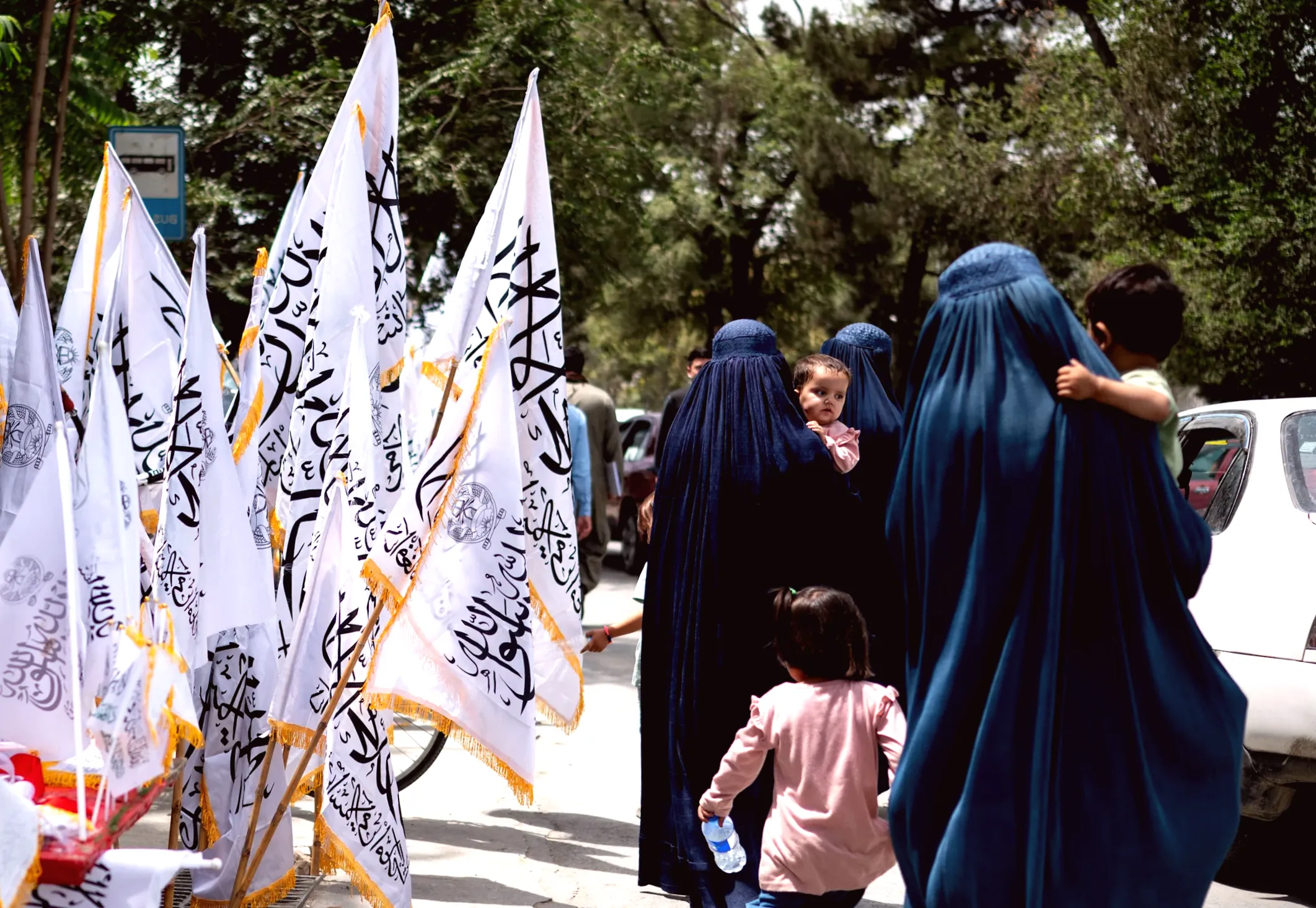
The Australian government has announced financial sanctions and travel restrictions against four members of Afghanistan's Taliban administration, citing the worsening human rights conditions in the country, especially for women and girls.
Foreign Minister Penny Wong stated on Saturday that Canberra had introduced a world-first independent sanctions system for Afghanistan, enabling Australia to impose sanctions and travel bans directly to increase pressure on the Taliban.
The new framework, according to the Department of Foreign Affairs and Trade, also enforces an arms embargo and prohibits providing related services and activities to Afghanistan.
The officials affected include Muhammad Khalid Hanafi, Minister for the Propagation of Virtue and the Prevention of Vice; Neda Mohammad Nadeem, Minister of Higher Education; Abdul-Hakim Sharei, Minister of Justice; and Abdul Hakim Haqqani, Chief Justice.
Penny Wong explained that the sanctions target those involved in the oppression of women and girls and in undermining good governance or the rule of law, including restricting access to education, employment, freedom of movement, and participation in public life.
Canberras new framework supplements existing sanctions on 140 individuals and entities under the United Nations Security Councils Taliban measures. The Taliban government has not publicly responded to Australias latest sanctions.
In July, the International Criminal Court issued an arrest warrant for Chief Justice Haqqani and the Talibans supreme leader, Haibatullah Akhunzada, for alleged crimes against humanity involving the persecution of women and girls.
The ICC stated that the Taliban has severely deprived girls and women of their rights to education, privacy, family life, and freedoms of movement, expression, thought, conscience, and religion. Since regaining power after the withdrawal of U.S. and NATO forces in August 2021, the Taliban has implemented strict limitations on womens rights, including bans on working and studying.
The Taliban has dismissed allegations of human rights abuses, asserting that womens rights are respected within the framework of Islamic law. In December 2022, the Ministry of Higher Education prohibited female students from attending universities, a decision widely condemned internationally. Last year, the United Nations reported that the Talibans policies denied education to at least 1.4 million girls, roughly 80% of school-age girls in Afghanistan.
The Taliban takeover has also exacerbated poverty, partly due to restrictions on female workforce participation, leaving large portions of the population dependent on humanitarian assistance.
Wong emphasized that Australia remains deeply concerned at the deteriorating situation and noted that the sanctions framework includes provisions for humanitarian aid. She expressed solidarity with those suffering under Taliban rule and with the Afghan community in Australia.
Author: Connor Blake
Share

Misidentified Ancient Cistern near Shlomi, Northern Israel, Mistaken for Hezbollah Tunnel
14 minutes ago 3 min read WORLD

Lammy's intervention in the EU could turn out to be a brilliant strategic move
14 minutes ago 2 min read WORLD
Researchers uncover surprising activity occurring deep below the ocean's surface: 'Far more dynamic than previously believed'
18 minutes ago 3 min read WORLD

Death toll from Indonesia floods reaches 883, with over 500 still missing
23 minutes ago 2 min read WORLD

WHO warns that progress in the fight against malaria has come to a halt
26 minutes ago 3 min read WORLD

Calls for South East Water CEO to step down following water shortage in Tunbridge Wells.
28 minutes ago 3 min read WORLD

I stayed in a 2-story, 100-square-foot tiny home in Germany for 2 nights. It was smaller than any I've seen in the US.
34 minutes ago 3 min read WORLD

Negotiators from the US and Ukraine stress importance of Russia for achieving 'real progress' towards peace
35 minutes ago 2 min read WORLD

The most crowded streets in Northern Kentucky | List
37 minutes ago 1 min read WORLD

Ukraine and US to hold third day of talks, acknowledge 'real progress' hinges on Russia
39 minutes ago 3 min read WORLD