

Cosmic rays from another galaxy can impact air travel, as shown by NJ plane incident: planetary defense expert
- Last update: 53 minutes ago
- 2 min read
- 613 Views
- WORLD
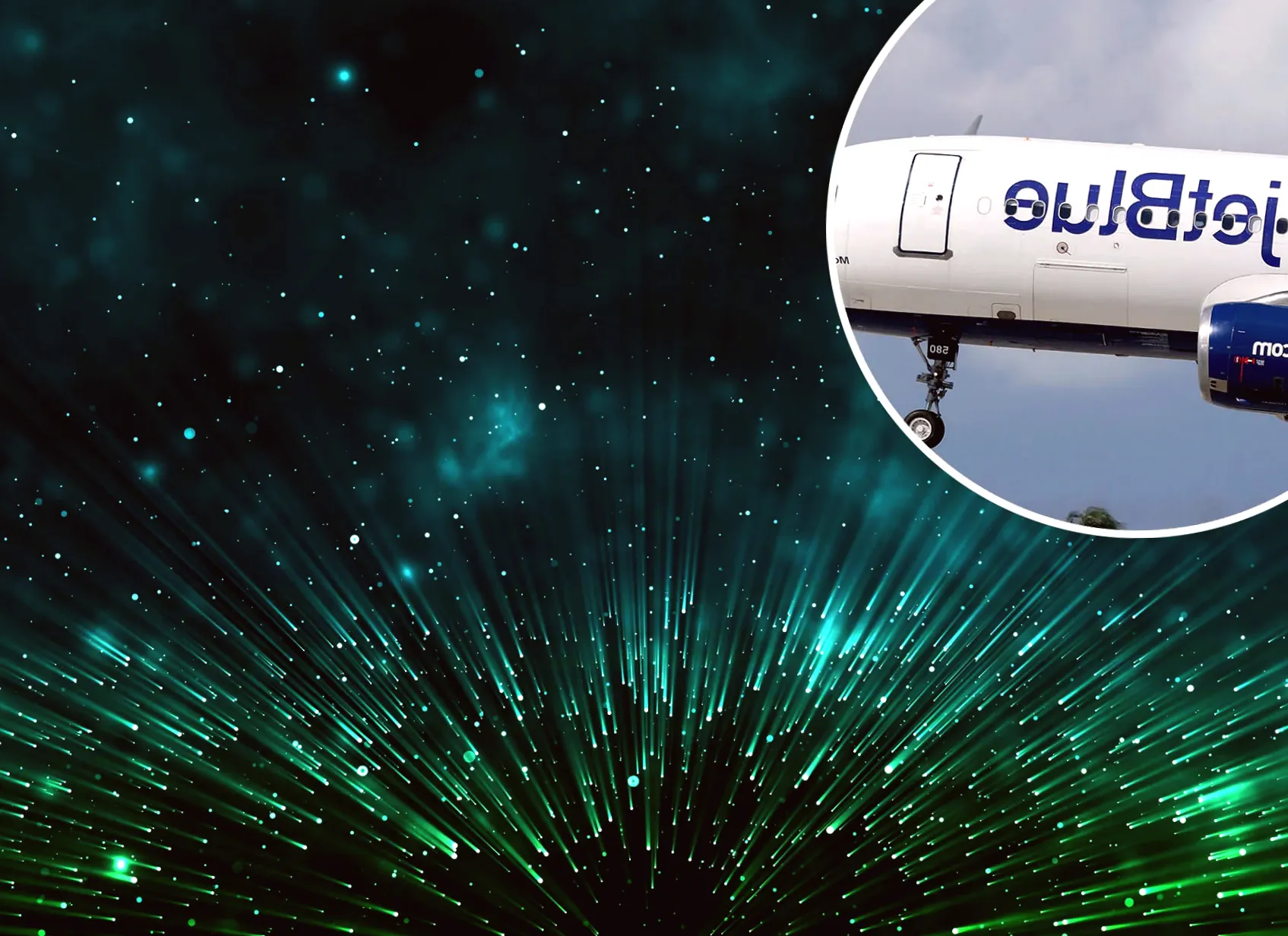
Space hazards arent limited to satellites and spacecraft. In a startling October incident, a JetBlue flight heading to New Jersey abruptly dropped thousands of feet, sending 15 passengers to the hospitala situation experts say could have broader implications for air travel safety.
With the sheer volume of flights every day, rare events like this are bound to happen, explained Casey Dreier, Chief of Space Policy at The Planetary Society. When a high-energy particle hits a critical computer circuit, it can disrupt memory, sensor readings, or cause other malfunctions.
Dreier described the event as a bit flip, where corrupted data in the flight computer triggered the sudden altitude loss. The affected aircraft had been traveling from Cancun, Mexico, to Newark when it was apparently struck by a stream of energetic particles originating from a supernova millions of years ago, according to UK-based space analysts.
Pilots managed to regain control and make an emergency landing in Tampa, Florida. Approximately 20 passengers suffered serious injuries, including head trauma. The pilots responded quickly, but the situation could have been far worse, Dreier noted, emphasizing that the cosmic ray explanation remains a hypothesis, not a confirmed cause.
Cosmic rays are pervasive and constantly bombard Earth, but Dreier stressed that such incidents are rare due to the protective shielding provided by Earths magnetic field and atmosphere. In space, the risks are significantly higher, which is why spacecraft use specialized hardware to safeguard sensitive systems, he added.
Although these particle strikes are ongoing, the likelihood of one hitting a critical system at a crucial moment is very low. The danger slightly increases during periods of intense solar activity, when solar flares emit powerful bursts of particles.
Space hazards extend beyond cosmic rays. Solar storms can disrupt GPS signals, interfere with radio communications, and even threaten power grids. In May, a massive solar storm affected the daylight side of Earth, causing widespread blackouts and radio outages across Europe, Asia, and the Middle East.
Mitigating the impact of deep-space radiation on aviation remains challenging. Improving hardware, updating software with better error correction, or enhancing radiation shielding for electronics could help, Dreier said. However, the high cost and infrequency of these events make extensive protective measures difficult to justify.
Author: Gavin Porter
Share

Possible JetBlue flight control issue may have been caused by cosmic flare
1 hours ago 2 min read US
Expert suggests that 'Cosmic Rays' from Distant Supernova Could be Responsible for JetBlue Flight Turbulence in Mid-Air.
9 hours ago 2 min read US

Cosmic rays from space may have caused turbulence on New Jersey-bound flight, sending 15 people to hospital: professor
9 hours ago 2 min read WORLD
A Navy jet's $60 million aircraft carrier landing goes awry in seconds with a bang and sparks
12 hours ago 3 min read WORLD

Theory proposes cosmic ray as potential cause of sudden drop in flight over Florida
13 hours ago 1 min read BUSINESS

Navy reveals 'catastrophic' discoveries regarding USS Harry S. Truman
20 hours ago 2 min read POLITICS
F-16s dispatched, flares used to intercept aircraft near Mar-a-Lago
3 days ago 2 min read POLITICS
Airbus confirms software fix for majority of A320 jets, fewer than 100 planes left to update
4 days ago 2 min read ECONOMICS
Airbus announces software fix completed for majority of A320 jets, fewer than 100 planes still require update
4 days ago 2 min read ECONOMICS
Airbus software problem could lead to flight disruptions over Thanksgiving holiday rush
5 days ago 2 min read WORLD