

Expert suggests that 'Cosmic Rays' from Distant Supernova Could be Responsible for JetBlue Flight Turbulence in Mid-Air.
- Last update: 9 hours ago
- 2 min read
- 402 Views
- US
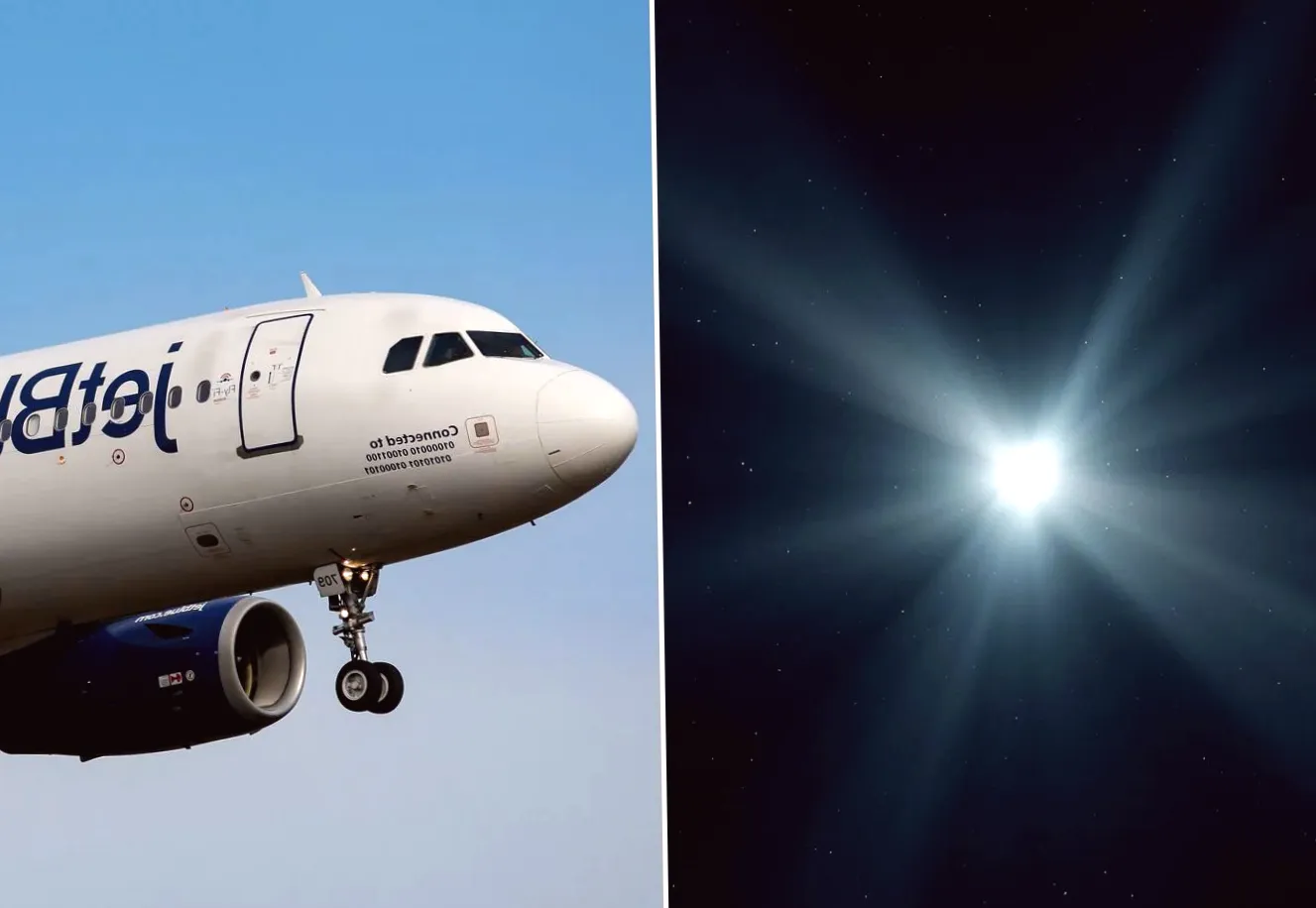
A specialist in space and radiation has proposed that a sudden mid-air drop experienced by a JetBlue flight, which resulted in injuries to at least 15 passengers, could have been triggered by cosmic rays rather than solar activity.
The incident occurred on October 30, when a JetBlue Airbus A320 flying from Mexico to New Jersey suddenly lost altitude and made an emergency landing in Tampa, Florida. Local authorities reported that around 15 to 20 passengers were taken to nearby hospitals with non-life-threatening injuries.
Initially, Airbus attributed the event to solar radiation interference with flight control systems. In a statement released on November 28, the manufacturer said that intense solar radiation "may corrupt data critical to the functioning of flight controls" and prompted a software update across more than 6,000 aircraft to maintain safety.
However, Clive Dyer, a space and radiation expert at the University of Surrey, challenged Airbus explanation. He told Space.com that solar activity on the day of the flight was minimal and unlikely to have caused the incident.
Dyer suggested that a cosmic raya high-energy particle emitted from a supernovamight have affected the plane's electronics. "These particles can interact with microelectronics, flipping bits or even causing hardware failures by inducing currents in devices," he explained. Cosmic rays originate from massive stellar explosions and can travel millions of years before reaching Earth.
While solar flares are also a source of energetic particles, they tend to be much more powerful than cosmic rays and can significantly disrupt electronic systems. Notably, higher levels of solar radiation were observed less than two weeks after the JetBlue event, which may have influenced Airbus decision to issue fleet-wide software updates.
Dyer emphasized the responsibility of manufacturers to design robust electronics, particularly in safety-critical systems. He warned that complacency over the past two decades could leave aircraft vulnerable to rare but intense cosmic or solar radiation events.
Research indicates that the sun is entering a more active phase, which could increase particle radiation in the atmosphere and affect aviation safety. "You can get massive spikes in particle radiation from the sunthousands of times higher than cosmic rayspotentially impacting many aircraft," Dyer added.
Author: Aiden Foster
Share
Data reveals increase in immigration arrests of individuals with no criminal backgrounds
1 minutes ago 2 min read US

Oregon Officials Express Concern Over Appearance of Hairy, Invasive, Wall-Scaling Crabs
9 minutes ago 2 min read US
Weekly quiz: What rare fungus was found?
10 minutes ago 1 min read US

Opinions requested on dementia care in hospitals
12 minutes ago 1 min read US

Watch: Trailer with nine sled dogs overturns on Minnesota highway
12 minutes ago 1 min read US

Five Peterborough news stories you may have overlooked
24 minutes ago 2 min read US

Maine Man Taken Into Custody Following Fast-Paced Chase in Stolen Vehicle, According to New Hampshire Authorities
33 minutes ago 2 min read US

Check it out: 5 real stories of animal criminals
36 minutes ago 2 min read US

DHS initiates immigration campaign in New Orleans
37 minutes ago 2 min read US

ESPN's 'College GameDay' Contemplates Unusual Week 15 Choice
51 minutes ago 2 min read US