

France is preparing to introduce drone swarms into its armed forces within two years
- Last update: 36 minutes ago
- 3 min read
- 741 Views
- WORLD
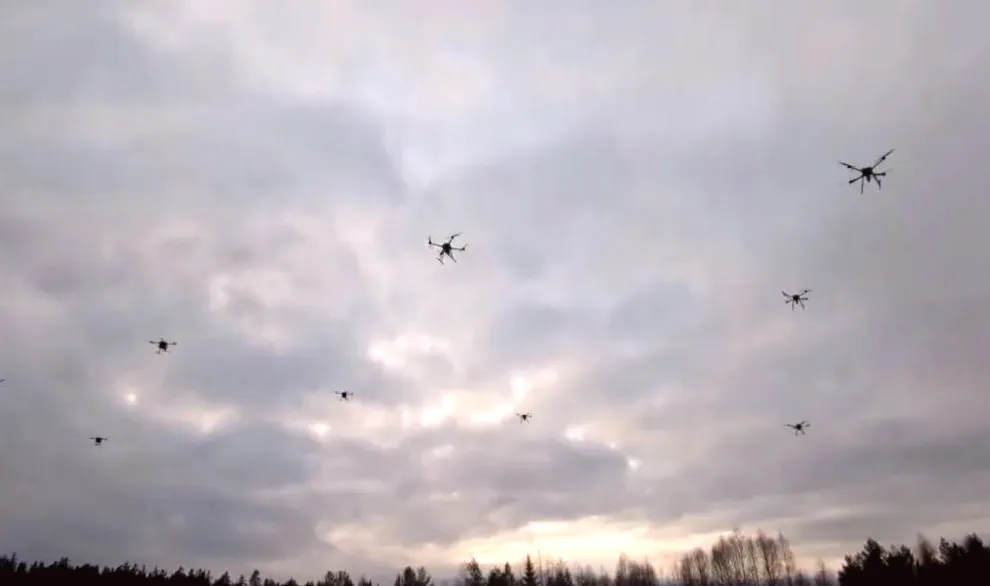
PARIS French military leaders expect drone swarms to be integrated into active units within two years, as core technologies enabling collective autonomous operations reach full readiness. The timeline was confirmed by Col. Philippe Bignon, head of the French Armys Future Combat Laboratory, and Eric Lenseigne, vice president for drone warfare at Thales.
Within two years, concrete use cases will be implemented in selected formations, and wide-scale adoption should follow rapidly due to their clear tactical advantages, Lenseigne stated during the Forum Innovation Dfense in Paris.
Bignon emphasized that swarms can counter two defining elements of modern combat: highly lethal engagement zones and restricted access created by layered defenses. While multiple NATO members are experimenting with coordinated drone groups and Ukraine has employed limited multidrone formations, most current platforms still demand one operator per aircraft. True swarm doctrine, however, relies on autonomous networks capable of sensing, processing and executing decisions collectively with minimal oversight.
Thales current trials indicate that all critical components needed for operational swarm deployment are effectively in place, according to Lenseigne. Bignon projected that initial operational capabilities will arrive in under two years, followed by broader rollout in approximately five.
Frances Pendragon initiative, combining ground and aerial autonomous systems under AIdirected command, is set for its first demonstration in 2026 with deployment planned the following year.
According to Bignon, swarms multiply offensive and defensive capabilities while lowering risk, as only a small portion of the deployed vehicles must reach mission goals. AI decisionmaking will enable leadership roles inside the swarm to shift automatically if a primary controller is lost.
He outlined upcoming strategies involving coordinated penetration missions blending air-defense suppression, electronic interference, attacks on command and logistics nodes, and followon exploitation. Such tactics, he said, could break the battlefield gridlock visible in Ukraine.
Lenseigne noted that although the conflict in Ukraine has accelerated drone concepts, swarm capability there remains limited due to the sheer number of drones requiring human pilots. Bignon added that initial formations are more likely to consist of small coordinated groups of five to ten drones rather than massive, thousandunit swarms.
Potential swarm applications include frontline resupply, deceptive maneuvers, and continued automation of contested zones that are already dominated by machinetomachine combat due to extreme lethality. Bignon warned that future zones may emerge where humans are almost entirely absent.
Lenseigne described a future battlefield defined by a shrinking number of expensive, crewed platforms operating alongside rapidly expanding fleets of uncrewed swarm assets.
Ethical oversight remains a significant hurdle. Because swarms function through artificial intelligence, operators must be trained to identify abnormal behavior, retrain systems when necessary, and assume legal responsibility for autonomous actions. Bignon also highlighted the psychological effects of facing machinedriven assault formations, describing swarms impersonal nature as a cold form of warfare.
Lenseigne stressed that human adaptation may slow deployment, as military personnel must adjust to a radically transformed combat environment. Logistics and hardware integration also present substantial challenges, from storage and transport to power management for largescale drone releases. Supporting infrastructure will need to evolve quickly to sustain swarm operations, he concluded.
Author: Maya Henderson
Share
£110k worth of cannabis plants discovered following fire
42 seconds ago 1 min read WORLD

Family of deceased Briton calls for a second post-mortem examination
2 minutes ago 2 min read WORLD

Israeli forces fatally shoot two Palestinian teenagers in occupied West Bank
3 minutes ago 2 min read WORLD

The Science Behind Why Certain Names Are More Memorable Than Others
10 minutes ago 3 min read WORLD

This year's royal Christmas card pays tribute to love
13 minutes ago 2 min read WORLD

Mexican flesh-eating worm causing shortage in U.S. beef supply
14 minutes ago 4 min read WORLD

Hong Kong’s deadliest fire in decades raises concerns about the safety of bamboo scaffolding, a centuries-old technique
16 minutes ago 3 min read WORLD

Three officers killed by roadside bomb in northwestern Pakistan
27 minutes ago 2 min read WORLD

Civil Administration retrieves numerous stolen artifacts from a site in the West Bank
30 minutes ago 2 min read WORLD

Explosion in western Mexican state of Michoacan leaves 2 dead, 7 injured
32 minutes ago 2 min read WORLD