

Ombudsman uncovers police shortcomings in IRA attacks investigation
- Last update: 55 minutes ago
- 4 min read
- 106 Views
- WORLD
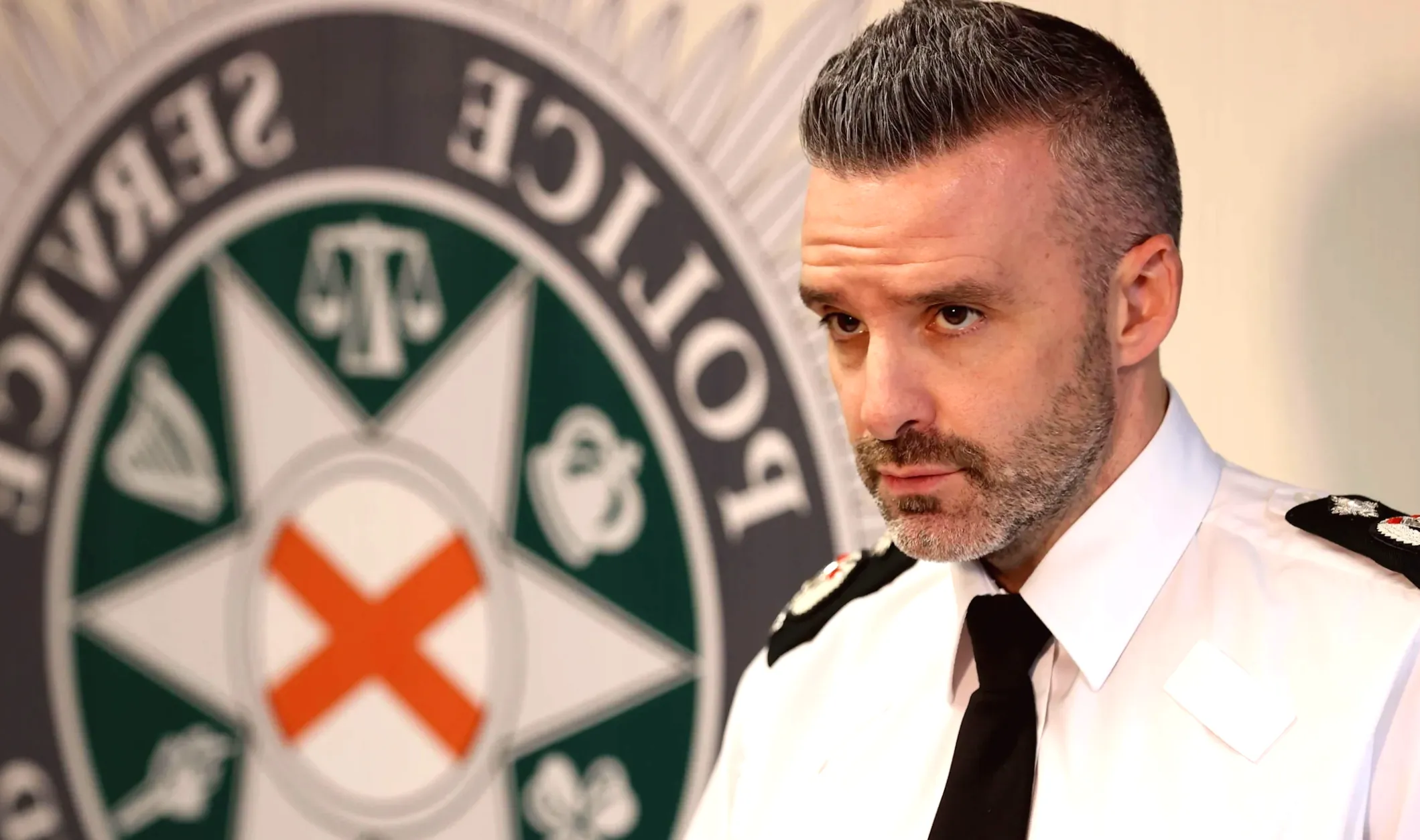
The Police Ombudsman has identified significant shortcomings in the investigations of two IRA-related attacks that occurred 35 years ago. A report released by Marie Anderson's office sheds light on the murders of Henry Babington, as well as police constables Harold Beckett and Gary Meyer. The killings in Belfast were linked by the use of a shared firearm.
Mrs. Anderson's office had previously received complaints from the families of Mr. Babington and Mr. Beckett regarding the way the investigations were handled. In response to the findings, the Police Service of Northern Ireland (PSNI) stated that it would thoroughly review the report and, when appropriate, meet with the affected families.
Deputy Chief Constable Bobby Singleton publicly apologized to the families of Beckett, Meyer, and Babington on behalf of the PSNI, acknowledging the "failings" in the investigation, both before and after the murders occurred.
Henry Babington, aged 52, was shot in Chichester Park in October 1989 as a result of mistaken identity. The ombudsmans investigation revealed that a brown leather jacket, which had traces of dried human blood, was confiscated from a suspect who was arrested. However, due to the inability to determine a blood type, the jacket could not be linked to the crime. The forensic lab was told that the suspect had been cleared of involvement, and the jacket was discarded with no further tests performed.
Mrs. Anderson stated, "Police claimed the individual was eliminated from the investigation despite evidence linking him to the murder. My investigators were unable to determine the reasoning behind this decision." She emphasized that proper storage and retention of the jacket could have been crucial, given advancements in forensic technology, and that the mishandling of this evidence might have limited further investigative opportunities.
Mrs. Anderson also criticized the initial investigation by the Royal Ulster Constabulary (RUC), describing it as "incomplete." The weapon used to kill Babington, a 9mm Browning pistol, was also linked to the attack on Constable Harold Beckett, who was fatally shot in Belfast city center in June 1990. Beckett's colleague, Constable Gary Meyer, was also killed in the same attack.
The Ombudsmans investigation found that intelligence from the army, which contained information about a potential witness who "knew the gunmen by name," was not acted upon by the RUC. Mrs. Anderson remarked, "The intelligence provided revealed a person who could have had crucial information about the identity of the gunmen. It is unclear why the Senior Investigating Officer (SIO) did not pursue this lead." She also uncovered additional information explaining why a planned arrest of two suspects did not take place.
Mrs. Anderson further concluded that the failures in the investigation were so severe that they undermined the possibility of apprehending and prosecuting the perpetrators, thus failing to meet the standards required under Article 2 of the European Convention on Human Rights.
The Browning pistol used in the attack had been stolen during the abduction and murders of Corporals Derek Wood and David Howes in west Belfast in 1988. The weapon was recovered during a police search of a property in October 1990, and a man arrested during the operation was later sentenced to seven years in prison for possession of the weapon. The gun was returned to the army in 1996, but its current location is unknown.
Mrs. Anderson's investigation concluded that, based on the available intelligence, there was no evidence suggesting that the murders of Babington, Beckett, and Meyer could have been prevented. "I believe these three individuals were innocent victims of a terror campaign orchestrated by republican paramilitaries. The IRA was solely responsible for their deaths," she stated.
However, she could not definitively conclude whether the guns used in the murders were returned to an IRA arms dump before being used in the killings, as part of a covert security operation.
Kevin Winters, a solicitor representing the Babington and Beckett families, described the ombudsman's findings as a "damning indictment" of the police investigations. He also pointed out that the RUC Special Branch had knowledge of the arms dump containing the murder weapons.
In response, Deputy Chief Constable Bobby Singleton acknowledged the shortcomings of policing at the time. He stated, "Policing has significantly evolved over the past 30 years, with new policies and procedures now in place regarding criminal investigations, intelligence handling, training, investigative standards, forensic opportunities, and family liaison processes. While we have made progress, we recognize that this will offer little solace to the families who continue to suffer due to the failures of policing in the past."
Author: Jackson Miller
Share

Human Rights Watch condemns FIFA's Peace Prize
50 seconds ago 2 min read WORLD

At least 11 people dead in South Africa mass shooting
1 minutes ago 1 min read WORLD

5 dead and 8 wounded in overnight clash at Afghan-Pakistan border, officials confirm
2 minutes ago 2 min read WORLD

Schools rename Christmas jumper day to 'Winter' jumper day
5 minutes ago 2 min read WORLD

Mother grieves for 8-year-old daughter killed in birthday party mass shooting, lamenting that she 'should have had a long life'
6 minutes ago 2 min read WORLD

Suspect accused in murder of AFP's Gambia correspondent
9 minutes ago 3 min read WORLD

Man released on bail after assaulting one victim, rapes another
13 minutes ago 1 min read WORLD

Germany's Chancellor Merz makes inaugural trip to Israel
16 minutes ago 4 min read WORLD

India Hicks, Princess Diana's Bridesmaid, Reveals Cancer Diagnosis at 58
26 minutes ago 2 min read WORLD

Report: RSF claims Sudanese forces targeted vital border crossing near Chad
26 minutes ago 2 min read WORLD