

Unstoppable drones are dropping wires all over, prompting Ukrainian troops to proceed with caution
- Last update: 3 days ago
- 2 min read
- 39 Views
- WORLD
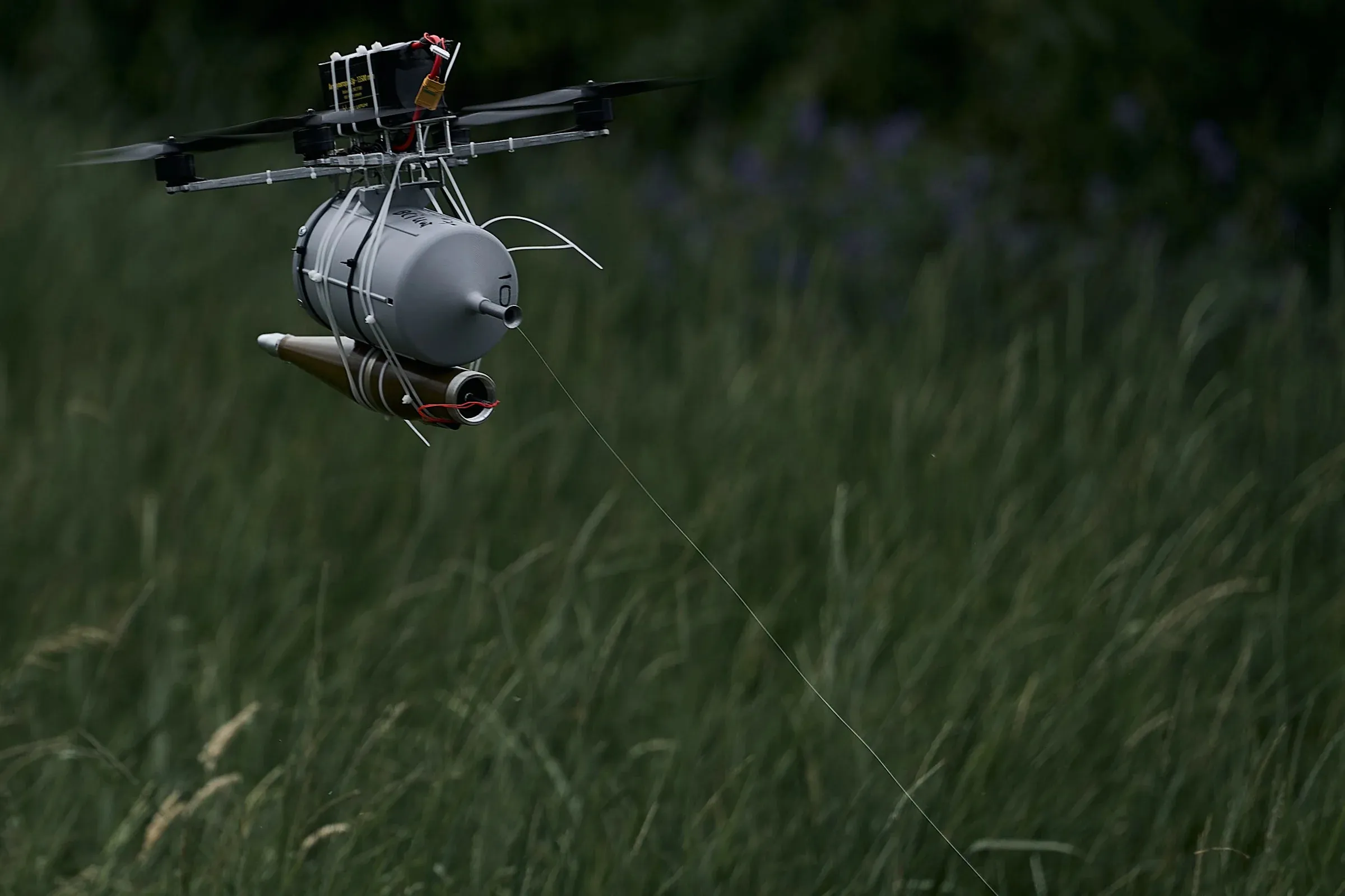
Both Russian and Ukrainian forces are increasingly deploying small drones connected via fiber-optic cables, creating extensive networks of cabling across combat zones. Ukrainian operatives report that these cables are forcing troops to move with heightened caution.
These unjammable drones have become essential in modern combat operations, leaving trails of fiber-optic cabling that weave through the battlefield. Designed to bypass electronic warfare measures, they are gaining prominence on both sides, complicating troop movement and strategy.
"The small webs of cables create uncertainty you cant immediately tell if its a fiber-optic drone or a booby trap," said Khyzhak, a Ukrainian special forces operator known by the call sign "Predator."
Initially, first-person-view (FPV) drones used radio-frequency connections, which were soon disrupted by jamming techniques. In response, both countries developed fiber-optic FPV drones that maintain constant control through long, thin cable spools. This method provides a stable connection and resistance to electronic interference.
The drones cables, while advantageous, are also a weakness. They can become entangled in the terrain, halting drone flight, and even when functional, the cables remain scattered across the battlefield.
Khyzhak, serving in Ukraines 4th Ranger Regiment, noted that fiber-optic cables are now ubiquitous in conflict zones, frequently caught in trees, fields, and even on soldiers equipment. Recent combat footage shows operators narrowly evading a Russian fiber-optic drone attack, with cables draped across roads and surrounding terrain.
Video from the front lines reveals cables crisscrossing like spider webs, often difficult to spot unless in direct sunlight or specific angles. Night operations are particularly challenging, as operatives must navigate these hazards without excessive light, making them a significant tactical issue.
Soldiers cannot immediately distinguish between harmless cables and potential traps, requiring careful judgment on whether to proceed, destroy, or call for engineering support. This slows missions and raises risks, especially in front-line or enemy-controlled areas.
Production of fiber-optic drones has surged over the past year. Russia has introduced long-range models capable of flying up to 50 kilometers, exceeding the typical 1025 kilometer range. In Ukraine, drones threaten supply routes, prompting troops to deploy protective netting, though it does not fully ensure safety.
Ukraine is also developing countermeasures against these drones, and NATO is monitoring the situation closely to incorporate lessons into its own military planning.
Author: Sophia Brooks
Share

Congress Proposes Establishment of New Space Agency: The National Institute For Space Research
16 seconds ago 2 min read WORLD

NASA reveals discovery of "Space gum" in samples from asteroid Bennu
2 minutes ago 3 min read WORLD

Ukraine urges Putin to stop wasting the world's time following US talks in Moscow
6 minutes ago 3 min read WORLD

First-Ever Satellite Image Captures Tsunami Wave From Space (Video)
6 minutes ago 2 min read WORLD

German police officer compensates victim following assault in Mallorca
10 minutes ago 2 min read WORLD

E-bike ambulance fleet deployed for half marathon
11 minutes ago 2 min read WORLD

More than 130 people escape unharmed after ship collides with bridge in southern Germany
12 minutes ago 1 min read WORLD

Honduras election on the edge of uncertainty due to technical glitch causing delay in vote count
18 minutes ago 2 min read WORLD

Kate Middleton utilizes 'Mood Boards' for decorating new 'Forever Home' while Prince William finds the move 'Challenging'
23 minutes ago 2 min read WORLD

Western Cuba experiences power outage as government works to modernize energy infrastructure
24 minutes ago 2 min read WORLD