

Grokipedia or Wikipedia: Who is Winning Right Now?
- Last update: 1 hours ago
- 3 min read
- 392 Views
- BUSINESS
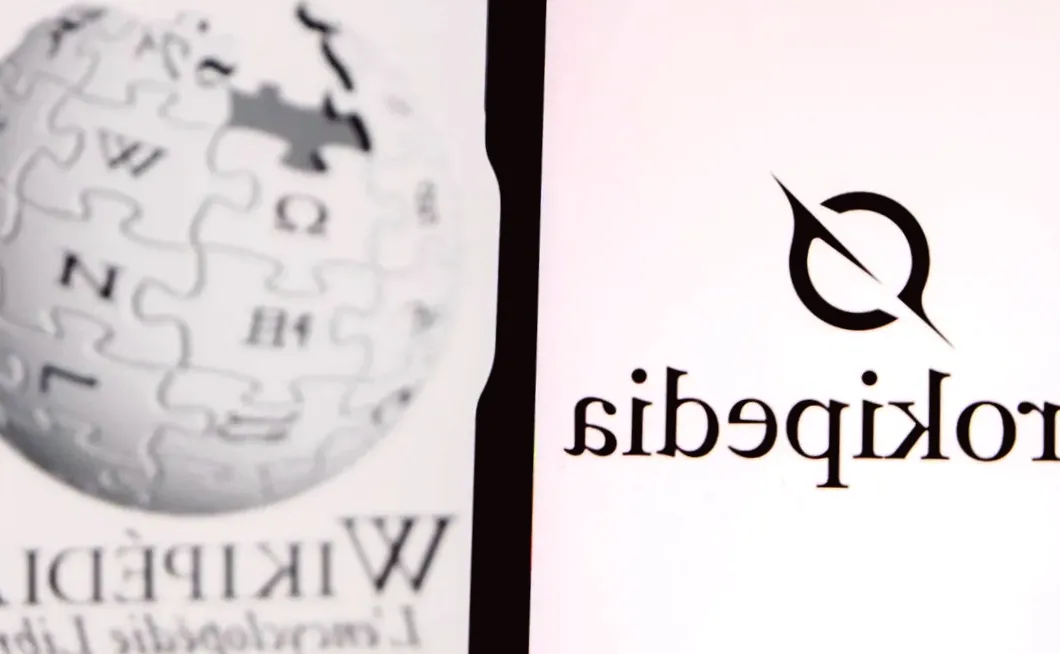
Elon Musk has launched a new project, Grokipedia, aiming to challenge Wikipedias long-standing dominance in the digital knowledge space. Released on October 27 with around 800,000 AI-generated entries, Grokipedia sets Musks automated content system against Wikipedias 7 million human-curated articles, creating a striking contrast between automated intelligence and collaborative human editing.
Both platforms compete for the same audience but follow vastly different principles. Wikipedia relies on donations, offers no ads or paywalls, and depends on volunteers for article creation and editing. This approach may be slower and sometimes contentious, but it ensures accountability and transparency in its content. In contrast, Grokipedia generates articles using the Grok language model, allowing users to flag mistakes but not directly edit pages. Some of its content is derived from existing Wikipedia entries.
Musk has publicly expressed a desire for a strong competitor to Wikipedia. In late 2024, he urged users to stop supporting Wokepedia, criticizing its editorial policies and budget priorities.
Community Validation vs. AI Speed
Experts note that Wikipedias strength lies in consensus and human oversight, while Grokipedia emphasizes speed and automation. Carlo Van de Weijer, an AI specialist at Singularity University, explained that users increasingly expect both accuracy and efficiency. Wikipedia achieves reliability through open debate and multi-perspective review, whereas AI platforms risk generating errors without community checks.
Santiago Nestares, co-founder of Dual Entry, added that even if Grokipedia grows, Wikipedias donation model will persist, evolving to balance human editing with computational oversight. He cautioned that AI platforms can create circular information loops if provenance and human review are ignored.
Human Oversight Matters
Grokipedia is unlikely to replace search engines but may influence how people access answers. Nestares emphasized that AI can democratize knowledge only if humans remain involved in guiding and validating content. Editors shift from writing articles to shaping AI models, ensuring quality remains grounded in human judgment.
Credibility Challenges
Experts warn that Grokipedias trustworthiness may be tied to Elon Musks public image. Kaveh Vahdat, founder of RiseAngle, noted that Wikipedias credibility emerged slowly through transparency and broad participation. Grokipedia inherits Musks controversial perception, making it harder to gain the same level of public trust. Users tend to favor platforms where judgment is distributed rather than tied to a single individual.
Nuance at Risk
Grokipedia may reduce editorial nuance, recycling existing content as new AI-generated material. Karl Hughes of Exposure Ninja stressed the importance of human editorial oversight, including verification layers and expert input. A recent study from Cornell University found that Grokipedia frequently cites extremist sources, unlike Wikipedia, which avoids them. Instant AI answers can reduce critical thinking and centralize information, undermining knowledge democracy.
The Verdict
Currently, Grokipedia may excel in speed, while Wikipedia retains trust. Nestares highlighted that Wikipedia provides the foundation for AI platforms, ensuring knowledge remains free, but curation increasingly blends human and computational governance. Experts largely favor Wikipedia as the more reliable platform, noting that AIs convenience may reduce public participation and shift control from community-based knowledge to centralized authority.
Vahdat concluded that Wikipedia maintains an advantage in trust, neutrality, and distributed oversight. Grokipedias speed cannot compensate for credibility concerns, leaving Wikipedia poised to remain the dominant force in open knowledge.
Author: Harper Simmons
Share

Closure of 'valued' path sparks petition with hundreds of signatures
7 minutes ago 2 min read BUSINESS

Elon Musk Acknowledges Difficulty in Spending Time with All His Children, Open to Welcoming More through Adoption
8 minutes ago 3 min read BUSINESS

Ex Fox News Analyst Calls for Prosecution of Hegseth for War Crime
8 minutes ago 2 min read BUSINESS

China Reveals its Mysterious Submarine-Ship Hybrid
9 minutes ago 2 min read BUSINESS

Former Paramount chair Shari Redstone says Trump-CBS lawsuit settlement was the 'right decision'
9 minutes ago 2 min read BUSINESS

Warm Welcome hubs provide an 'essential' helping hand
9 minutes ago 2 min read BUSINESS

Is EU considering revising the 2035 combustion-engine ban?
13 minutes ago 2 min read BUSINESS

Work-related stress in teaching is a significant issue.
13 minutes ago 2 min read BUSINESS

Chatbots Do Not Qualify as Medical Devices
14 minutes ago 3 min read BUSINESS

Councils providing free parking incentives
18 minutes ago 2 min read BUSINESS