

Is Fashion Ready to Fulfill Its Climate Promises as 2030 Approaches?
- Last update: 1 hours ago
- 7 min read
- 545 Views
- BUSINESS
As 2030 draws nearer, only four years away, Beth Jensen, the Chief Impact Officer at Textile Exchange, has a clear view of the situation: unless a significant breakthrough occurs, the organization is unlikely to meet its goal of cutting greenhouse gas emissions from fiber and raw material production by 45%. She remarked, "2026 will be a pivotal moment for us to assess this target, dive deeper into the data, and evaluate key interventions, such as regenerative agriculture and textile-to-textile recycling. We must also consider what is achievable by 2030 and 2035, while maintaining ambitious goals."
Ten years after the Paris Agreement, which aimed to avert the worst effects of global warming, the fashion industrys optimism about reducing its carbon footprint is dwindling. The increased use of polyester has caused clothing production emissions to rise by 7.5% in 2023, reaching nearly 944 million metric tonsthe first major increase since 2019, when the Apparel Impact Institute (Aii) began tracking these numbers. With the climate crisis escalating, even the most sincere sustainability efforts seem to be retreating as economic and geopolitical tensions intensify.
This retreat was evident during the recent United Nations climate summit in Belm, Brazil. At the event, which was expected to have significant industry participation, Rachel Kitchin, Senior Corporate Climate Campaigner for Fashion and IT at Stand.earth, noticed a concerning lack of fashion brand presence. "I didnt see any brands attending in person, and there was limited inclusion in official discussions or side events," Kitchin observed. "Stand.earth and Oxfam in Bangladesh hosted one of the few fashion sector-focused events, concentrating on financing a just transition."
For Kitchin, this signals a deeper issue. As signatories of the Paris Agreement submit their updated climate plans, she pointed out that corporate actions in fashion are misaligned with national targets. "Fashion is lagging behind, and its efforts are heading in the wrong direction," she emphasized. COP30 is a "complex, global negotiation," but at its core is a simple truth: everyone deserves a livable future, said Liv Simpliciano, head of policy and research at Fashion Revolution. The groups annual "What Fuels Fashion" report criticizes the fashion sector for continuing to rely on fossil fuels despite the availability of decarbonization solutions like industrial heat. "The industry already has the evidence, the solutions, and the skills to act," Simpliciano said. "Yet, progress is sluggish, and this inaction is indefensible."
Despite these calls for urgent change, the industrys response remains sluggish. As world leaders gathered in Brazil, the UN Fashion Industry Charter for Climate Action issued a communiqu urging lawmakers to use policy reform to enhance renewable energy access, tighten carbon reporting, mobilize climate finance, and strengthen adaptation efforts. The letter stressed that these actions would help signatories accelerate their efforts to phase out fossil fuels, promote clean energy, and improve transparency and accountability across the industry.
However, Lindita Xhaferi-Salihu, initiatives lead at the UN Framework Convention on Climate Change, believes that companies have been slow to invest in the necessary transformation. "We need to move beyond commitments and begin talking about concrete actions and their impact," she stated. As the industry approaches 2025, she hopes that companies will focus on actual implementation rather than more promises. Meanwhile, Ruth MacGilp, Fashion Campaign Manager at Action Speaks Louder, expressed concerns that general global guidelines will not lead to specific policy outcomes unless more focused action is taken, such as H&M Group and Nikes lobbying for Vietnams new direct power purchase agreement policy.
Some brands are taking steps to address the crisis. In September, the H&M Foundation pledged 53 million Swedish kronor (about $5.6 million) over five years to the Fashion for Good's Future Forward Factories, starting with an innovative plant in India. The facility aims to cut emissions from Tier 2 material production by as much as 93%. Similarly, Bestseller, backed by H&M Group, committed $100 million to help fund Bangladeshs first offshore wind project, increasing renewable energy in the country. But such initiatives remain sporadic.
According to Action Speaks Louder, Fashion Revolution, and Stand.earth, if the industry continues on its current path, fashions emissions could reach 1.24 billion metric tons by 2030. Despite numerous buzzwords like collective action and industry alignment, real progress remains elusive. The Global Fashion Agendas Fashion Impact Toolkit, developed with Deloitte, has been criticized for being ineffective. Additionally, the Fashion Pacts voluntary supplier questionnaire on environmental data has raised concerns about further contributing to "reporting fatigue." Even the Fashion Charters recommendations risk falling short of driving meaningful progress, according to MacGilp.
One of the biggest obstacles is funding. The cost of decarbonizing supply chains is steep, and securing the necessary financial commitments has been difficult. The Fashion Climate Fund, for example, has only achieved 7.8% of its $2 billion target between 2018 and 2024. This shortfall underscores the necessity of bringing financial decision-makers into the conversation about funding climate solutions. "If we dont get finance involved, nothing will happen," said Xhaferi-Salihu.
Further complicating the situation is the lack of transparency from many brands regarding their financial contributions to sustainability efforts. Most brands still fail to provide concrete details about their spending and goals. Brands also need to pay fair prices for their products and ensure workers earn fair wages. Moreover, they must contribute to climate adaptation funds to protect workers from extreme weather events exacerbated by climate change.
Garment workers are already experiencing the harsh effects of climate change, including heat stress and extreme weather. A report by Climate Rights International highlights the challenges faced by workers in countries like Bangladesh and Pakistan, where temperatures regularly surpass 40C (104F). Despite the increased risks, many workers continue to receive little consideration from brands. The International Accord is working to address heat-stress issues more systematically, but the scale of the problem requires urgent action.
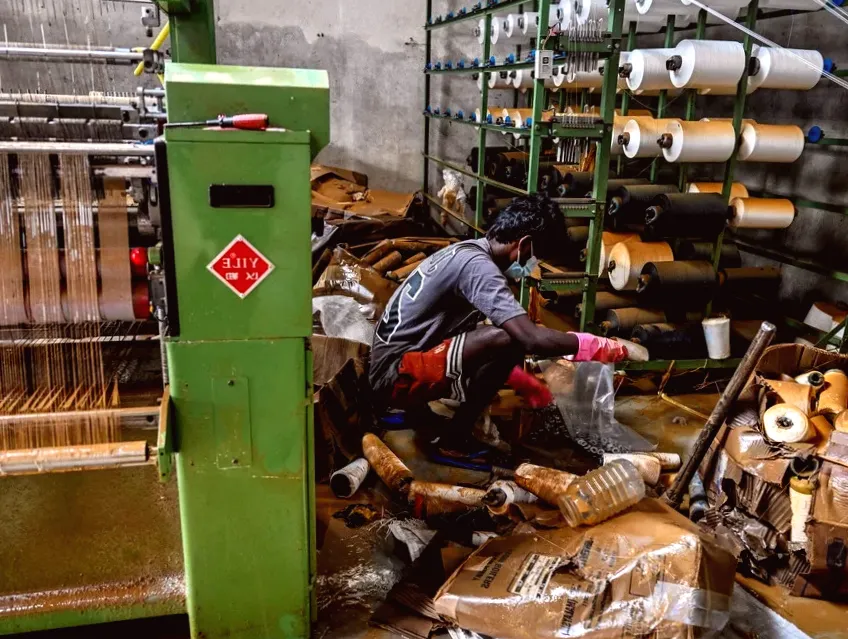
As climate change continues to impact workers on the ground, it's critical that the fashion industry treats extreme weather events as health hazards. A recent policy brief by Cornell Universitys ILR Global Labor Institute emphasized the devastating effects of floods on apparel production hubs, such as Sri Lanka, where Cyclone Ditwah killed over 600 people and displaced thousands. For garment workers already struggling with low wages, climate-induced disasters can quickly escalate into humanitarian crises. Abiramy Sivalogananthan of the Asia Floor Wage Alliance stated, "In Asia, climate change is no longer a forecastits a lived reality."
The fashion industry has historically prioritized mitigation over adaptation, but this must change. Simpliciano argued that adaptation should not be an afterthought but must go hand-in-hand with mitigation efforts. "Adaptation must be worker-led and integrated into every part of the supply chain," she said. "Brands must fund cooling systems, protect workers from heat stress, and co-design transition plans with those directly affected."
The fashion industrys focus on emissions reduction also overlooks other critical environmental issues, such as methane emissions and deforestation, which continue to be under-addressed. Jensen from Textile Exchange noted that the industry has largely ignored nature-related impacts and called for a more balanced approach to measuring both climate and nature-related effects.
As the industry grapples with these challenges, the pace of progress remains slow, and the window to address these issues before 2030 is rapidly closing. To truly tackle the climate crisis, fashion must take urgent, concrete steps to both mitigate its impact and adapt to the inevitable changes already affecting workers and the environment.
Author: Harper Simmons
Share

Is Fashion Ready to Fulfill Its Climate Promises as 2030 Approaches?
1 hours ago 7 min read BUSINESS

Oops, Scientists Might Have Misjudged Our Global Warming Schedule
7 hours ago 2 min read CLIMATE

Opinion - The Green New Deal falls to the ground
10 hours ago 3 min read BUSINESS

IPCC chief urges UN scientists to be 'clear' on human impact to combat climate denial
12 hours ago 2 min read WORLD

Source Fashion introduces plan to navigate upcoming EPR regulations
14 hours ago 2 min read BUSINESS

Nike, Lacoste, and Superdry advertisements banned in UK for deceptive environmental claims
15 hours ago 2 min read BUSINESS
Levi's reveals groundbreaking update to its iconic products: 'We'll keep setting the pace'
1 days ago 2 min read BUSINESS

Democrats aim to establish a fresh approach towards fossil fuels.
1 days ago 2 min read POLITICS

German government postpones presentation of climate plans
1 days ago 2 min read WORLD

German government to postpone announcement of climate strategies
1 days ago 2 min read WORLD