

Report Urges Revamping California's School System
- Last update: 48 minutes ago
- 3 min read
- 880 Views
- BUSINESS
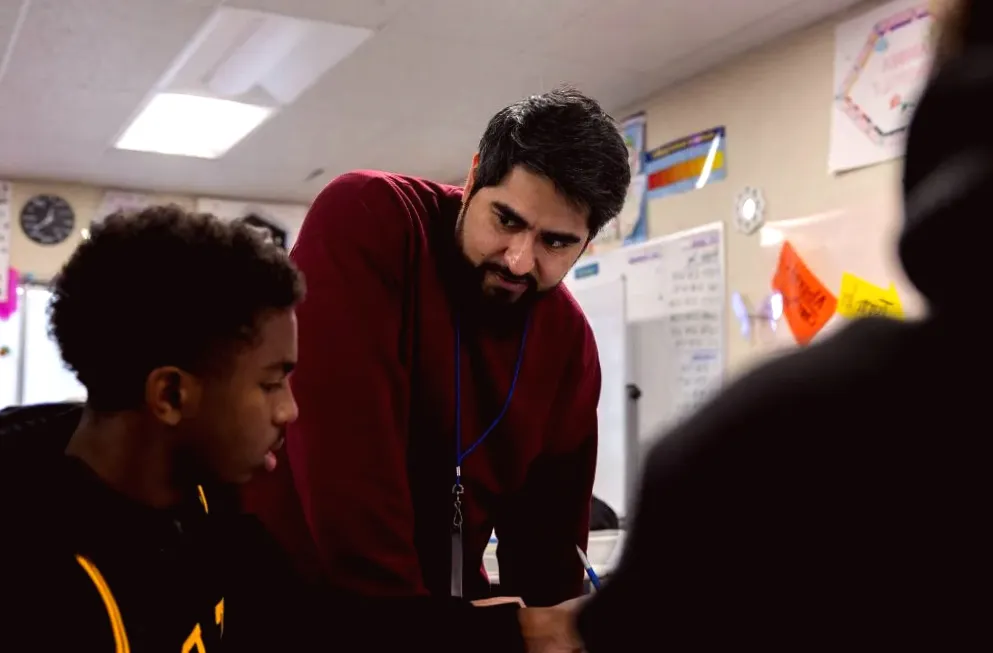
A recent report highlights the need for a complete restructuring of Californias school system to improve accountability, clarify lines of authority, and ensure equitable support for all districts. The study, released Monday by the research center PACE, points out that systemic weaknesses are hampering the effectiveness of state programs like universal kindergarten and initiatives aimed at reducing absenteeism and closing achievement gaps.
The report, TK-12 Governance in California: Past, Present, and Future, emphasizes that anticipated federal education funding cuts and a shift of oversight responsibilities to states make it urgent to simplify the states complex multiagency system, starting with the California Department of Education.
With changing federal roles, declining student enrollment, and widening achievement gaps, California can no longer delay reforms long overdue, said Julie Marsh, USC education policy professor and co-author of the report. We must modernize the governance system now.
PACE, or Policy Analysis for California Education, is a research group led by faculty from Stanford, UC Berkeley, UC Davis, UCLA, and USC. One of the reports most debated suggestions is transferring control of the Department of Education from the elected state superintendent to the governor and the governor-appointed State Board of Education. Under this plan, the state superintendent would become an independent ombudsman and advocate for students, providing impartial evaluation of multibillion-dollar programs and school improvement efforts.
Centralizing authority under the governor would resolve a long-standing question in Sacramento: Who is truly responsible for education policy and its implementation? Currently, the State Board sets standards, while the superintendent manages the department but lacks statutory authority to enforce policy changes.
The report notes that debates over governance are not new. As early as 1920, the Jones Report criticized the double-headed system of authority. Past efforts to eliminate the elected superintendent have failed at the ballot box, partly due to strong opposition from the California Teachers Association. California is one of only twelve states that elect their state school superintendent.
Rather than eliminating the superintendent position, the PACE report recommends revising statutes to redefine the role and improve Department of Education management. The state board would hire a director with professional expertise in education administration. This approach would align California with 20 other states, including Massachusetts, New York, and Florida, where boards appoint their chief education officers.
The report also highlights leadership challenges. Many past superintendents lacked experience managing large organizations and some had political ambitions, which could create incentives to overstate results to boost public profiles. Current Superintendent Tony Thurmond, one year into his second term, has announced a 2026 gubernatorial run. Potential successors include a former Assembly speaker, an Assembly Education Committee chair, and a former state senator.
PACE reiterates that the Department of Education faces chronic underfunding and staffing shortages, limiting its capacity to manage new multi-billion-dollar programs and assist struggling districts. Proposition 98 restricts administrative funding, forcing reliance on the general fund, which competes with other priorities like Medi-Cal and higher education. This has led to workarounds, such as creating semi-independent agencies like the California Collaborative for Educational Excellence to fill gaps.
The report is based on interviews with 16 prominent education leaders and feedback from 30 governance experts. The experts criticized the system for lacking strategic thinking and overwhelming districts with initiatives without sufficient guidance. They evaluated the states governance across six areas: strategic planning, accountability, capacity, knowledge, engagement, and coordination. The average grade was 2.8 out of 5, indicating performance between poor and fair.
Overall, the report calls for urgent reform to create a clearer, more accountable, and better-resourced education system capable of delivering on its ambitious programs and addressing persistent challenges.
Author: Grace Ellison
Share

Elon Musk's Boring Company fined heavily for dumping tons of waste in publicly-owned water site: 'A flagrant violation'
56 seconds ago 3 min read BUSINESS

Ayn Rand Criticized FCC's Censorship of 'Public Interest' Over 60 Years Ago
1 minutes ago 2 min read BUSINESS

Angry Landlords Predict Pub Closures Due to Tax Rises
7 minutes ago 2 min read BUSINESS

Google Caught Replacing News Headlines with AI-Generated Gibberish
8 minutes ago 2 min read BUSINESS

General Atomics CEO Provides CCA Test and Export Market Update at Dubai Airshow
20 minutes ago 2 min read BUSINESS

Rebecca Yarros, Emily Henry, and Others: Spotify Unveils Audiobooks Wrapped featuring the Best Books of 2025!
21 minutes ago 2 min read BUSINESS

Fox News Celebrities Deal with Tired Trump Cabinet Meeting by Using 136-Year-Old Response
21 minutes ago 1 min read BUSINESS

Hawley supports removal of AI-related provision from Defense bill
22 minutes ago 2 min read BUSINESS

This Formerly Popular Grocery Chain Thrived in the '50s But Didn't Survive to the 2000s
22 minutes ago 2 min read BUSINESS

Recall of Shredded Cheese in Multiple States for Possible Metal Fragment Contamination
31 minutes ago 1 min read BUSINESS