

Could the 'Star of Bethlehem' Actually Have Been a Comet?
- HOME
- ENTERTAINMENT
- Could the 'Star of Bethlehem' Actually Have Been a Comet?
- Last update: 2 hours ago
- 3 min read
- 474 Views
- ENTERTAINMENT
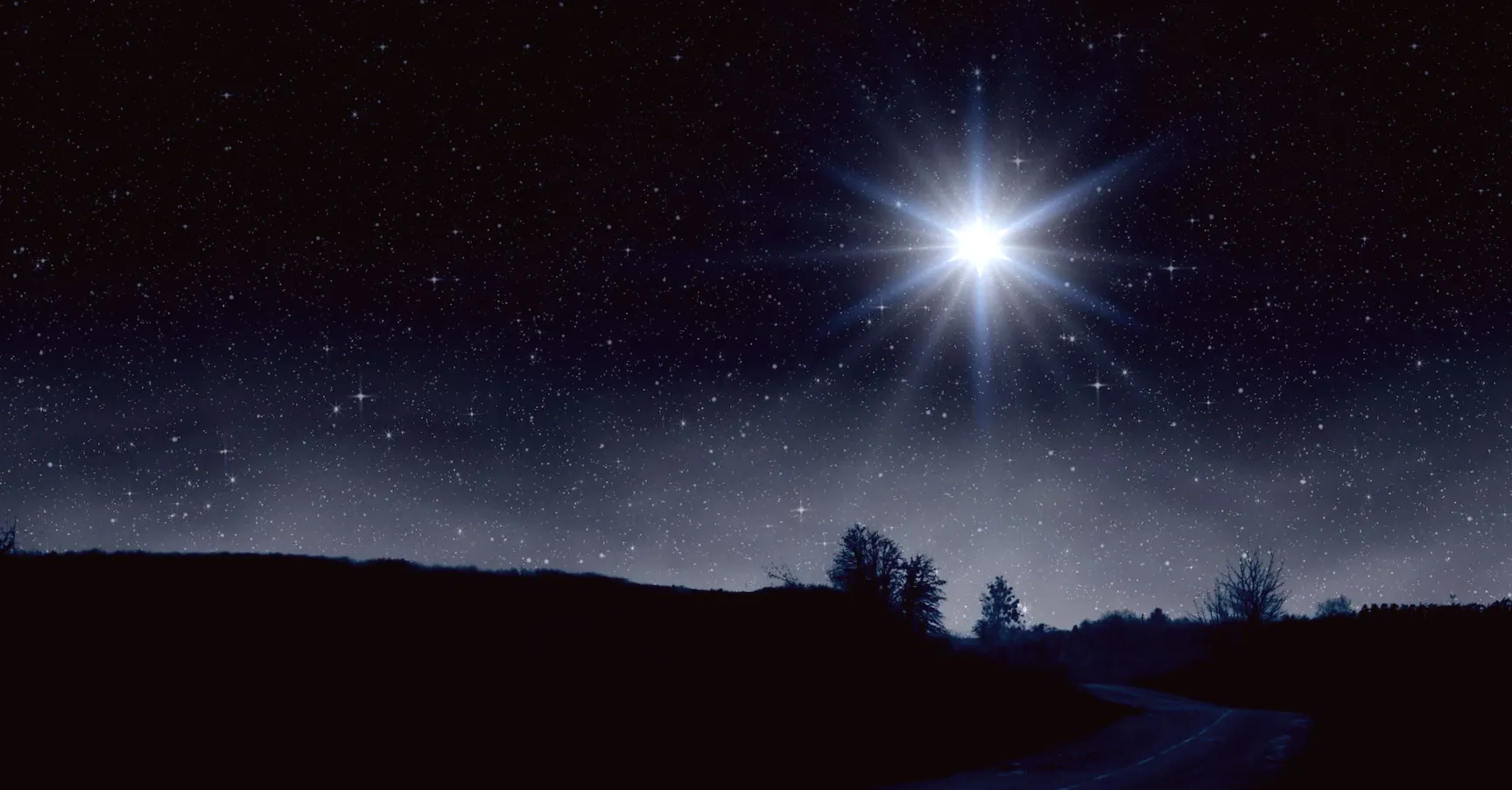
Astronomers have long attempted to uncover a cosmic explanation for the Star of Bethlehem described in the Bible, the radiant object that, according to the story, guided the wise men or magi to the birthplace of Jesus. One of the longest-held theories suggested that the Star of Bethlehem was a conjunction, possibly between the planets Jupiter and Saturn. However, a new hypothesis has emerged this holiday season: the object in question may have been a comet.
Research published on December 3 in the Journal of the British Astronomical Association introduces the idea of a comet as a contender, with findings by Mark Matney, a planetary scientist at NASA. Matney, who conducted this research independently, points to Chinese records from 5 BCE that mention a comet. As a student, Matney had worked at a planetarium where a Christmas sky show depicted the story of the Star of Bethlehem. The show presented a challenge: no known astronomical object could behave as described in the magi's journey. According to the story, the star rose in the southern sky, then appeared to stop above the observers. Matney recalls thinking, I know of one object that could do that.
He theorized that a long-period comet, originating from the distant Oort Cloud beyond the solar system's planets, could provide the answer. If such a comet passed extremely close to Earthabout the distance of the moonit could create the illusion of a starlike object rising in the sky and seemingly halting for several hours. A comet could stay in one place if it was on a collision course with Earth, Matney explained. Thats exactly the behavior you would expect from an object passing extremely close to our planet.
To further explore this theory, Matney examined Chinese records of a broom star from the spring of 5 BCE, a term historically used to describe comets, referring to their characteristic tail. These records have long been considered by those searching for explanations of the Star of Bethlehem. Interestingly, the Chinese texts suggest that the star remained in the same constellation for a full 70 daysfar longer than a typical comets visibility, leading some astronomers to speculate it might have been a nova, a star with a ray-like appearance.
Matney, however, believes this description fits his theory of a comet on a collision course. Some other astronomers remain skeptical. Ralph Neuhuser, an astrophysicist from Friedrich Schiller University Jena in Germany, cautions that older records often contain limited or misleading information. He also believes that the search for the Star of Bethlehem's identity may be fundamentally misguided.
Matney acknowledges the limitations of the available records and admits that more sources would be helpful. However, he stresses that his objective is not to definitively identify the Star of Bethlehem, but to propose a plausible astronomical object that could explain its described behavior. Im sure this paper wont provide the final answer, but it seems to be a valuable contribution to forensic astronomy, said Frederick Walter, an astronomer at Stony Brook University.
Author: Olivia Parker
Share
Could the 'Star of Bethlehem' Actually Have Been a Comet?
2 hours ago 3 min read ENTERTAINMENT

Is It Possible to Capture Images of Alien Earths? This Newly Discovered Object Could Provide the Answer
13 hours ago 2 min read WORLD

Study finds potential identification of UFOs in 1950s images
2 days ago 2 min read WORLD
The Enigmatic Interstellar Object Shows Pulsating in a "Heartbeat Pattern"
4 days ago 2 min read SCIENCE

9 celestial phenomena to observe in December, including a supermoon and an extraordinary interstellar comet
4 days ago 3 min read SCIENCE

Wyoming Skies: Bright planets light up December skies
5 days ago 3 min read SCIENCE