

Supreme Court to consider evangelist's challenge to protest regulation
- Last update: 1 hours ago
- 2 min read
- 480 Views
- POLITICS
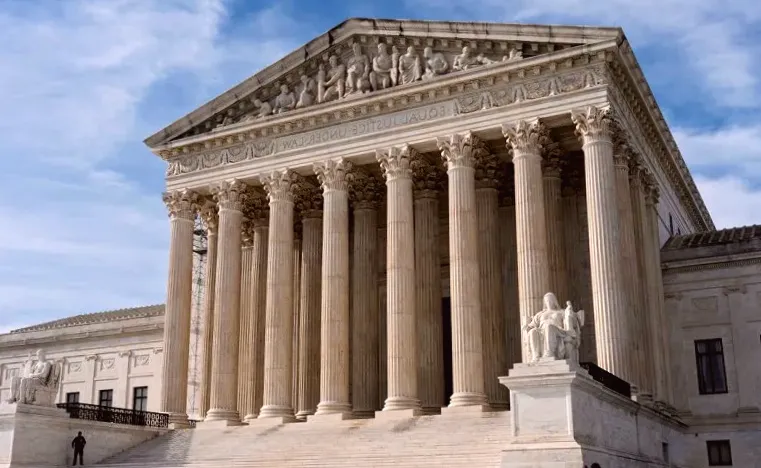
The Supreme Court will consider on Wednesday a case involving a Mississippi evangelist contesting a local protest ordinance he was previously found guilty of breaking. Gabriel Olivier, a street preacher, is asking the justices to allow his lawsuit challenging the constitutionality of a Brandon, Mississippi, ordinance regulating demonstrations outside the citys amphitheater, arguing that it infringes on his religious freedoms.
Oliviers legal challenge was initially hindered because he had already been convicted under the same ordinance. A federal judge dismissed his lawsuit, and the U.S. Court of Appeals for the Fifth Circuit upheld that decision, citing Supreme Court precedent that prevents someone from disputing a law under which they have been convicted if success would call that conviction into question. A full panel of the appeals court refused to rehear the case by a narrow one-vote margin, despite several dissenting opinions.
The ordinance in question requires that demonstrations take place in a designated nearby area for three hours before and one hour after amphitheater events, and prohibits loudspeakers from being audible more than 100 feet from the protest zone. In its response to Oliviers petition, the city noted that the ordinance was enacted after Olivier and other demonstrators used a loudspeaker at a busy intersection to call passersby derogatory names.
Officials nationwide have warned that a ruling in Oliviers favor could threaten numerous similar local regulations, potentially encouraging lawsuits in other municipalities. Olivier had pleaded no contest to violating the ordinance, resulting in a $304 fine, suspended sentence, and one year of probation. His attorneys emphasized that the lawsuit does not aim to overturn the conviction, which has already been resolved.
Instead, Oliviers primary concern is that the ordinance prevents him from sharing his religious message with amphitheater attendees. His lawyers argue that past prosecution should not bar him from seeking judicial protection against future enforcement, stating that his prior conviction actually underscores the ongoing threat posed by the ordinance.
The Trump administration has partially supported Oliviers case, indicating that his request for future protections against the ordinance merits judicial consideration.
Author: Harper Simmons
Share

Reasons for the Failure of U.S.-Russia Ukraine Talks
20 seconds ago 3 min read POLITICS

Kelly describes threats as graphic and violent following Trump's call for arrest.
4 minutes ago 2 min read POLITICS
Trump boasts of ‘major victory’ for Van Epps despite troubling GOP signals following tight race with ‘AOC of Tennessee’
8 minutes ago 2 min read POLITICS
Cracks appearing in Trump's support base
11 minutes ago 3 min read POLITICS
Pictures reveal President Trump appearing to nod off once more while at work
12 minutes ago 2 min read POLITICS
Trump's attempt to increase authority reaches Supreme Court
14 minutes ago 3 min read POLITICS
Trump's Travel Ban Intensifies, Impacting Citizenship Applicants
17 minutes ago 2 min read POLITICS
Scott Jennings Criticizes Critics Worried About Trump's Health: 'Democrats Are Overly Sensitive'
22 minutes ago 2 min read POLITICS

Morrison v. Olson and the victory of the unitary executive theory
41 minutes ago 3 min read POLITICS

'Republicans concerned they're not doing enough on affordability: 'People are not unintelligent''
41 minutes ago 3 min read POLITICS