

Israeli gas sensor detects identical molecules, paving the way for diagnostics based on breath.
- Last update: 42 minutes ago
- 3 min read
- 764 Views
- WORLD
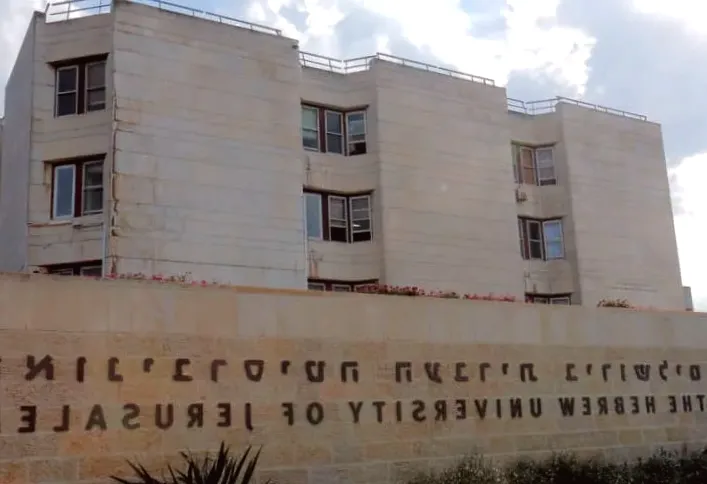
Scientists in Israel have engineered a gas sensor capable of detecting "mirror-image" molecules in the air, a development that could transform medical diagnostics, food quality control, environmental safety, and pharmaceutical production. The innovation, announced by Hebrew University of Jerusalem, allows for the detection of subtle structural differences in volatile compounds, potentially enabling non-invasive breath tests for conditions like lung cancer or diabetes.
These advanced sensors could monitor disease progression, ensure consistency in flavors and aromas in foods and fragrances, and detect spoilage or contamination before products reach consumers.
Understanding Mirror-Image Molecules
Mirror-image molecules, or chiral molecules, are chemically identical pairs arranged like left and right hands, meaning they cannot be superimposed. Despite their similar appearance, the two forms can generate vastly different effects, influencing smell, taste, or biological activity.
The study, published in Chem. Eur. J., details the sensors design, testing, and potential applications. The sensors incorporate carbon nanotubes coated with sugar-based receptors that function like a molecular lock-and-key, selectively binding to specific airborne compounds. By adding a sugar coating, we created a precise chemical architecture around the sensor that can even interact with very weakly binding scent molecules, explained Prof. Shlomo Yitzchaik, one of the supervisors.
Demonstrating Selectivity
The research team, led by Ariel Shitrit and Yonatan Sukhran under guidance from Yitzchaik and Prof. Mattan Hurevich, demonstrated the sensors ability to differentiate mirror forms of limonene and carvone while ignoring similar molecules like -pinene. The sensors detected the ()-limonene molecule at concentrations as low as 1.5 parts per million, approximately ten times more sensitive than many existing methods.
Effectiveness arises from interactions between sugar-coated nanotubes and airborne molecules. Electrical measurements and computer simulations, conducted in collaboration with Germanys Technical University of Dresden and Friedrich Schiller University Jena, revealed that each mirror-image molecule binds slightly differently, altering electron flow in the nanotubes and producing measurable electrical changes. Understanding how molecular structure affects sensor performance gives us a blueprint for designing better artificial smell receptors, said Hurevich.
Engineering Breakthroughs
Converting sugar molecules, typically water-soluble, into stable functional gas sensors was a major challenge. The team developed a two-part system: adjustable sugar-based receptors chemically attached to carbon nanomaterials. By modifying the sugar framework or attached chemical groups, the sensors detection capabilities can be customized for various molecules.
Broader Applications
Beyond healthcare and food monitoring, these sensors could enhance environmental safety by detecting trace air pollutants or chemical leaks and support pharmaceutical production by confirming the purity and composition of chiral compounds, which often have distinct biological effects depending on their mirror-image form.
Looking ahead, the team believes advanced computational tools, including physics simulations and machine learning, could accelerate the development of new receptor designs, widening the spectrum of detectable airborne molecules and their mirror forms. Our work shows that tiny changes in molecular structure can be picked up reliably using sugar-coated nanotubes, said Shitrit. This opens the door to electronic sensing systems that were previously thought impossible.
Author: Zoe Harrison
Share

Civil Administration retrieves numerous stolen artifacts from a site in the West Bank
1 minutes ago 2 min read WORLD

Explosion in western Mexican state of Michoacan leaves 2 dead, 7 injured
3 minutes ago 2 min read WORLD

The impact of anti-China disinformation on South Korea's year of crisis
5 minutes ago 4 min read WORLD

Deportation flights from the US to Venezuela will keep going
6 minutes ago 1 min read WORLD

Bethlehem welcomes back Christmas celebrations, kicks off with tree lighting
6 minutes ago 2 min read WORLD

Remote wilderness along Alaska-Canada border struck by Magnitude-7.0 earthquake
6 minutes ago 1 min read WORLD

France is preparing to introduce drone swarms into its armed forces within two years
7 minutes ago 3 min read WORLD

Government Ministers consider construction and hospitality industries as potential sources of employment for young people.
9 minutes ago 3 min read WORLD
Oldham bungalow fire claims man's life
12 minutes ago 1 min read WORLD

Monarch and Monarch Consort unveil this year's Christmas card
18 minutes ago 2 min read WORLD