

Israel's militia strategy in Gaza under scrutiny after Yasser Abu Shabab's killing
- Last update: 16 hours ago
- 3 min read
- 711 Views
- WORLD
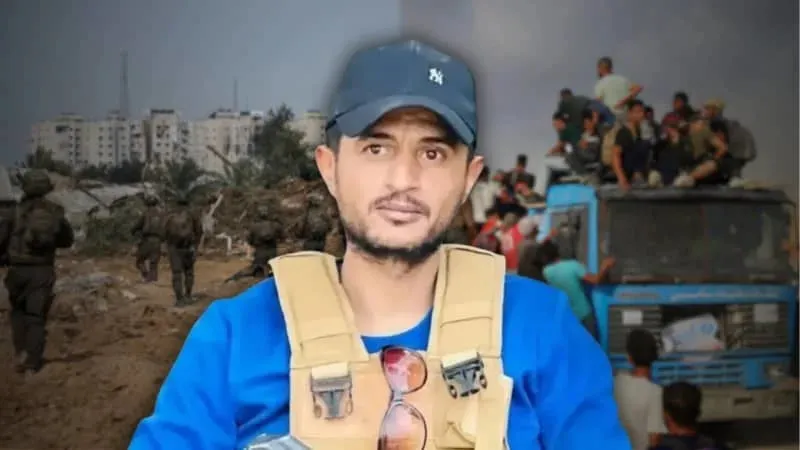
The Abu Shabab militia reflects a narrow Israeli approach that seems unwilling to support the emergence of a stable and legitimate governance in Gaza. Reports confirm that Gaza-based militia leader Yasser Abu Shabab was killed on Thursday. Early accounts suggested an assassination, while others pointed to an internal dispute. Some reports claimed he was being transported to an Israeli hospital but died en route. The exact circumstances remain secondary.
Abu Shabab, operating under his alias, faced a likely violent end due to multiple factors. The ongoing conflict in Gaza has caused heavy losses for Hamas, with most senior commanders reportedly eliminated according to IDF sources. Despite these casualties, Hamas has retained control, and during the war, smaller gangs began appearing as potential challengers to its authority. Many of these were longstanding armed clans. Hamas responded to these threats with brutal force, eliminating rival members.
Hamas administers Gaza with a combination of terror and mafia-style control. While the organization exerts fear over civilians, it also tolerates some gangs and corruption, understanding it cannot dominate every aspect of life. Against this backdrop, it was unsurprising that militias like Abu Shababs emerged, particularly in southern Gaza. His group gained media attention in mid-2025, although Abu Shabab had a criminal record predating this coverage. He was not widely seen as a credible alternative to Hamas rule.
Historically, arming resistance groups involves working with diverse actors. Conflicts worldwide show alliances with individuals involved in drug trafficking, gun running, or other illicit activities. Cooperation with Abu Shabab was not unusual in this context, but supporting him as an Israeli-backed alternative came with inherent risks.
Abu Shababs militia likely consisted of only a few dozen fighters, with some allowed to include family members. Many recruits came from locals who had previous ties to organizations like GHF. For Israel, such small militias could reduce the need for large troop deployments in the Yellow Line Zone. However, armed groups can be unpredictable, susceptible to infighting, or infiltrated by Hamas. Loyalty often follows personal or financial interests rather than ideology.
Gazas population is diverse. Some communities predate 1948 and are generally non-Hamas, while Bedouin tribes have historical ties to the Negev and Sinai. Many displaced populations settled permanently in Gaza over decades. Hamas primarily draws support from major refugee camps such as Khan Younis, Central Camps, Rafah, Jabaliya, Shuja'iya, and parts of Gaza City. Peripheral areas have seen the activity of Israel-backed militias, but these groups remain lightly armed and ill-prepared to govern.
The trajectory of Abu Shabab illustrates the limitations of such initiatives. Initial optimism in mid-2025, during operations like Gideons Chariots and the GHF Initiative, proved largely illusory. Militias are undertrained, small, and unready to challenge Hamas effectively. This reflects an Israeli policy that does not promote sustainable governance in Gaza.
The broader geopolitical context shows a preference for instability. While the US advocates for governance and an international stabilization presence, Israel resists Palestinian Authority control in Gaza, instead engaging with localized, weak militias. Abu Shababs death, reportedly in a supposedly secure Green Zone behind the Yellow Line, underscores the risks and disorder these militias create. Hamas benefits from these failures, reinforcing its dominance in the region.
Author: Harper Simmons
Share

The deadly flooding across Asia unleashed by a mix of rogue storms and climate chaos
13 minutes ago 5 min read WORLD

The final full moon of 2025 will shine tonight, marking one of the last supermoons for some time.
1 hours ago 2 min read WORLD

Michael Bublé considers meeting Pope Leo as 'one of the greatest moments'
1 hours ago 2 min read WORLD

Prince George is receiving instruction on his future duties as king — Source
1 hours ago 3 min read WORLD

Video of Nigerian customs officer justifying feeding bandits is outdated
1 hours ago 3 min read WORLD

Have We Finally Moved Beyond the "Jaws Effect?"
2 hours ago 2 min read WORLD

The Royal Family's Best Photos from the German State Banquet at Windsor Castle
2 hours ago 2 min read WORLD

Tragic Accident: 6-Year-Old Boy Fatally Struck by School Bus During Drop Off, Leaving Community Devastated
2 hours ago 2 min read WORLD

Prince George remains unfazed by his future responsibilities as a future king — Source
2 hours ago 2 min read WORLD

Flavio Bolsonaro announces candidacy for Brazil’s 2026 presidential election endorsed by his father
2 hours ago 4 min read WORLD