

Researchers Uncover Human Brain's Life-Long 'Eras Tour'
- Last update: 1 hours ago
- 3 min read
- 876 Views
- WORLD
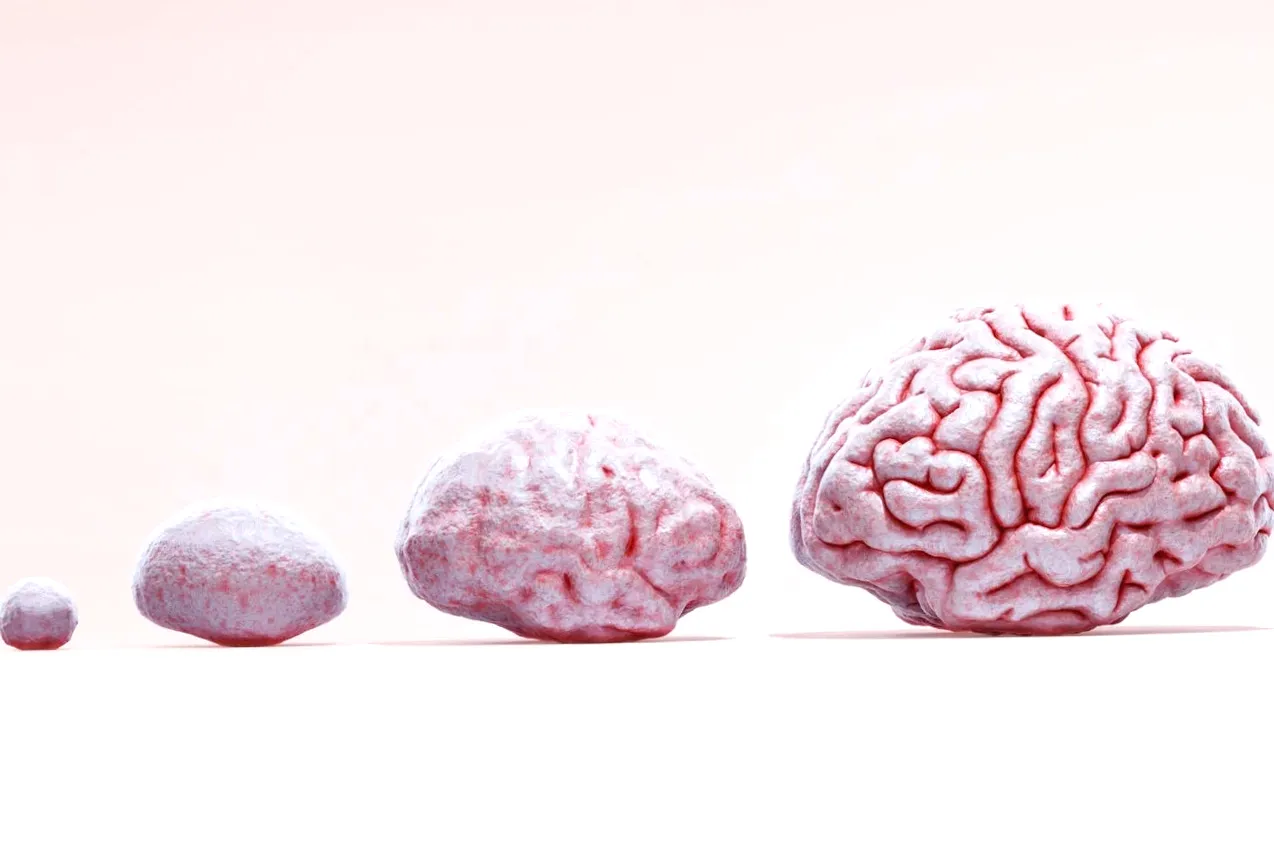
Recent research has revealed a fascinating discovery about the human brain, uncovering its life-long transformation through distinct "eras." A team of scientists, through analyzing specialized MRIs of over 4,000 individuals ranging from infancy to 90 years old, identified five distinct brain stages, marked by four major "turning points." These turning points were tracked by examining how water molecules move through brain tissue, offering new insights into the brains evolving structure.
Understanding these changes could provide a clearer picture of how aging affects neural connections, influencing cognitive functions such as language, memory, and attention. Traditionally, aging has been viewed as a steady, continuous process, similar to the ticking of a clock. However, this study challenges that perspective, highlighting a more complex biological process.
Previously, Stanford researchers discovered that in our 40s and 60s, rapid biomolecular changes accelerate aging markers. A year later, neuroscientists from the University of Cambridge made similar observations, uncovering key markers of different "eras" in the brain. Their findings, published in Nature Communications, offer a groundbreaking perspective on the human brains lifespan.
Alexa Mousley, lead author of the study, explains, We know the brain's wiring plays a critical role in our development, but weve lacked a comprehensive understanding of how it changes throughout our lives. This study, she adds, is the first to define these major phases of brain reorganization over the course of a human lifetime.
The team employed diffusion imaging, a type of MRI that traces the movement of water molecules in the body, across nine separate datasets. These datasets included nearly 4,000 individuals from a wide age range, from infants to seniors. The focus was on how water molecules travel through brain tissue and how this process changes as the brain ages.
The findings revealed that the brain undergoes four significant "turning points" where its structure undergoes major reconfigurations. The first phase, which spans from birth to approximately nine years old, is marked by intense network consolidation and rapid growth of both grey and white matter. Despite the popular belief that the brain doesn't fully mature until the age of 25, the study found that this phase actually extends into the early 30s on average. This doesn't imply that people in their 30s have the brain structure of teenagers, but rather that their neural networks share similar characteristics.
The next major change occurs around the age of 66, signaling the start of the "early aging" phase. The final phase, "late aging," begins around age 83. Each of these brain eras is defined by unique characteristics. In childhood, the brain focuses on consolidating networks while undergoing rapid growth. During adolescence, neural efficiency increases, and this efficiency reaches a plateau in adulthood, which is the longest phase of brain life. The last two eras are defined by declinegradual in the early aging phase, and more noticeable in the late aging phase.
Duncan Astle, co-author of the study, commented, "Many of us look back at our lives and recognize distinct phases. It turns out that the brain follows a similar pattern." He further noted that understanding the brains structural journey as a series of turning points, rather than a smooth progression, will help scientists pinpoint when and how brain wiring becomes susceptible to disruption.
Author: Gavin Porter
Share

The final full moon of 2025 will shine tonight, marking one of the last supermoons for some time.
15 minutes ago 2 min read WORLD

Michael Bublé considers meeting Pope Leo as 'one of the greatest moments'
23 minutes ago 2 min read WORLD

Prince George is receiving instruction on his future duties as king — Source
24 minutes ago 3 min read WORLD

Video of Nigerian customs officer justifying feeding bandits is outdated
30 minutes ago 3 min read WORLD

Have We Finally Moved Beyond the "Jaws Effect?"
38 minutes ago 2 min read WORLD

The Royal Family's Best Photos from the German State Banquet at Windsor Castle
40 minutes ago 2 min read WORLD

Tragic Accident: 6-Year-Old Boy Fatally Struck by School Bus During Drop Off, Leaving Community Devastated
44 minutes ago 2 min read WORLD

Prince George remains unfazed by his future responsibilities as a future king — Source
46 minutes ago 2 min read WORLD

Flavio Bolsonaro announces candidacy for Brazil’s 2026 presidential election endorsed by his father
48 minutes ago 4 min read WORLD

Leader of Lithuanian governing party convicted for inciting hatred against Jews
50 minutes ago 2 min read WORLD