

Unmarried women face dangers of rape and exploitation while seeking a better life in Europe
- Last update: 2 hours ago
- 5 min read
- 106 Views
- WORLD
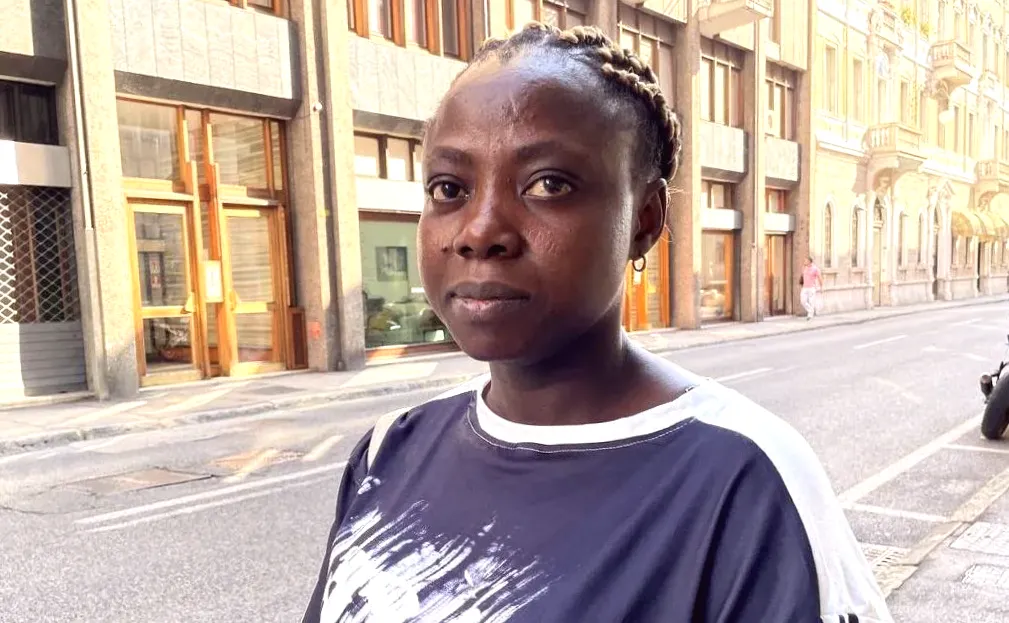
Esther was homeless on the streets of Lagos when a woman approached her with the promise of a new life in Europe, offering a job and a home. Having fled a violent foster home, Esther had nothing to hold her back. In 2016, she left Lagos, crossing the desert to Libya, unaware of the horrors that lay ahead. She was forced into sex work and endured years of asylum claims across multiple countries.
While the majority of irregular migrants and asylum seekers are men (about 70%, according to the European Agency for Asylum), the number of women, like Esther, seeking asylum in Europe is growing.
"We are seeing a rise in women traveling alone, both on the Mediterranean and Balkan routes," says Irini Contogiannis from the International Rescue Committee in Italy. A report from 2024 highlighted a 250% increase in the number of single women arriving in Italy along the Balkan route, while family arrivals grew by 52%.
Migrant routes are notoriously dangerous. In the previous year, 3,419 migrant deaths or disappearances were recorded in Europe by the International Organization for Migration (IOM), marking the deadliest year on record. However, women face the added threat of sexual violence and exploitation, a reality that Esther experienced after being betrayed by the woman who promised her a better life.
"She locked me up in a room and brought in a man. He raped me. I was still a virgin," Esther recalls. "They travel to different villages in Nigeria to pick young girls and bring them to Libya to become sex slaves."
"Women's experiences are often riskier," says Ugochi Daniels of the IOM. "Even women traveling in groups are vulnerable, often subjected to abuse by smugglers, traffickers, or other migrants."
Many women are aware of the dangers, yet still embark on the journey. Some carry condoms or even get contraceptive devices fitted, preparing for the possibility of rape along the way. "All migrants pay smugglers," says Hermine Gbedo of the anti-trafficking network Stella Polare. "But women are often expected to offer sex as part of the payment."
Gbedo works with women migrants in Trieste, a city in northeastern Italy that serves as a major entry point to the European Union for those crossing from the Balkans. Most migrants arriving in Trieste via the Balkan route are men.
After being exploited in Libya for four months, Esther escaped and crossed the Mediterranean in a rubber dinghy, eventually being rescued by the Italian coast guard and taken to Lampedusa. She claimed asylum three times before finally being granted refugee status. While asylum seekers from "safe" countries are often denied, Italy previously considered Nigeria unsafe, but revised that stance two years ago as European governments tightened their immigration rules in response to the 2015-2016 migrant crisis.
Voices advocating for more restrictions on asylum claims have grown louder. "Its impossible to sustain mass migration," says Nicola Procaccini, an MP in Italys right-wing government. "We must guarantee safety to women who are truly at risk, but not to all of them."
Rakib Ehsan, a Senior Fellow at Policy Exchange, emphasizes the need for "controlled compassion" in responding to women and girls fleeing conflict, where rape is used as a weapon of war. He argues that this focus is not yet consistent, and many women from countries considered safe face ongoing abuse, making life unbearable in their home countries. This was the case for Nina, a 28-year-old from Kosovo.
"People think everything is fine in Kosovo, but it's not true," Nina explains. "Things are terrible for women." She and her sister were sexually abused by their boyfriends, who forced them into sex work. A 2019 report by Europe's OSCE security organization revealed that 54% of women in Kosovo had experienced psychological, physical, or sexual violence by an intimate partner since the age of 15.
Under the Council of Europe's Istanbul Convention, women who face gender-based violence are entitled to asylum. The Convention recognizes psychological, physical, and sexual violence, including female genital mutilation (FGM). However, the implementation of these protections remains inconsistent, according to advocacy groups.
"Many asylum officials are men who are inadequately trained to handle sensitive issues like FGM," says Marianne Nguena Kana, Director of the End FGM European Network. She notes that some asylum claims are denied because judges mistakenly assume that women who have already undergone FGM are no longer at risk.
When it comes to sexual violence, Carenza Arnold from Women for Refugee Women points out that it is often harder to prove because it does not leave the same visible scars as physical torture. "Women are often rushed through the asylum process and may not disclose the sexual violence theyve experienced to an immigration officer theyve just met," she says.
The violence many women face often continues during their journey. "Women flee sexual violence in their home countries, only to face it again during their journey," says Ugochi Daniels of the IOM.
This was the case for Nina and her sister, who fled their abusive relationships in Kosovo. On their way to Italy, they traveled with other women through Eastern Europe, trying to avoid authorities. There, they were attacked by male migrants and smugglers. "Even in the mountains, in the dark, you could hear the screams," Nina recalls. "Men would come up, shine a torch in our faces, pick the one they wanted, and drag them into the forest. At night, I could hear my sister crying, begging for help."
When they arrived in Italy, Nina and her sister told authorities they would be killed by their ex-boyfriends if they were sent back to Kosovo. Eventually, they were granted asylum.
Esthers asylum journey took much longer. After first claiming asylum in Italy in 2016, she moved to France and then Germany, where her claims were rejected under the EU's Dublin Regulation. She finally received refugee status in Italy in 2019. Almost a decade after leaving Nigeria, she reflects on her painful journey: "I dont even know why I came to this place."
Author: Maya Henderson
Share

The final full moon of 2025 will shine tonight, marking one of the last supermoons for some time.
49 minutes ago 2 min read WORLD

Michael Bublé considers meeting Pope Leo as 'one of the greatest moments'
57 minutes ago 2 min read WORLD

Prince George is receiving instruction on his future duties as king — Source
58 minutes ago 3 min read WORLD

Video of Nigerian customs officer justifying feeding bandits is outdated
1 hours ago 3 min read WORLD

Have We Finally Moved Beyond the "Jaws Effect?"
1 hours ago 2 min read WORLD

The Royal Family's Best Photos from the German State Banquet at Windsor Castle
1 hours ago 2 min read WORLD

Tragic Accident: 6-Year-Old Boy Fatally Struck by School Bus During Drop Off, Leaving Community Devastated
1 hours ago 2 min read WORLD

Prince George remains unfazed by his future responsibilities as a future king — Source
1 hours ago 2 min read WORLD

Flavio Bolsonaro announces candidacy for Brazil’s 2026 presidential election endorsed by his father
1 hours ago 4 min read WORLD

Leader of Lithuanian governing party convicted for inciting hatred against Jews
1 hours ago 2 min read WORLD