

Emerald Fennell and Margot Robbie Confirm Wuthering Heights Fans' Greatest Fears by Referencing 'Titanic' and 'The Notebook'
- HOME
- ENTERTAINMENT
- Emerald Fennell and Margot Robbie Confirm Wuthering Heights Fans' Greatest Fears by Referencing 'Titanic' and 'The Notebook'
- Last update: 4 hours ago
- 4 min read
- 618 Views
- ENTERTAINMENT
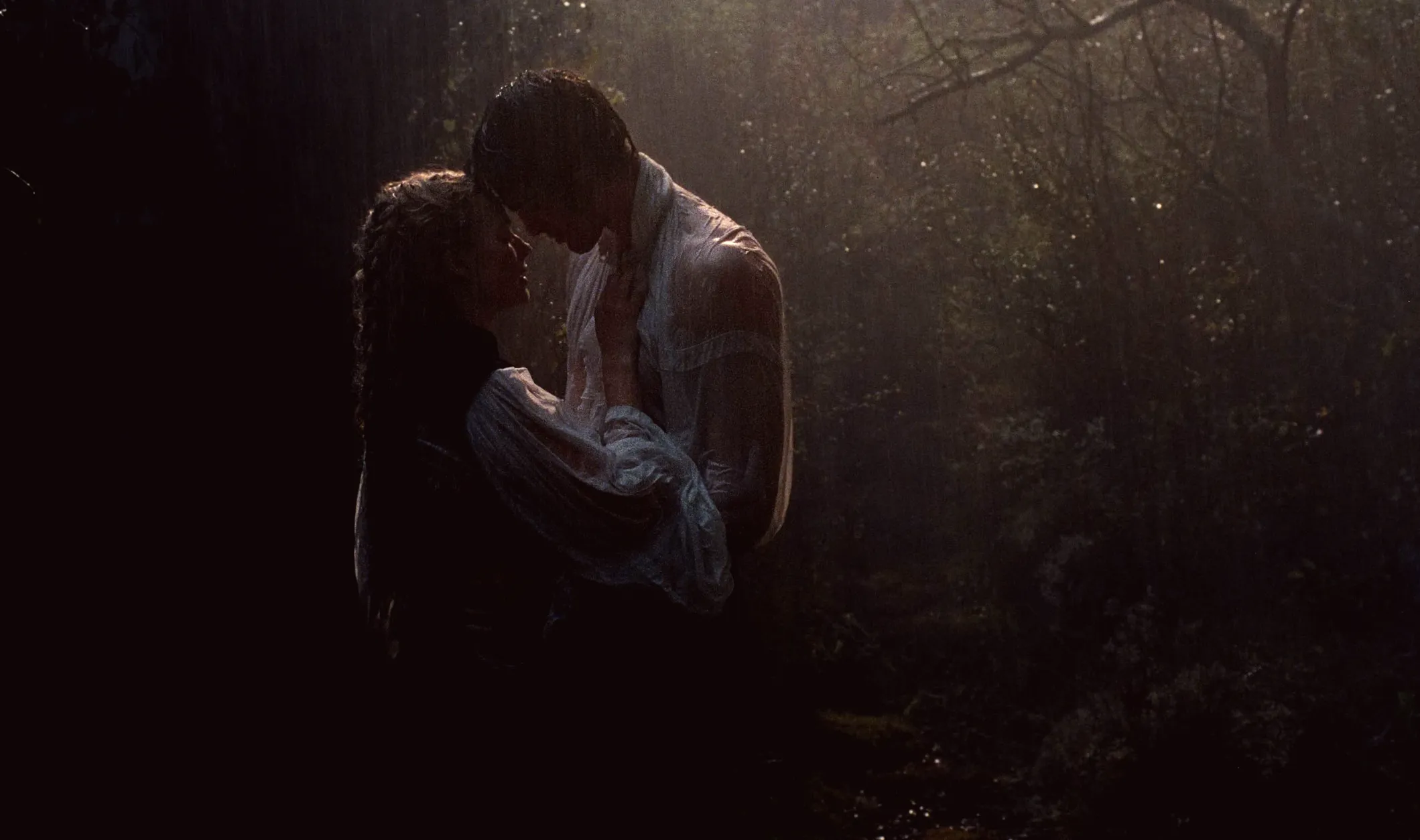
As the release of Emerald Fennell's highly anticipated adaptation of Wuthering Heights approaches, the excitement surrounding Emily Bront's classic novel should be palpable for fans. However, with each new detail emerging about the film, featuring Margot Robbie and Jacob Elordi as Cathy and Heathcliff, there is growing concern among literature purists. The initial backlash stemmed from the casting choices, which were controversial from the start. Robbie and Elordi were seen as mismatched for Bront's characters, with glaring differences in age, appearance, and even ethnicity, leading some fans to question whether these actors could truly embody the dark, obsessive love that defines the novel.
Despite the evident contrasts, such as Robbies vibrant persona and Elordis charming presence even in darker roles, there has been ongoing speculation about whether they can bring the emotional depth needed for their characters, whose tragic love story destroys everything around them. The film's team, including casting director, has remained largely unresponsive to these critiques, aside from making some bold statements. At a film festival in St Andrews, Scotland, the casting director argued that "racially blind casting" should be embraced and assured viewers that they should withhold judgment until they see the film. In a provocative remark, she added, Its just a book. Its all art, and teased that the set design was as unconventional as the casting itself, mentioning a mysterious dog collar.
Recently, both Robbie and Fennell further fueled concerns by revealing their vision for the film during a conversation with British Vogue. The duo shared their intention to make the film an epic love story in the vein of popular Hollywood romances like Titanic and Baz Luhrmanns Romeo + Juliet. Robbie expressed her desire for the film to resonate with todays audience in the same way those classics did, describing her own emotional connection to Romeo & Juliet, saying, "I went to the cinema to watch it eight times, and I was crying on the floor when I wasnt allowed to go back for a ninth. I want it to be that. She described the film as a perfect option for a date night, adding that while there are definitely intimate and provocative moments, the focus would be on creating a romantic experience rather than an overly provocative one.
Fennell elaborated on their approach to the films intimate scenes, emphasizing that the focus was on romance rather than raunchiness, although the film still promises to be quite provocative. She mentioned that, much like the long-ago era of films such as The Notebook and The English Patient, its been a while since audiences have had such an epic love story. In their view, this film is poised to reignite that sense of sweeping, tragic romance.
Interestingly, Fennell has been a fan of Wuthering Heights since childhood, and the idea for this adaptation came to her when she saw Elordi on set for Saltburn, noticing his sideburns that reminded her of the Heathcliff from her teenage edition of the novel. Meanwhile, Robbie, who was not familiar with the novel or its previous adaptations before joining the project, was captivated by the script and its portrayal of Cathy. Fennell believed Robbies ability to bring a layer of likeability to Cathy was crucial, as the character is complex, willful, and at times, cruel. She needed an actress who could make the audience sympathize with Cathys more disturbing traits someone with big dick energy, according to Fennell.
Together, Fennell and Robbies statements make it clear that their vision for Wuthering Heights deviates significantly from the original novel. Their adaptation will likely lean more towards a high-profile, stylized romantic blockbuster than a faithful retelling of Bronts dark, Gothic tale. While this departure from the source material is not surprising, it highlights a key difference between Hollywood adaptations and the devoted fanbase of Bronts work. The novel, after all, is not a romance its a cautionary tale about destructive love. And while the promotional materials may market the film as the greatest love story of all time, this seems to disregard the essence of Bronts work, shifting the focus to something far more commercial.
Author: Aiden Foster
Share

What We Know About Emerald Fennell's Next Project: Jacob Elordi and Margot Robbie in Wuthering Heights
5 hours ago 3 min read ENTERTAINMENT

Margot Robbie Sets New Boundaries Regarding Baby Boy Discussion
12 hours ago 2 min read ENTERTAINMENT

Margot Robbie praises Jacob Elordi as 'Our Generation's Daniel Day-Lewis' for his role in 'Wuthering Heights'
14 hours ago 2 min read ENTERTAINMENT
This On-Screen Act by Jacob Elordi Made Margot Robbie ‘Weak at the Knees’
17 hours ago 2 min read ENTERTAINMENT

Margot Robbie stands by 'Wuthering Heights' casting choice despite backlash, believes Jacob Elordi will impress as Heathcliff
17 hours ago 2 min read BUSINESS

Margot Robbie Left 'Weak at the Knees' by Jacob Elordi's On-Screen Performance
17 hours ago 2 min read ENTERTAINMENT
Margot Robbie supports Jacob Elordi in their Wuthering Heights casting
18 hours ago 2 min read ENTERTAINMENT

Margot Robbie stands up for Jacob Elordi and her role in Wuthering Heights
18 hours ago 2 min read ENTERTAINMENT

Margot Robbie Admits Some Scenes in New Movie Made Her Feel 'Weak At The Knees'
18 hours ago 2 min read ENTERTAINMENT

Margot Robbie acknowledges backlash over 'Wuthering Heights' casting: "I understand"
20 hours ago 2 min read ENTERTAINMENT